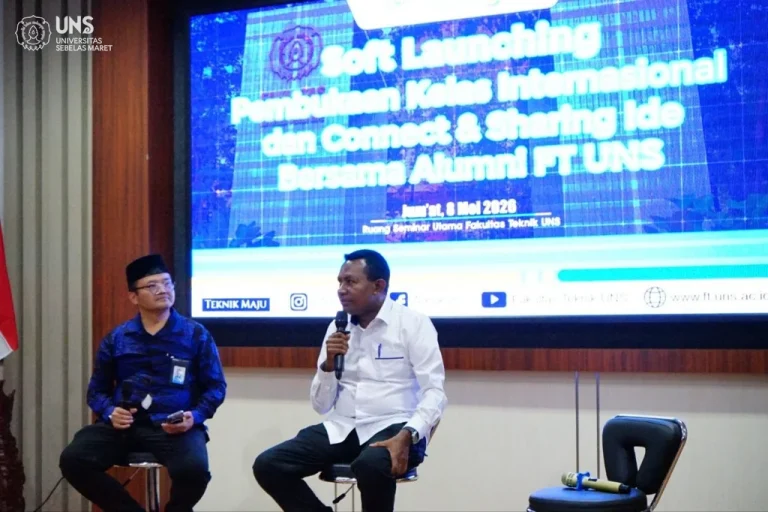
UNS — The Master Program in Fine Arts Universitas Sebelas Maret (UNS) Surakarta held another joint lecture with the Postgraduate School of Institut Seni Indonesia (ISI) Yogyakarta through Zoom Cloud Meetings and YouTube stream that both institutes faculty members and students attended. This joint lecture is the third conducted between both large art institutions in Indonesia.
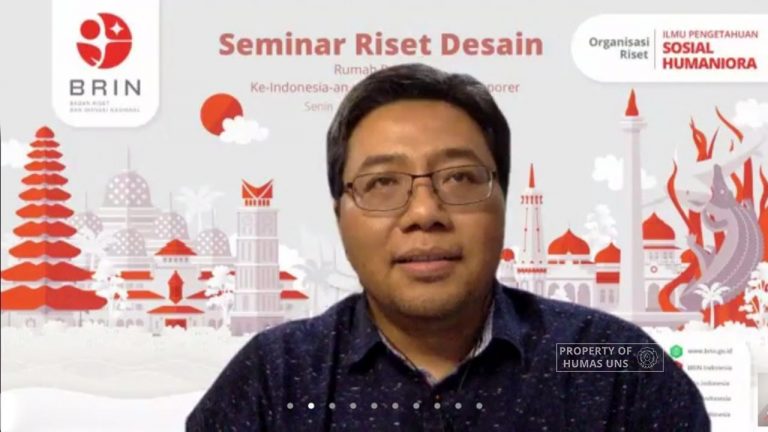
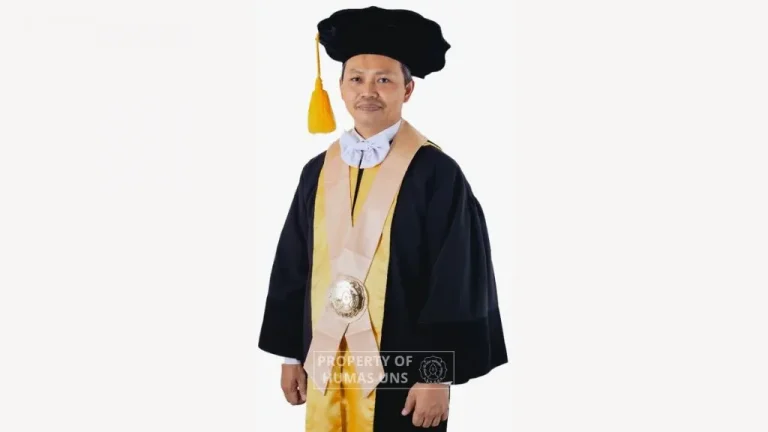
Dr. Bedjo Riyanto, M.Hum, and Dr. Prayanto Widyo Harsanto, M.Sn were invited as the speakers in the joint lecture that discussed the speaker’s and their team’s practical researches. Both speakers also shared their studies performed amid the Covid-19 pandemic. Opening the joint lecture, Dr. Bedjo, explained the points in research with light themes. The Master Program in Fine Arts UNS faculty member also invited participants to view research from a simpler viewpoint to be more exciting to conduct. Especially regarding visual research.
Dr. Bedjo explained that there are at least three components of a study. First is the human component, who created art, design, and other works, alone or in a group. Secondly, the object or the result of a work, could be design or industrial products. Thirdly, people who consumers using, and appreciating the work from the creators.
“Research and writing are exploring, observing, liking, trying to express, and retelling from these components. The fancy terms are genetic, objective, and affective factors,” the faculty member of DKV Program UNS explained on Friday (20/8/2021).
Dr. Bedjo added that studies that use genetic factors are the historicism study, which emphasizes the human factor (artist, designer, creator) with all of the cultural, social, and socio-cultural backgrounds. Another type of study in this field is the formalism study that emphasizes the work (objective factors) and puts forward objective factors’ information and analysis. Lastly, emotionalism is a study that focuses on the affective factors or the audiences. This study emphasizes how the audience, art lovers, and people who appreciated a work responded toward the object/work.
Each of these studies has its relevance and values. The values depend on the interest, perspective, or paradigm used or followed. “The key is, it should be interesting, understandable, beneficial for the community. On the other hand, those who need it are complex and segmented. Currently, the interest and issues will be related to the social segment,” he added.

The next speaker, Dr. Prayanto, emphasized the importance of adaption in researching the Covid-19 pandemic. The DKV Program ISI Yogyakarta faculty member stated that the pandemic affects research activities, primarily social and humanities research, that requires field data collection. “We tried to adapt with the research plan. Adaptation is needed to maintain researchers and research subject safety and flexibility. However, still achieving the research objectives, quality, and credibility,” he stated.
In her opening remark, Lulu Purwaningrum M.T., Ph.D., as the Head of Master Program in Fine Arts UNS hoped that more activities could follow the collaboration with Postgraduate School of ISI Yogyakarta in the future. “We will not stop at learning, maybe a workshop, joint research, and joint artwork,” she explained. Humas UNS
Reporter: Kaffa Hidayati
Editor: Dwi Hastuti