UNS — People Consultative Assembly (MPR) RI proposed an amendment plan on Indonesia 1945 Constitution (UUD 1945) as directly explained by the Chairman of MPR RI, Bambang Soesatyo, in the MPR Annual Meeting with DPR and DPD on Monday (16/8/2021). To the President of RI Joko Widodo (Jokowi), ministries in the Indonesia Maju Cabinet, DPR members, and DPD, Bambang Soesatyo, stated that UUD 1945 amendment would be performed limitedly. This amendment agenda covers the addition of MPR authority to determine the Principles of State Policies (Pokok-Pokok Haluan Negara – PPHN) as the basis for long-term national development.
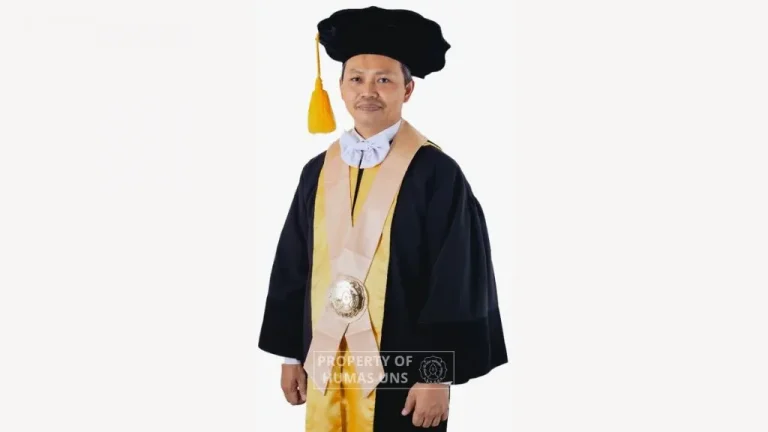
Responding to this hot issue, the Constitutional Law (HTN) expert of the Faculty of Law (FH) Universitas Sebelas Maret (UNS) Surakarta Dr. Sunny Ummul Firdaus, stated, that UUD 1945 amendment should improve the basic regulations.
“The contents of UUD 1945 are the sovereignty, Human Rights, separation of power, the concept of a democratic country, and legal,” Dr. Sunny explained to uns.ac.id through a short messaging app on Thursday (26/8/2021).
She stated that UUD 1945 amendment, partially or entirely, should be returned to the basic objectives of this country’s formation as mentioned in the preamble to the UUD 1945. These objectives are to protect all Indonesian nations, develop public welfare, educate the nations, and participate in the global peace movement based on independence, eternal peace, and social justice. In the interview, the Chief of Democracy and National Resilience Study Center (Pusdemtanas) LPPM UNS also responding to Bambang Soesatyo’s statement that there are two articles in UUD 1945 that could be amended.
Bambang Soesatyo, in his official release on Friday (20/8/2021), stated that “Among others, the addition of one paragraph in Article 3 that allow MPR to revise and determine PPHN, and adding a paragraph in Article 23 that regulate DPR authority to reject RUU APBN (state budget bill) proposed by the president if it does not follow the PPHN.”
Dr. Sunny explained that the amendment on Article 3 UUD 1945 is a political option for the state administrator. However, historical, philosophical, sociological, political, and theoretical reasons must be provided besides support from the general public through a structured method. “If it is MPR authority, then it needs to be constructed into an appropriate legal form for PPHN. This legal form will affect the process of PPHN and the probability of judicial review,” she explained.
Further, discussing the amendment agenda on Article 23 UUD 1945, Dr. Sunny stated that the presidential system regulated in the constitution aims to implement the separation of power and the check and balances principles. Therefore, fundamentally, the regulation and management of state financing through the State Revenue and Expenditure Budget (APBN) mechanism decided through a Law must be discussed to receive agreement from the President of Indonesia and the DPR.
“I think without amending the Article 23 UUD 1945, DPR position in the state budgeting is significantly strong, considering the programs planned by executive cannot be implemented if DPR with its budgeting function does not agree,” she added.
Concerns over PPHN
Dr. Sunny stated that PPHN that Bambang Soesatyo continuously mentions would be realized; it needs to be a reference or direction for planning, preparation, decision, implementation, and evaluation of government’s development policies. PPHN needs to be constructed to achieve continuous development. It should be applied according to the vision and missions of the elected President, and the President’s vision and mission cannot deviate from PPHN.
She discussed this matter following several people’s concerns that PPHN will bring Indonesia back to the New Order when the Outline for the State Policy (Garis-Garis Besar Haluan Negara – GBHN) was strictly applied as a guideline in the national long-term development agenda.
“PPHN must be constructed not to disturb the presidential system that has been implemented. Because the people select President and vice-president, they should be responsible toward the people, not to MPR,” Dr. Sunny said.
Besides discussing the concerns over PPHN, Dr. Sunny also mentioned the probability of MPR bringing back TAP MPR through the limited amendment. She explained that MPR has no authority to create a provision that has regulating impact (regelling) because, after the previous amendment on UUD 1945, MPR only has the authority to make a provision that is deciding (beshickking).
“UUD itself does not mention that TAP MPR needs to contain regulation (regelling) and take a form of law. Deciding can only be defined as taking a decision (beschikking) that is real and individual. In general, the implication of PPHN that has directive application needs to be cleared,” she concluded. Humas UNS
Reporter: Yefta Christopherus AS
Editor: Dwi Hastuti