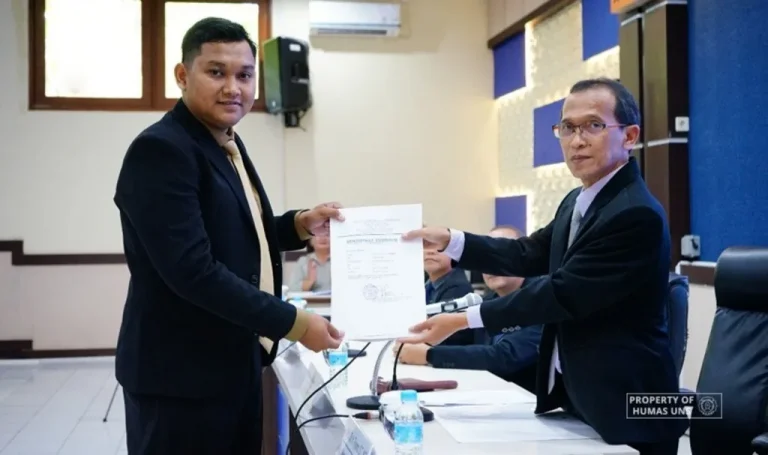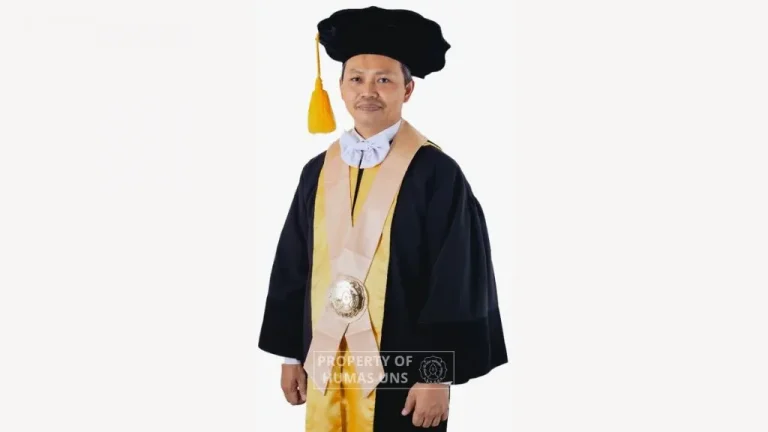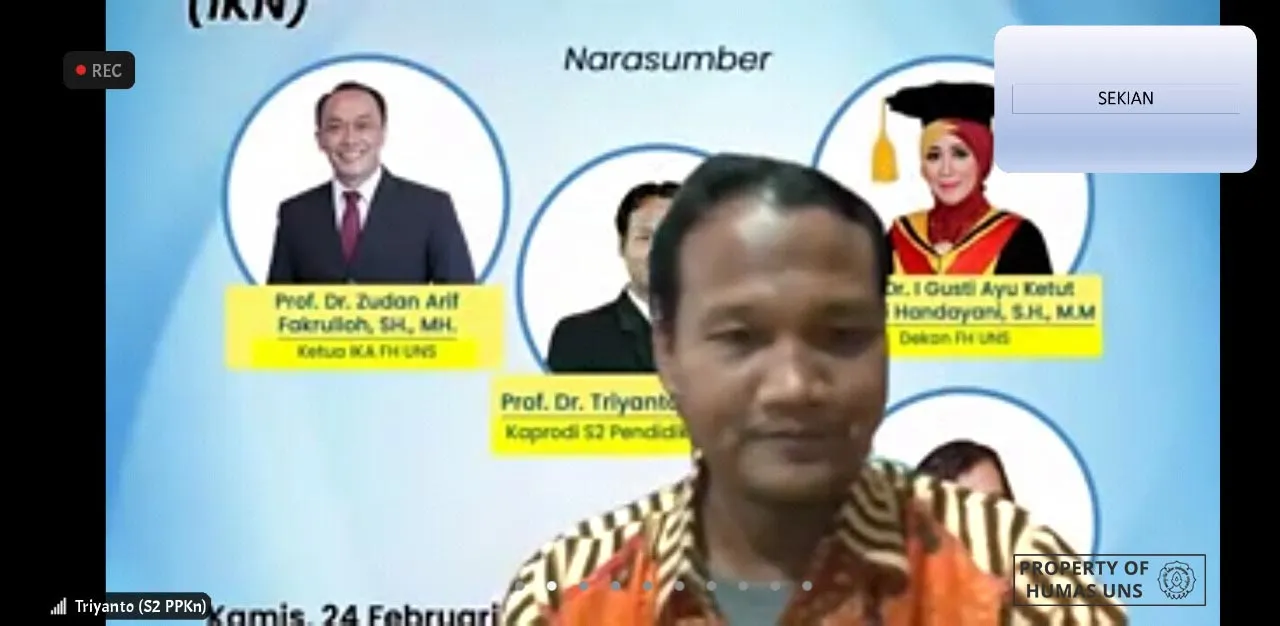
UNS — The discussion over the new capital city of Indonesia (IKN) is getting louder after Law No. 3 of 2022 was passed. The civics expert of Universitas Sebelas Maret (UNS) Surakarta, Prof. Dr. Triyanto, S.H., M.Hum., also participated in the discussion.
Prof. Triyanto stated that the discussion regarding IKN is inseparable from various aspects such as historical, legal, political, sociological, and economic aspects. From a historical point of view, moving a capital city had been done before from 1946 to 1949 from Jakarta to Yogyakarta and in 1948 to Bukittinggi. The new capital city in Palangkaraya was also discussed during the Soekarno era, but it evaporated without implementation. President Soeharto also brought up the idea of moving the capital city from Jakarta to Jonggol, which also met no realization. The new capital city was realized in President Jokowi’s era, with a planned new capital city in Kalimantan Timur, named Nusantara.
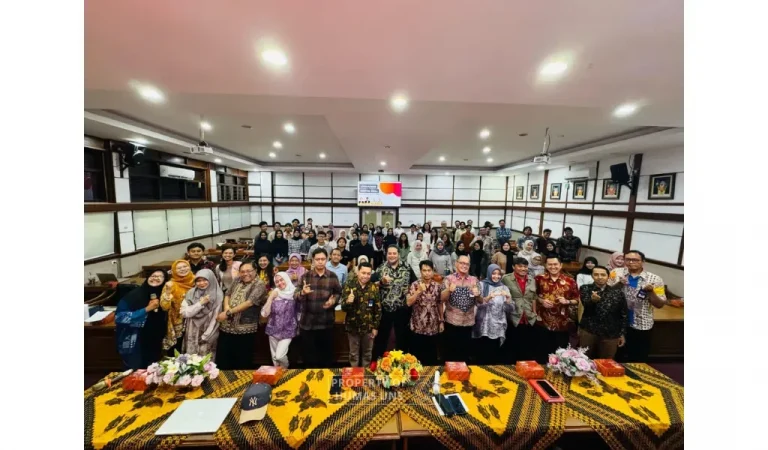
Prof. Triyanto also discussed the sociological aspect of the plan regarding the future of local people in the region. The Head of Master Program in Pancasila and Civic Education (PPKn) UNS stated that local people are often marginalized during the development of a capital city; take the Betawi people in Jakarta as an example. He emphasized that the local people need special attention due to this issue. “It needs a consideration because we are not just moving the people, but their families, culture, jobs, social environment, and other aspects,” he stated in Ngobrol Bareng IKA FH UNS on Thursday (24/2/2022).
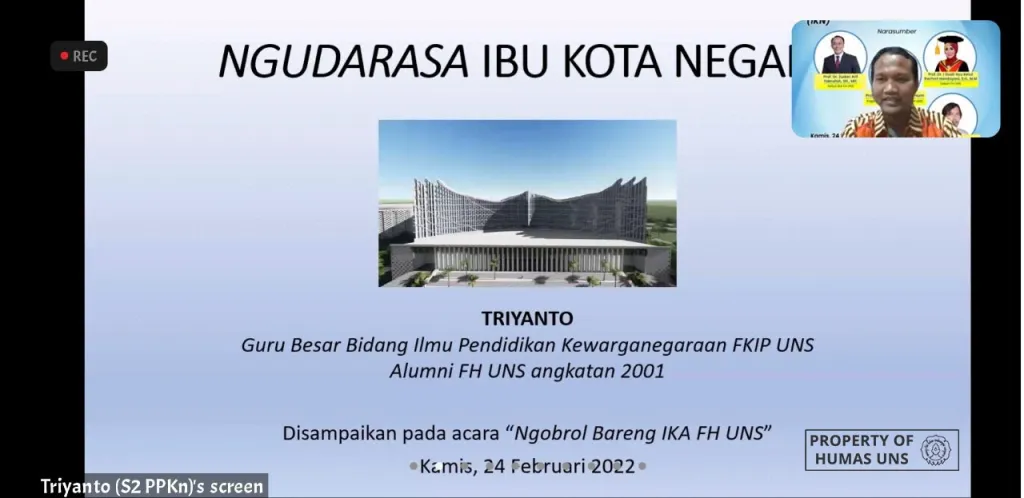
Prof. Triyanto also discussed the transfer of a hundred thousand state civil apparatus (ASN) from Jakarta to Nusantara, which will require special care regarding their social aspects, such as residential area, school or university, and live necessity, and social environment. Everything needs to be considered to prevent declining productivity.
“These (aspects) need to be anticipated to ensure that migrant and local people generate optimum benefits from the new capital city,” he added.
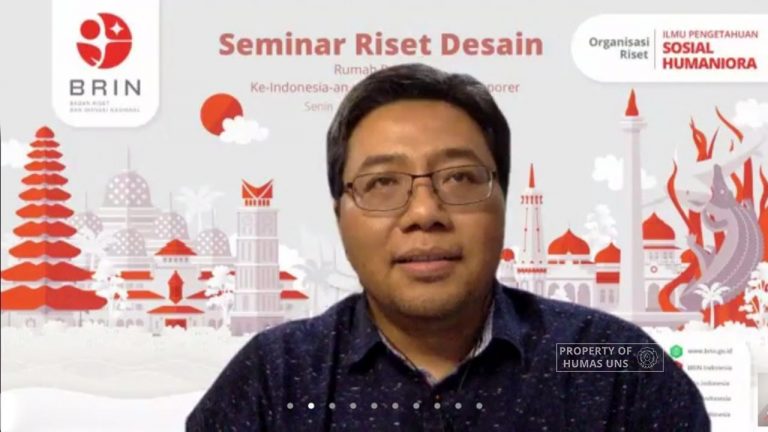
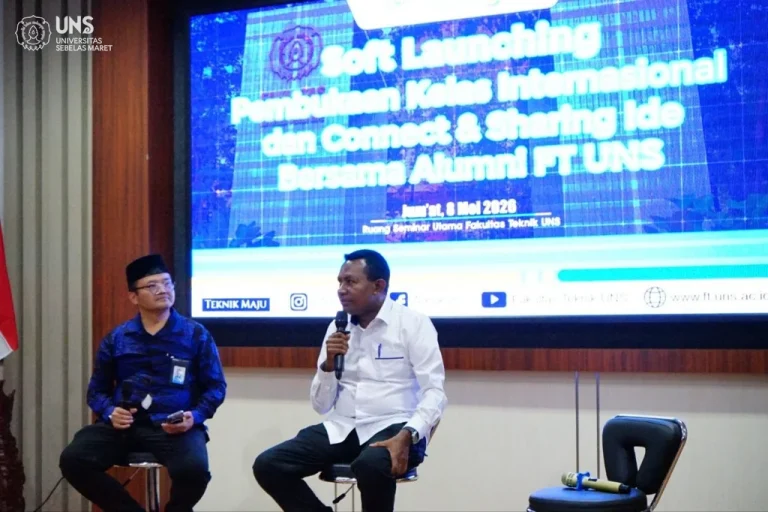
Prof. Zudan Arif Fakrulloh, S.H., M.H., the Chairman of the Alumni Association (IKA) of the Faculty of Law (FH) UNS and Director General (Dirjen) of Population and Civil Registration (Dukcapil). Prof. Zudan confirmed that the transfer of ASN will be handled gradually. The ministries will operate in two offices in two separate cities, Jakarta and Nusantara. The transfer is estimated to take between 15 to 20 years to complete. Prof. Zudan explained as another speaker in the discussion. Humas UNS
Reporter: Ida Fitriyah
Editor: Dwi Hastuti