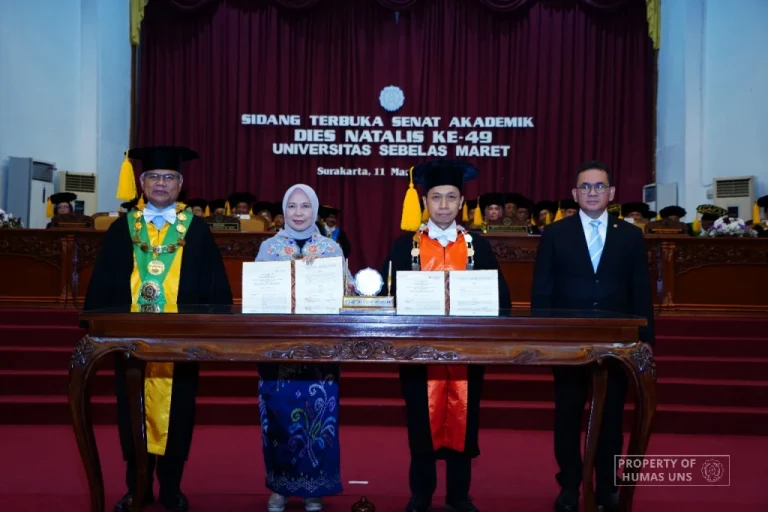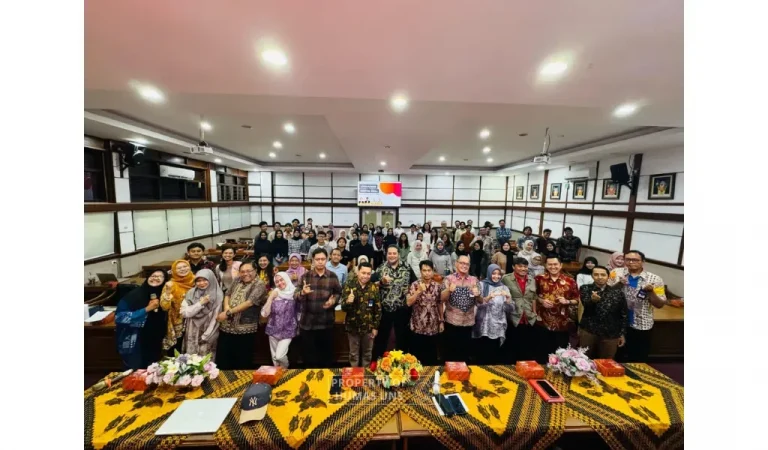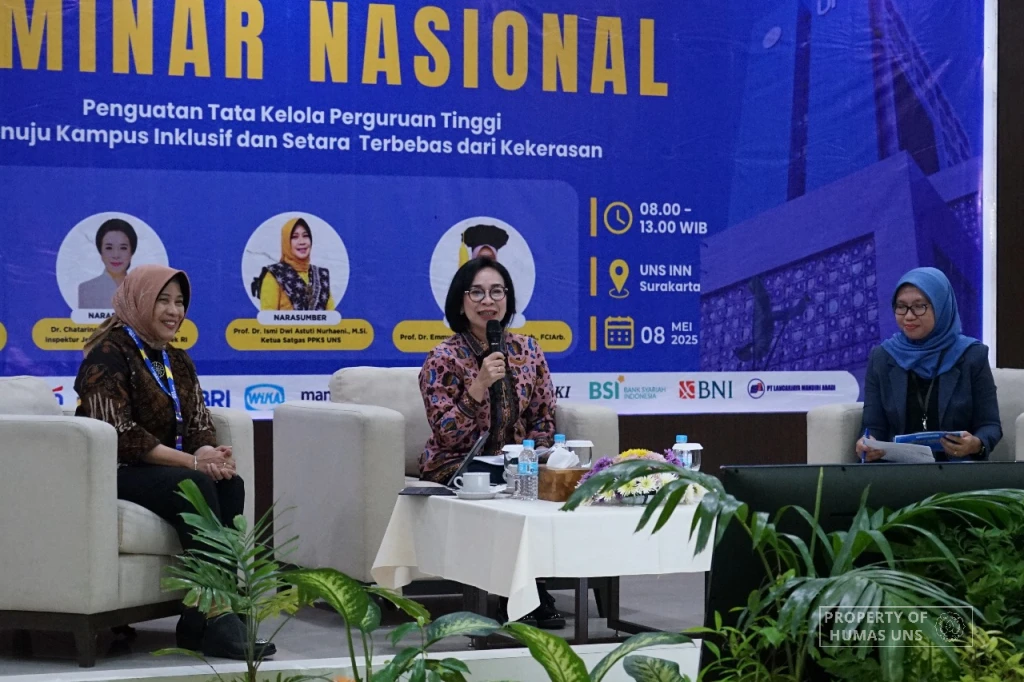
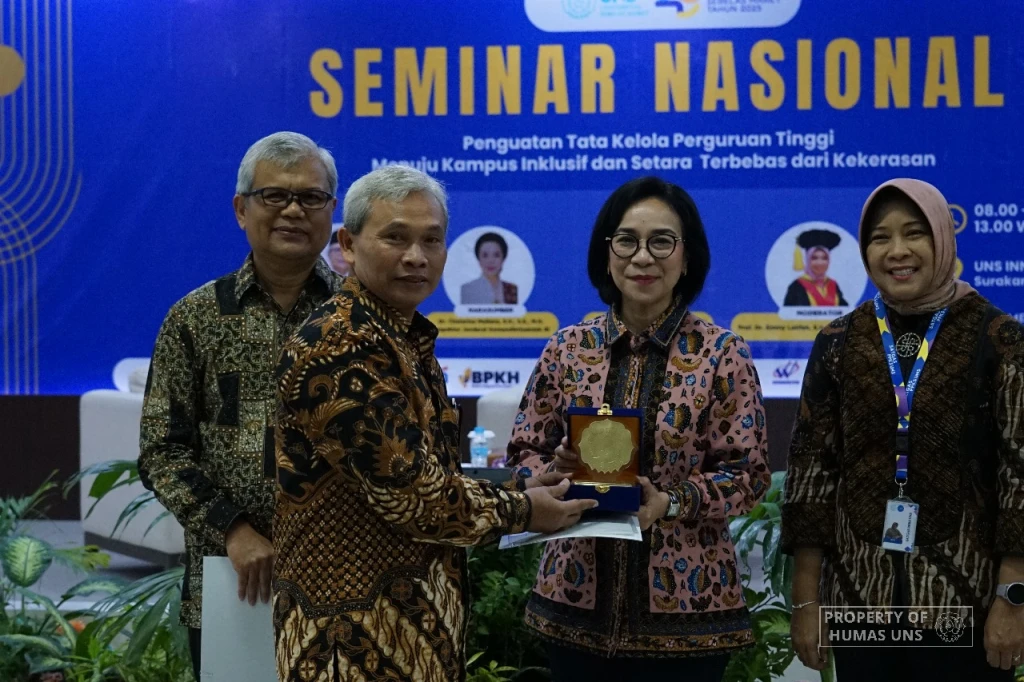
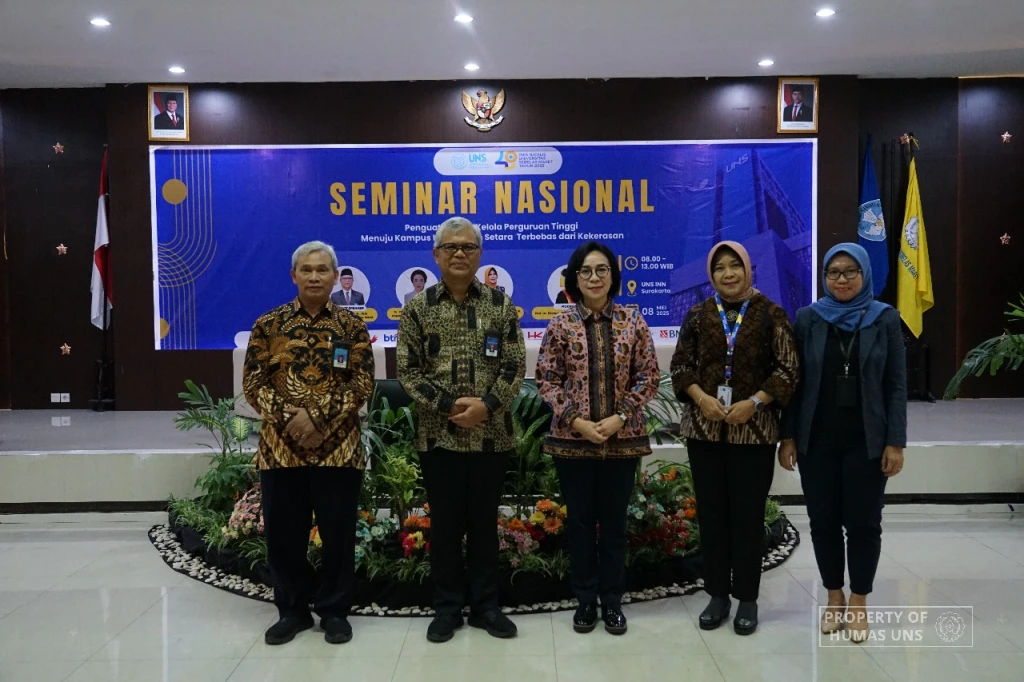
UNS – Universitas Sebelas Maret (UNS) Surakarta held a national seminar and officially launched the Rector’s Regulation on the Prevention and Handling of Violence. The seminar carried the theme “Strengthening Higher Education Governance Toward an Inclusive and Equal Campus Free from Violence.” It took place on Thursday (8/5/2025) at the Indraprastha Ballroom, UNS Inn. This event was part of the university’s 49th Dies Natalis celebration.
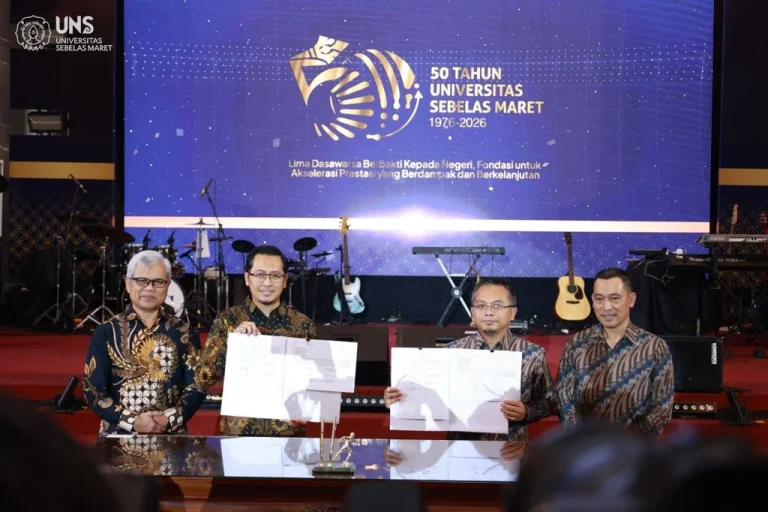
During the event, UNS introduced Rector’s Regulation Number 7 of 2025. This new regulation responds to Ministerial Regulation Number 55 of 2024 on the Prevention and Handling of Violence in Higher Education Institutions. It represents UNS’s strong commitment to promoting a safe, respectful, and inclusive learning environment.
Strong Institutional Collaboration for Prevention Efforts
Various stakeholders attended the national seminar, including university, faculty, and study program leaders, as well as student organization representatives. Members of the Task Force for the Prevention and Handling of Violence in Higher Education (Satgas PPKPT) attended the event. The Office of Women and Children Empowerment (DP3AKB) also participated as a partner institution. Other partners included local police, hospitals, and NGOs focused on violence prevention.
Chair of UNS’s 49th Dies Natalis Committee, Prof. Dr. Ir. Samanhudi, stated that the seminar was a strategic platform. It aimed to unify understanding and strengthen commitment among members of the academic community.
“We chose the theme to support the realization of an inclusive and equal campus free from violence,” he said. “It promotes an atmosphere that respects diversity and eliminates all forms of discrimination. This environment supports the fulfillment of the Three Pillars of Higher Education.”
Government and University Leadership Reaffirm Commitment
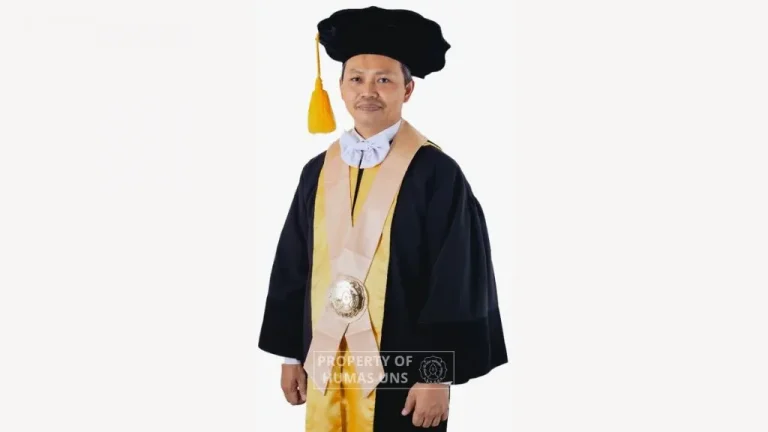
The seminar featured a keynote speech by the UNS Rector, Prof. Dr. Hartono.
He emphasized the importance of aligning university policies with national regulations. He explained that UNS had revised its regulation as a response to Ministerial Regulation Number 55 of 2024.
“UNS has launched several initiatives to create an inclusive academic environment,” Prof. Hartono explained. “These include policies aligned with Equality, Diversity, and Inclusion (EDI), and collaborative efforts with international partners.”
Next, Dr. Chatarina Muliana, S.H., S.E., M.H., Inspector General of the Ministry of Higher Education, Science, and Technology (Kemendiktisaintek), discussed the urgency of implementing the regulation. She cited the rise in violence cases across campuses nationwide.
“The key lies in the commitment of university leaders,” she stated. “We must build a culture of dignity and integrity and promote civil learning processes. We also need to strengthen the task force’s human resources and supporting infrastructure.”
Building Quantum Leadership and Strengthening the Task Force
Prof. Dr. Ismi Dwi Astuti Nurhaeni, M.Si., Head of UNS’s Task Force for the Prevention and Handling of Violence (PPK), shared strategies for achieving inclusive governance. She emphasized collaboration among university leaders, task force members, and the broader academic community.
She introduced the concept of Quantum Leadership, which focuses on flexibility and adaptability in managing institutions. This approach promotes innovation, collaboration, and a values-based culture.
“The keyword is gercep—acting quickly,” Prof. Ismi remarked. “We need to be responsive and adaptive in developing systems that support a violence-free campus.”
Prof. Ismi also addressed the expanded scope of Satgas PPKPT. Following new regulations, the task force now handles not only sexual violence but also other forms of campus violence. Therefore, stakeholders must reinforce their capacity through skill development, increased funding, and better access to support services.
Moving Forward with Shared Commitment
The seminar concluded with an interactive discussion moderated by Prof. Dr. Emmy Latifah, S.H., M.H., AIIArb., FCIArb. Participants shared insights on policy implementation, challenges in the field, and opportunities for inter-institutional collaboration.
Through this seminar, UNS hopes to foster a collective commitment among university leadership, the task force, students, and external partners. The university remains dedicated to advancing inclusive and violence-free higher education governance rooted in humanity, justice, and equality. Humas UNS