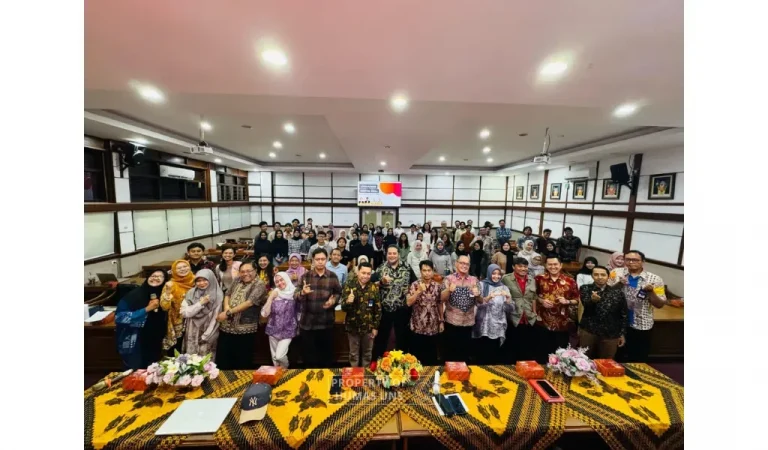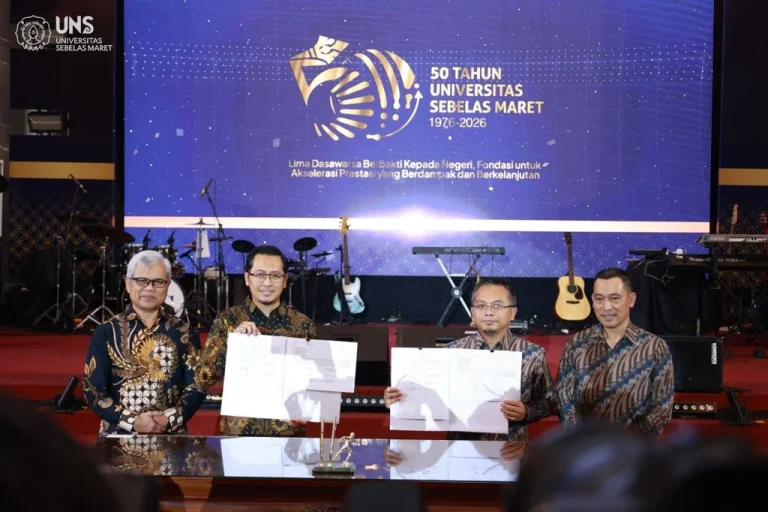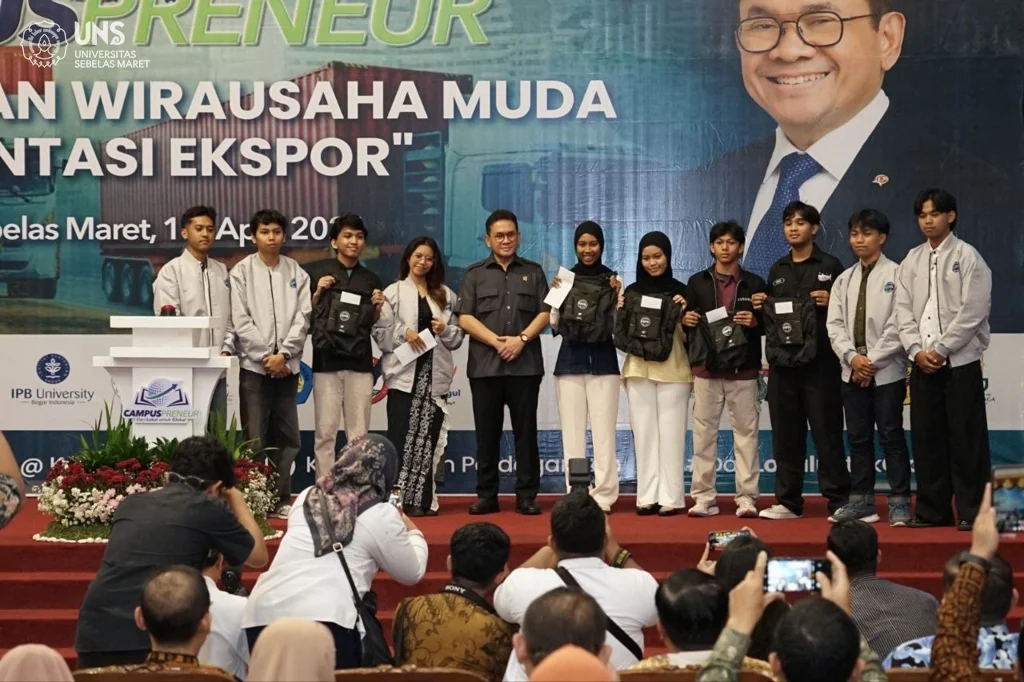
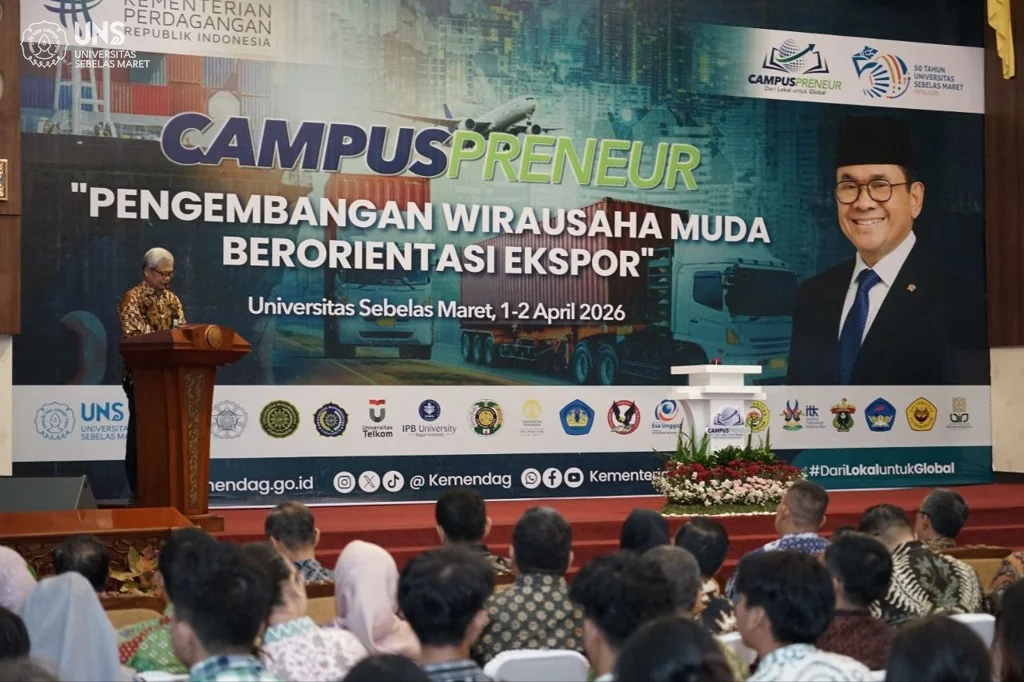
UNS — Universitas Sebelas Maret (UNS) Surakarta became the host of the launch of the Campuspreneur Program: Developing Young Export-Oriented Entrepreneurs, initiated by the Ministry of Trade of the Republic of Indonesia. The event was also combined with the signing of various strategic cooperation documents between the Ministry of Trade and several universities in Indonesia.
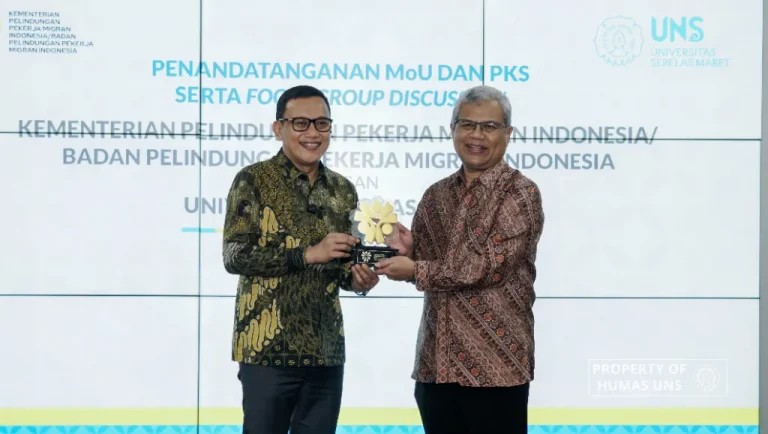
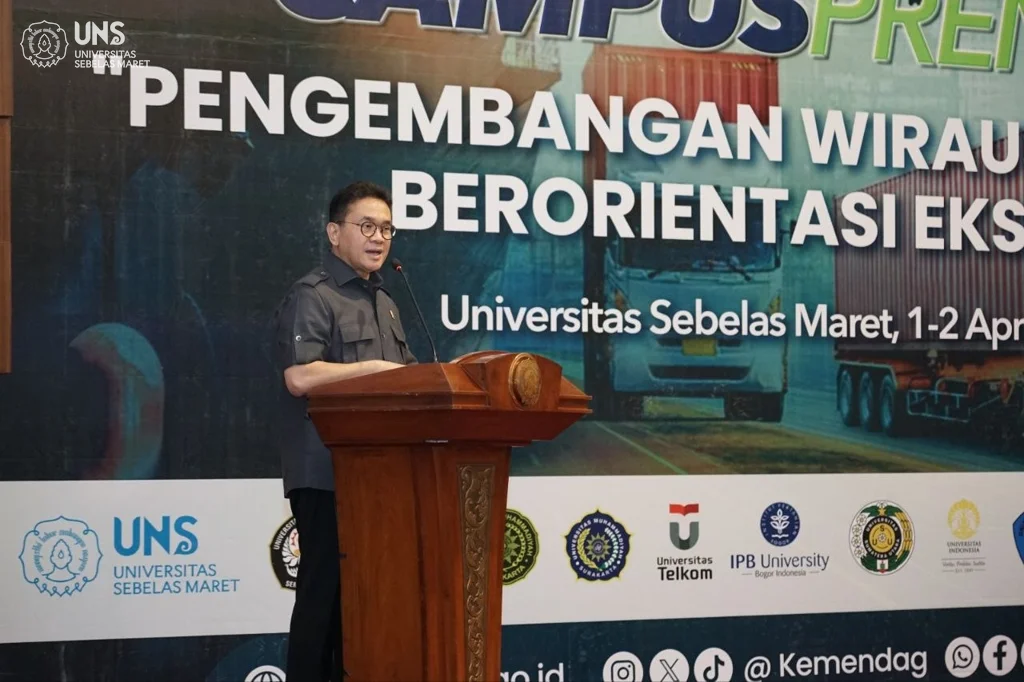
The event, held on Thursday (2/4/2026) at the G.P.H. Haryo Mataram Auditorium, UNS, was attended directly by the Minister of Trade of the Republic of Indonesia, Dr. Budi Santoso, along with several rectors and university leaders, both offline and online.
Those attending in person included the Rector of Universitas Muhammadiyah Surakarta, Prof. Harun Joko Prayitno; the Rector of UIN Sunan Kalijaga Yogyakarta, Prof. Noorhaidi Hasan; the Vice Rector of Institut Teknologi Kalimantan, Erma Suryani; the Rector of Universitas Diponegoro, Prof. Suharnomo; as well as representatives from Universitas Gadjah Mada, Universitas Muhammadiyah Yogyakarta, Telkom University, and Universitas Udayana.
Several other universities also joined online, including IPB University, Universitas Sumatera Utara, Universitas Lampung, Universitas Pelita Harapan, Universitas Esa Unggul, Universitas Balikpapan, Universitas Hasanuddin, Universitas Pattimura, and Universitas Cenderawasih.
In his remarks, UNS Rector, Prof. Dr. Hartono, expressed appreciation for the trust given to UNS as the host of this strategic event. The Campuspreneur Program is considered a visionary step in strengthening Indonesia’s position in global trade, especially through the development of campus-based young entrepreneurs.
“Students should no longer only be prepared as job seekers, but must become job creators, and even young exporters who can bring Indonesian products to the global market,” said Prof. Hartono.
This program is considered highly relevant because the export sector makes a major contribution to national economic growth, including increasing foreign exchange, creating jobs, and strengthening the competitiveness of domestic products. Amid increasingly complex global challenges, innovation and collaboration are the main keys.
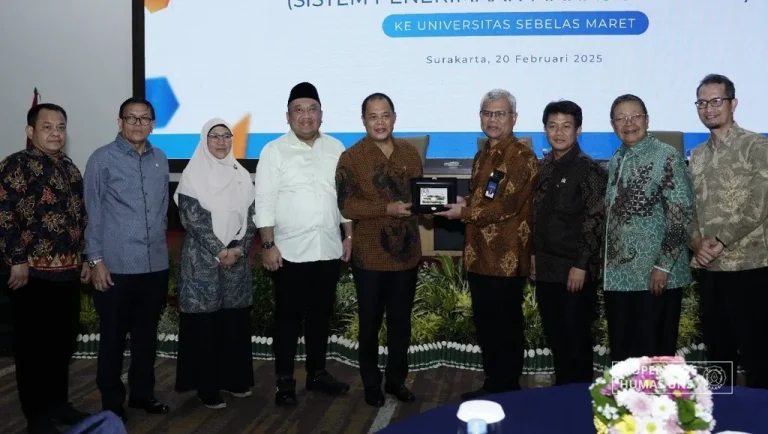
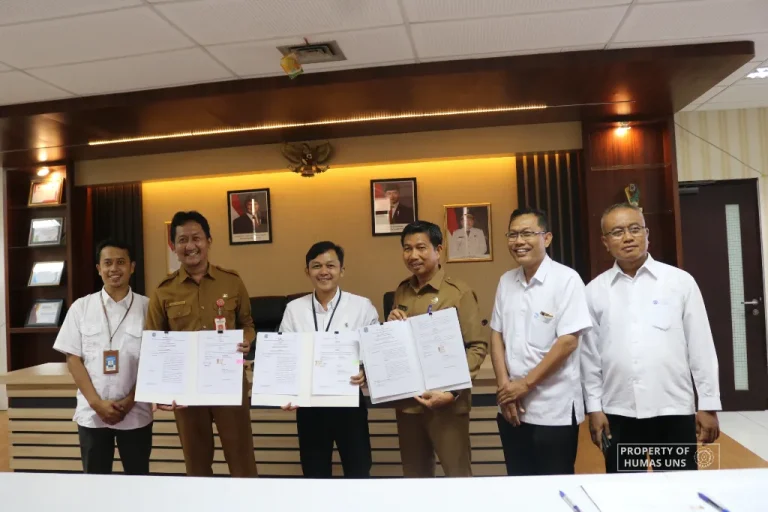
During the event, several cooperation documents were also signed, including a Joint Agreement on implementing the Tridharma of Higher Education in the trade sector, a Cooperation Agreement on developing export-oriented young entrepreneurs, and a Letter of Intent with the modern retail sector.
UNS emphasized that this collaboration aligns with the university’s strategic policy direction through the spirit of DREAMTEAM, especially the “Active” value in building productive partnerships with government, industry, and society. Through the concept of an Impactful Campus, UNS is committed not only to academic excellence, but also to making real contributions to national development.
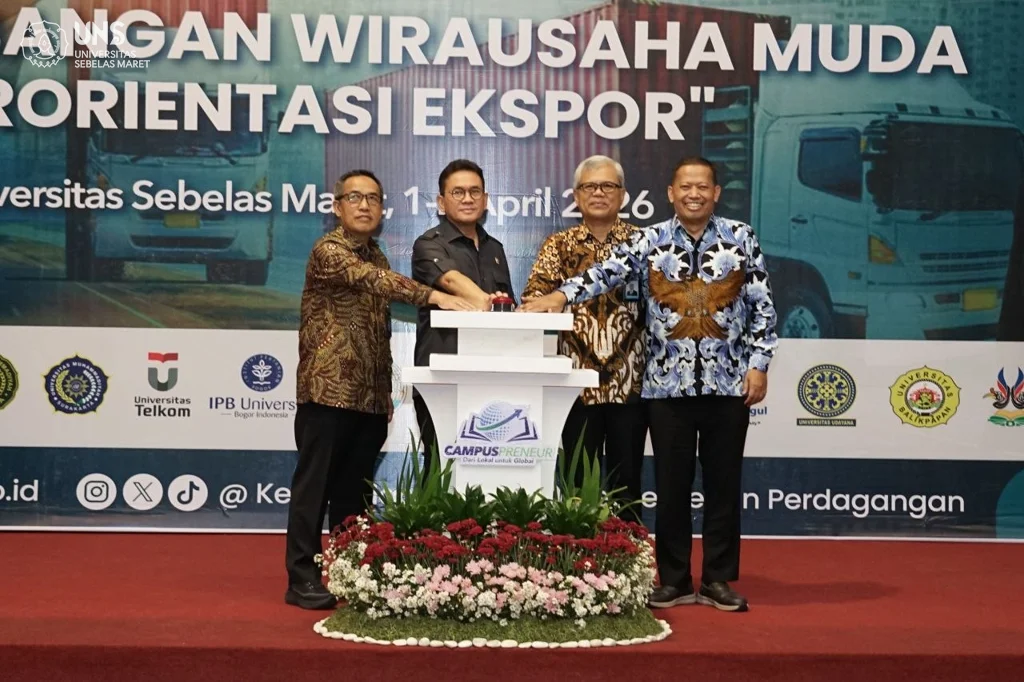
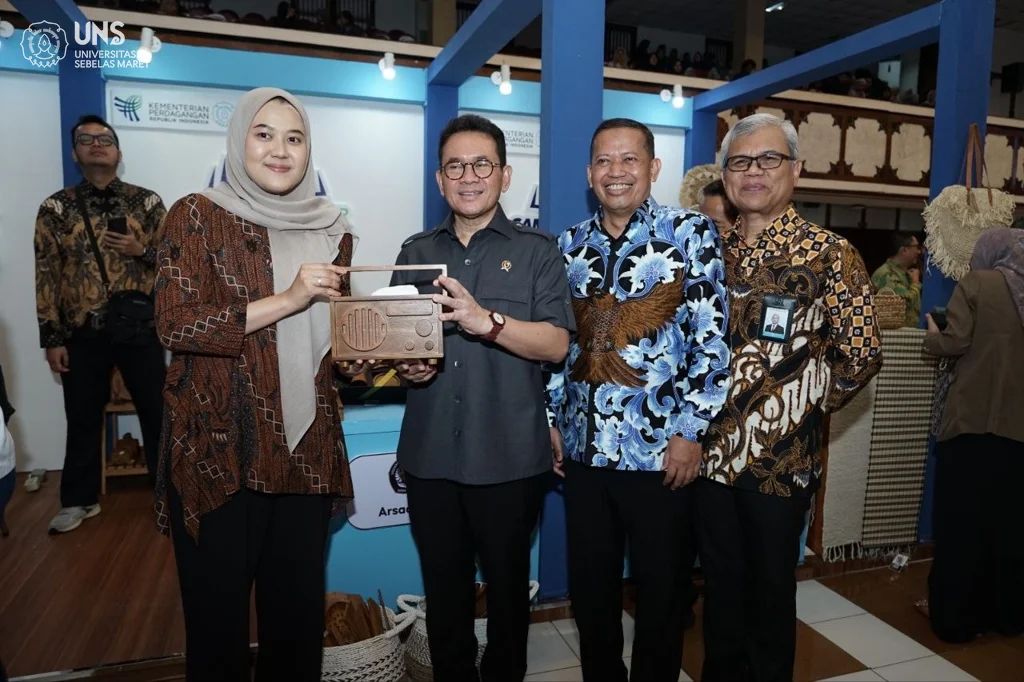
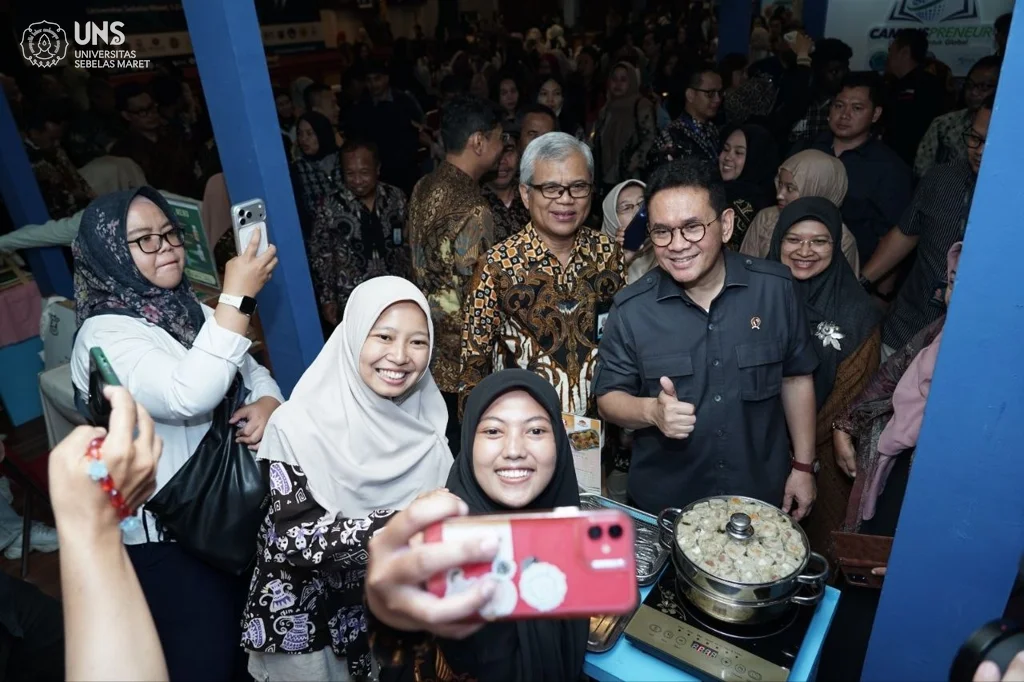
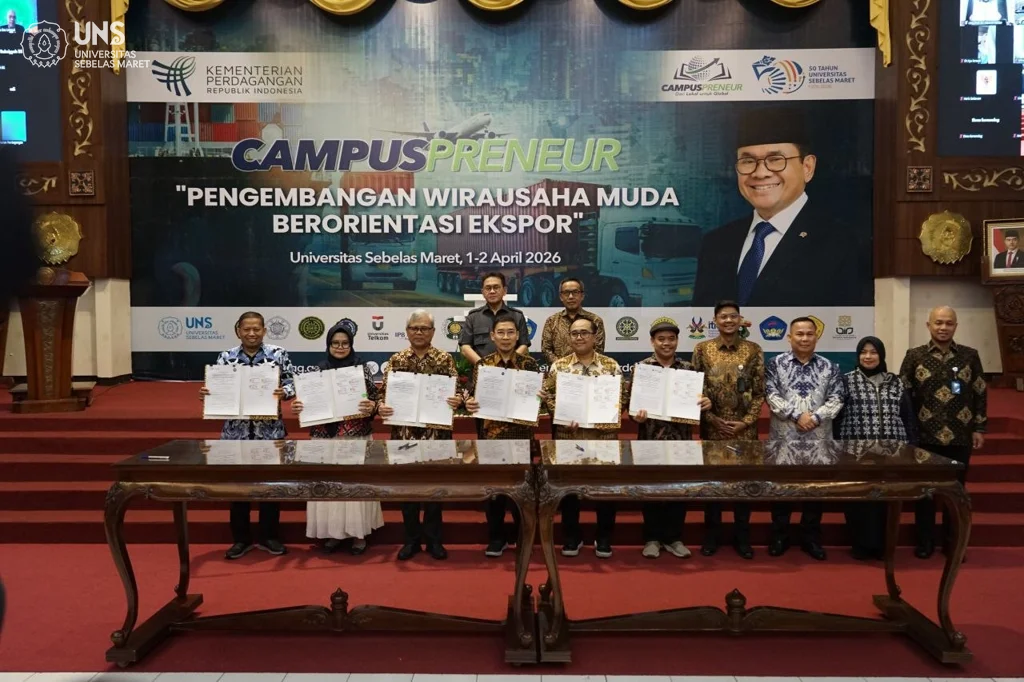
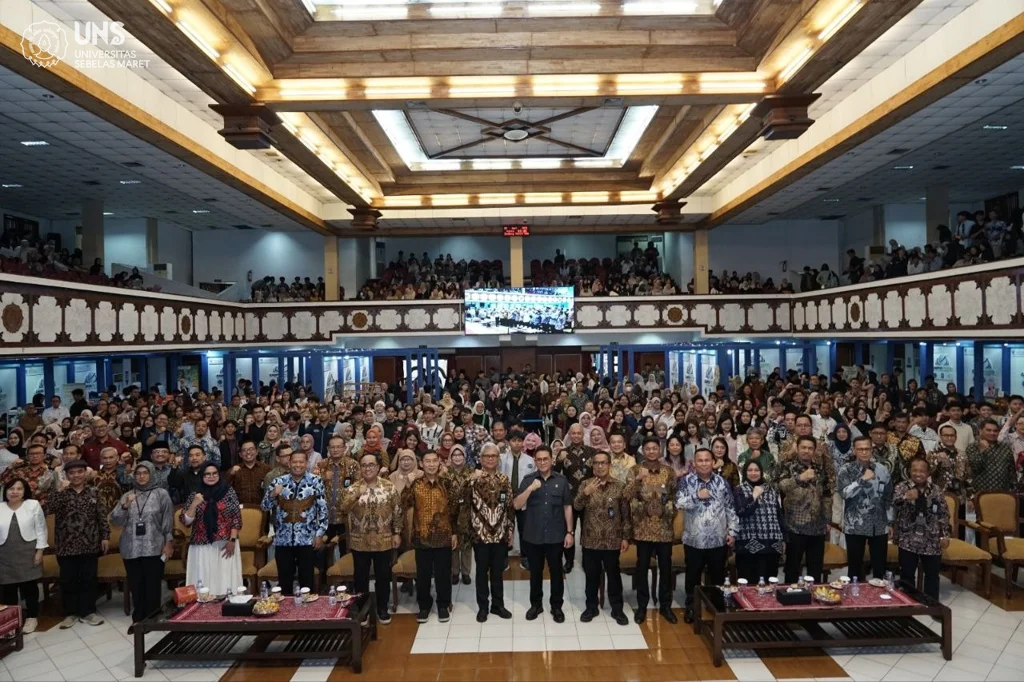
In the future, this cooperation is expected not to stop at formal documents, but to be implemented in real, measurable, and sustainable ways. The expected outcomes include the birth of export-oriented student startups, globally competitive research-based innovative products, and a strong internationally oriented campus entrepreneurship ecosystem.
UNS is optimistic that through strong synergy between the Ministry of Trade and universities, Indonesia will be able to produce more young entrepreneurs who are resilient, innovative, and ready to compete in the global market.
Minister of Trade Dr. Budi Santoso stated that collaboration with universities will encourage the growth of young entrepreneurs among students. The hope is that after graduation, students will not only be ready to work, but also able to create jobs through businesses they build themselves, both as exporters and domestic business actors.
“Currently, we see that many students have started building businesses. This is something to be grateful for because it shows that our young generation has extraordinary potential and talent in business. In the future, we will continue to develop this potential, including by providing mentoring, opening market access, and connecting them to both domestic and international markets,” said Dr. Budi Santoso.
This program will also be strengthened through various training programs, business matching, and collaboration with Indonesian trade representatives abroad, such as Trade Attachés and the Indonesian Trade Promotion Center (ITPC). This way, students will not only be able to become entrepreneurs, but will also have opportunities to enter export markets.
“We would like to thank UNS and all universities that have joined this Campuspreneur Program. We hope that through this program, students will be increasingly encouraged to become strong and competitive entrepreneurs.”
As additional information, Indonesia’s entrepreneurship ratio is currently around 3.29 percent. This figure is still behind other countries such as Malaysia, which has reached around 8 percent, and developed countries that are in the range of 10–12 percent. Therefore, strengthening entrepreneurship among university students is one of the important strategies to increase this ratio.
“Through this program, we aim to help students identify business opportunities, optimize existing potential, and connect them with various market opportunities. With these steps, we hope that the contribution of national entrepreneurship can continue to grow significantly,” said Dr. Budi Santoso.
HUMAS UNS