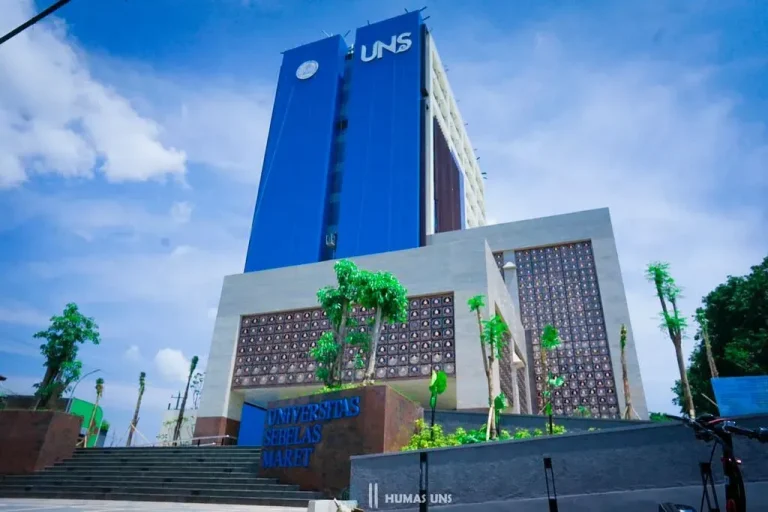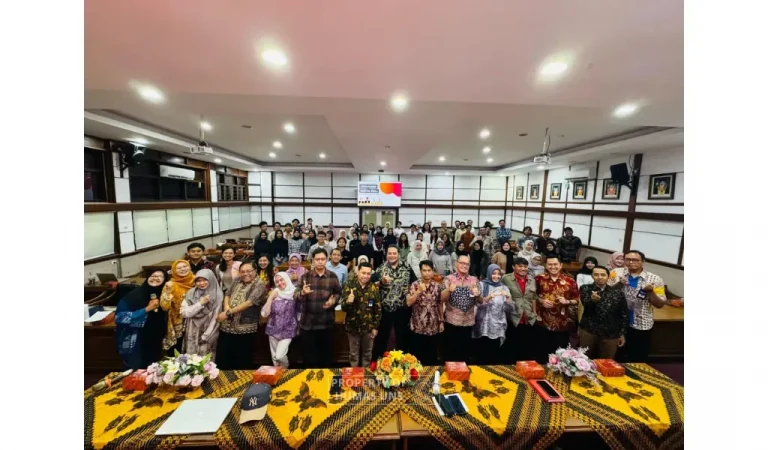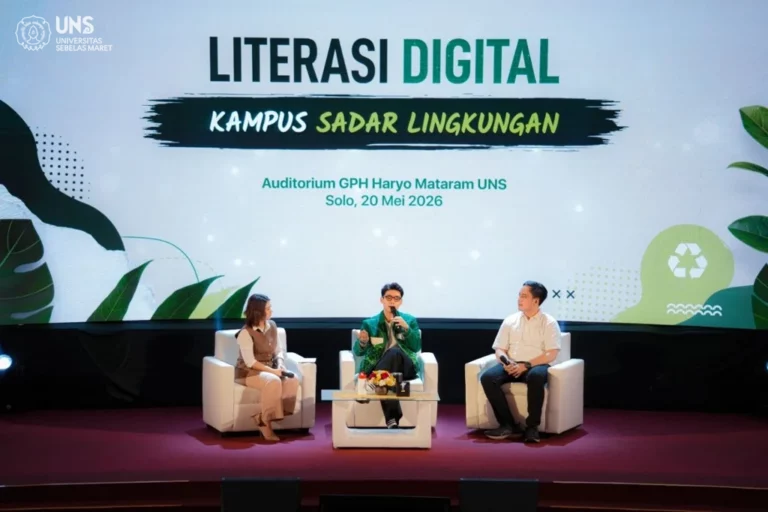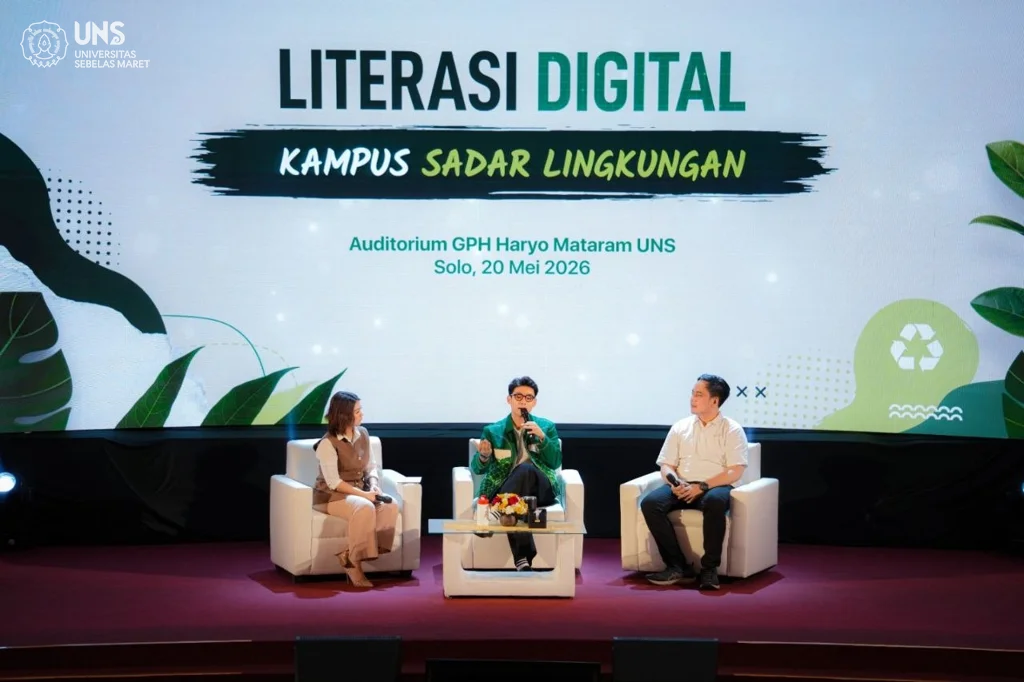
UNS — Universitas Sebelas Maret (UNS) Surakarta, in partnership with Kompas.id and Djarum Foundation, has reaffirmed its commitment to preparing eco-conscious youth while strengthening digital literacy amid accelerating technological advancements. This joint initiative took shape through an educational and youth empowerment forum titled “Digital Literacy, Eco-Conscious Campus” (Kampus Darling Literasi Digital), convened at the G.P.H. Haryo Mataram Auditorium, UNS, on Wednesday (20/5/2026).
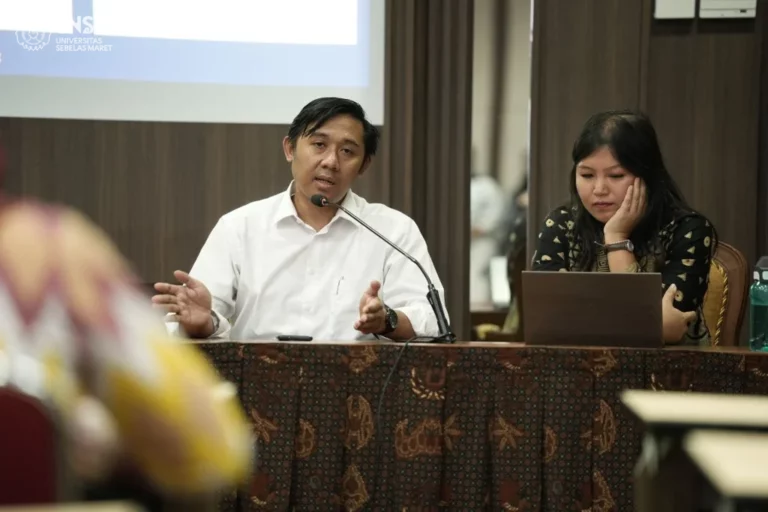
Speaking at the event, Communications Director of Djarum Foundation, Mutiara Diah Asmara, underscored the essential role of digital literacy in an interconnected world. She emphasized that digital competence transcends social media proficiency, demanding critical reasoning, objective content verification, and constructive technology adoption.
“We share a collective obligation to navigate social platforms responsibly and resist misleading narratives and hate speech. Simultaneously, we are confronted by the urgent realities of climate change, extreme weather, and accelerating environmental degradation,” Asmara stated. She emphasized that environmental preservation cannot be addressed in isolation, requiring broad-based solidarity (gotong royong) across all sectors. “Higher education campuses provide both an educational foundation and a real-world testing ground for establishing sustainable practices.”
UNS Vice Rector for Planning, Partnerships, Internationalization, and Information, Prof. Irwan Trinugroho, S.E., M.Sc., Ph.D., QCRO, commended the high student engagement at the forum. He highlighted UNS’s institutional commitment to green governance through its dedicated Subdirectorate of Green Campus and Sustainable Development Goals, established to systematically drive campus sustainability initiatives.
Prof. Irwan Trinugroho, S.E., M.Sc., Ph.D., QCRO also recognized Kompas.id and Djarum Foundation for sponsoring 1,000 free one-year subscriptions to Kompas.id for UNS students, providing access to verified reporting on climate affairs and governance.
“We want our students to have direct access to authoritative, reliable journalism rather than unverified sources. Access to credible reporting is fundamental to building an informed civic culture,” he noted.
The forum featured keynote sessions from the Head of the UNS Subdirectorate of Green Campus and SDGs, Prof. Dr. Ir. Murtanti Jani Rahayu, S.T., M.T., and the Editor-in-Chief of Harian Kompas, A. Haryo Damardono. Addressing municipal waste concerns, Prof. Dr. Ir. Murtanti Jani Rahayu, S.T., M.T. cautioned against the excessive consumption of single-use plastics, including straws, cups, and bottled water.
“A single plastic straw requires more than 200 years to break down, while plastic caps take roughly 20 years. Polyethylene terephthalate (PET) water bottles can take up to 400 years to decompose naturally. This persistent accumulation represents a major threat to ecosystem stability,” Prof. Dr. Ir. Murtanti Jani Rahayu, S.T., M.T. warned.
The session called on students to adopt reusable containers—supported by university water-refill stations—and urged universities to manage institutional waste streams responsibly. Given dense campus operations, academic institutions generate notable volumes of solid refuse, alongside electronic and battery waste requiring hazardous waste (B3) disposal protocols. Panellists advocated for practical circular economy measures, including extended product life cycles, repairs, and material reuse, to divert post-consumer waste away from municipal landfills.
The program concluded with an interactive dialogue featuring Bakti Lingkungan Djarum Foundation (BLDF) Program Officer Dandy Mahendra and environmental digital creator Jerhemy Owen, examining how Generation Z can harness creative media production to drive environmental awareness and climate advocacy. UNS PUBLIC RELATIONS