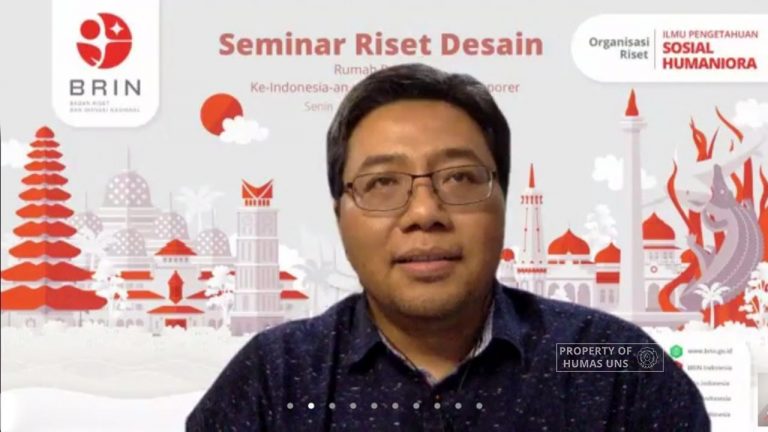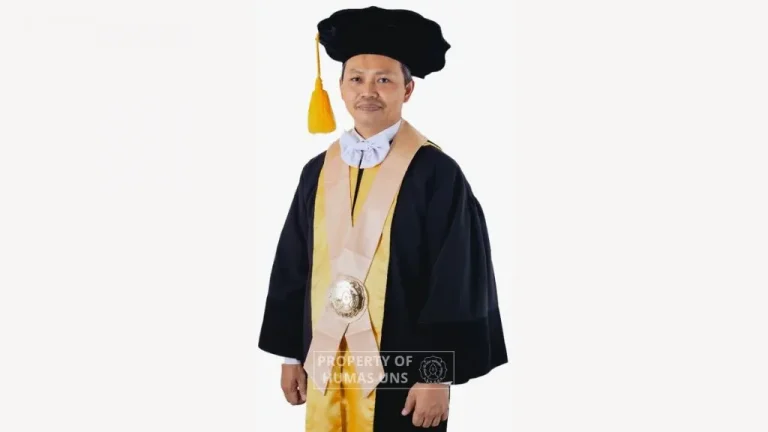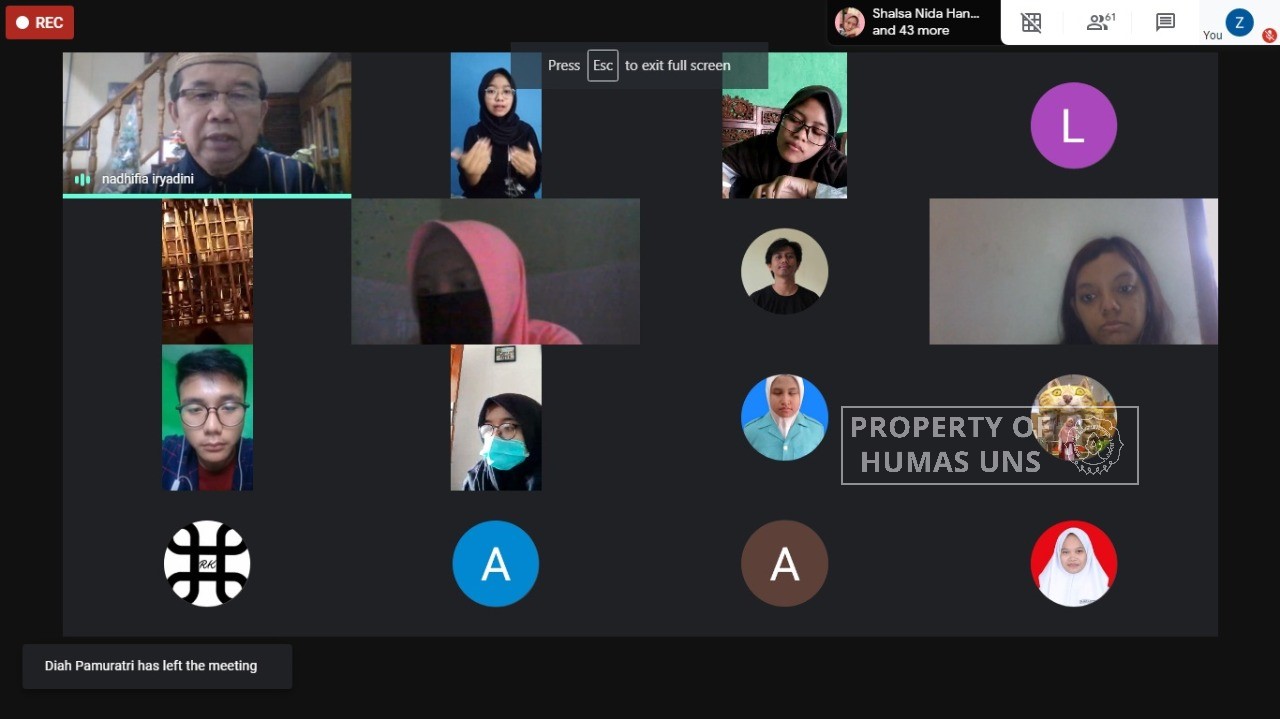
UNS — Student Executive Board (BEM) Universitas Sebelas Maret (UNS) Surakarta held an online discussion with a theme “Achieving UNS Disability Friendly” on Saturday (29/8/2020) through Google Meet application. The event invited Prof. Dr. Munawir Yusuf, M.Psi as Faculty Member of Special Education Program (PLB) UNS and the Chief of Disability Study Center (Pusat Studi Disabilitas – PSD) UNS as the main speaker.
Opening the discussion, Prof. Munawir explained that disability can be categorized into four types, physical disability such as withered or stiff paralysis and paraplegia, intellectual disability such as
down syndrome and mentally disabled, and mental disability such as bipolar and autism, and sensory disability such as visually impaired and deaf. To achieve disability-friendly campus, UNS has PSD which is established in 1990. “PSD LPPM UNS is established in 1990 with initial name Research Center for Rehabilitation and Remediation (Pusat Penelitian Rehabilitas dan Remidiasi – PPRR), and in 2004 it changed into PSD,” Prof. Munawir explained.
PSD held a sign language training for beginner and Mobility Orientation (Orientasi Mobilitas – OM) to provide skills for UNS Disable Volunteer (UDV). It is expected that UDV which has joined a series of training that will contribute to students with disability in UNS. After joining the training, they are eligible for a certificate.
Concerning UNS as an inclusive campus, three important points require attention. First, UNS since 2010 provides inclusive education course for students in the Faculty of Teacher Training and Education (FKIP). This aims to provide knowledge for students which after graduated there is a possibility to meet students with disability. Second, the campus has provided facilities for people with disability, for example, ramp, parking area, and rooms with Braille letters. Lastly, UNS provides places of worship for all religions, which shows the inclusiveness of UNS.
Prof. Munawir explained that as inclusive campus, UNS does not only pay attention to physical facilities but also non-physical facilities. The example of non-physical facilities is UNS academic member’s mindset concerning people with disability. Humas UNS
Reporter: Zalfaa Azalia Pursita
Editor: Dwi Hastuti