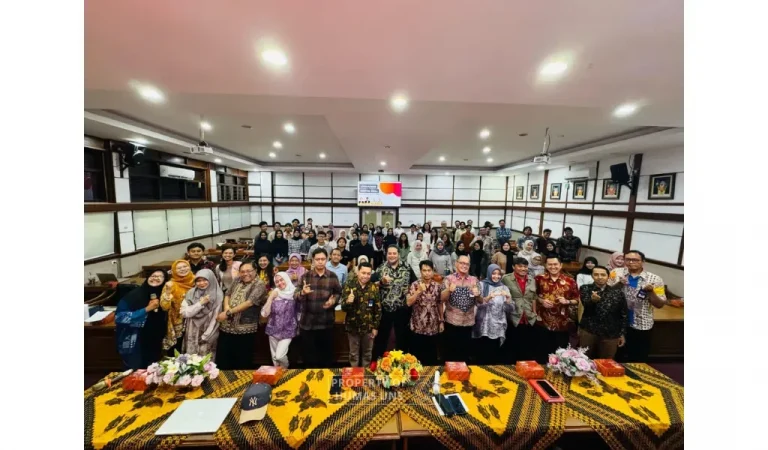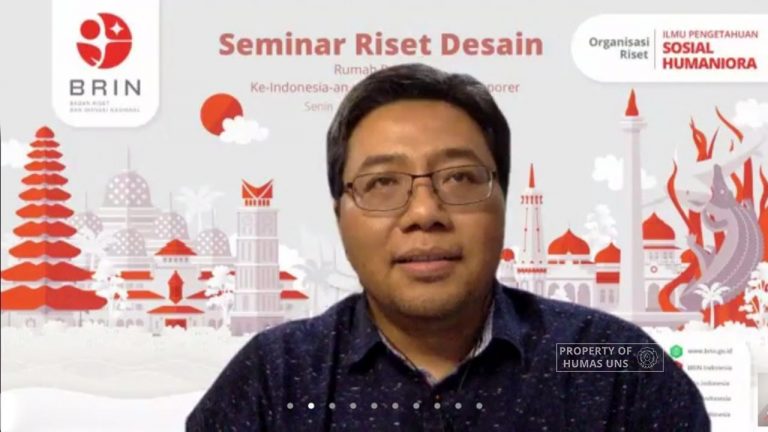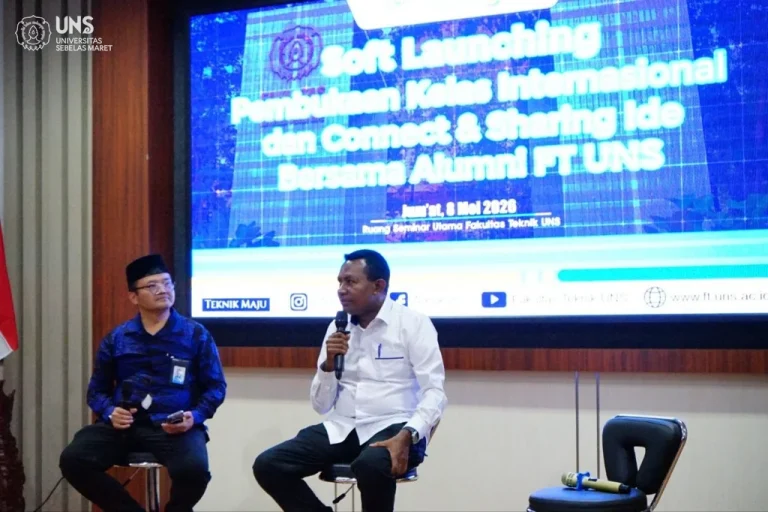
UNS — The Forum for Historical Science Students (Forum Mahasiswa Sejarah – FMS) Universitas Sebelas Maret (UNS) Surakarta held a webinar on Semarak Sejarah Kebudayaan Sebelas Maret Surakarta (Sansekerta) (enlivening the cultural history Sebelas Maret Surakarta). The event took the theme of “Revisiting Young Generation’s Role in Indonesia Unity” and was conducted through Zoom Cloud Meeting on Wednesday (28/10/2020) afternoon.
This webinar was held as the peak of a series of Sansekerta 2020 event which is also held to commemorate the 92nd Anniversary of Sumpah Pemuda (the Youth’s Pledge). In this webinar, FMS UNS invited three historians as the speakers to discuss the youth’s footprints for Indonesia’s unity. The invited speakers are Bonnie Triyana (Editor in Chief Historia), Prof. Anhar Gonggong (Professor in Historical Science Universitas Indonesia), and Eko Sulistyo (Deputy of Presidential Staff Office 2015-2019).
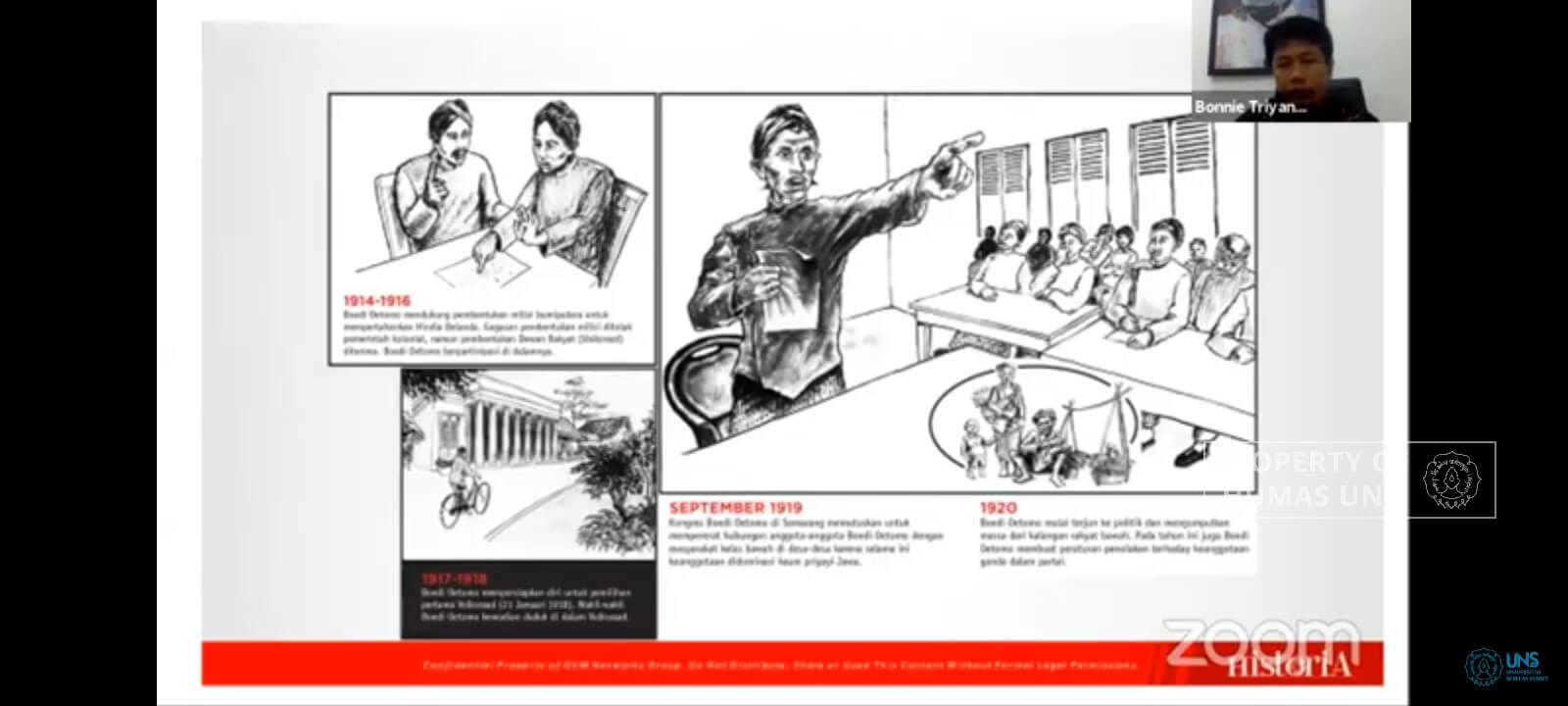
As the first speaker, Bonnie Triyana delivered his material on “The Youth’s Pledge 1928: Meanings and Future Projection”. In front of the webinar participants, she stated the process for Indonesian youth to awaken the awareness of movements based on one nation, started with regional organizations/groups. The awareness to establish an organization grew after the youth realized that they can no longer be separated by race. “Jong Java, for example, is the local identity as the result of the united Dutch East Indies, but they did not consider themselves as Dutch East Indies,” Bonnie Triyana stated. He added that the awareness of ‘I am Indonesia/Sumatera’ exist long before Indonesia born.
The awareness to be united and fight the colonialism, according to Bonnie Triyana, was responded by establishing a political organization, protest/criticism movements, disseminating the idea of independence, and strengthening awareness of national identity. Through these organizations, he stated that the meanings of Sumpah Pemuda implied the growth of awareness on Indonesia unity as a response on Dutch colonialism which divided and oppressed the colonialized nation. Through this movement, the awareness of one language (mindscape), one country (landscape), and gave birth to the feelings as one nation, namely Indonesia.
Supporting Bonnie Triyana, Prof. Anhar Gonggong conveyed that youth’s initiative to establish an organization is a result of educated and enlightened people’s thoughts. From localized and physical struggles, they moved to the struggles through education and movement. The educated and enlightened youths then organized the first and second Youth Congress. In their first congress, they could not fully agree on the pledge. But in their second congress, they are successfully agreed on the three pledges, one of which is to use Bahasa Indonesia as the uniting language.
“Indonesia is the result of intellect and the clarity of minds of 20th-century young people. A generation that was born and grew in the 20th century who have enough of colonialism and the suffering which have the creativity and was shaped by educated and enlightened people and those who are creative in their struggle. That’s why Indonesia exists,” Prof. Anhar Gonggong conveyed.
As the last speaker, Eko Sulistyo connecting Sumpah Pemuda and the youth’s role in today era. He questioned the role of Indonesian youth amid the Covid-19 pandemic. For him, during this pandemic, the youth, especially the students of Historical Science program, need to contribute to the historical studies. For example, by collecting historical evidence concerning the Covid-19 pandemic to be recorded in history. He gave the example of a museum in England which did not provide a virtual tour to get visitors but it asked its curator to collect evidence and records the events during Covid-19 pandemic to be used as concrete evidence of a great health crisis that hit human life in the 21st century.
“Concerning the challenges, my reflective attitude view maybe the passive behavior of the young generation might be caused because they already fall as the victims of the pandemic. Not in a physical sense, by because of their fear of becoming ‘generasi rebahan’ (lethargic generation) who likes to googling from their bed,” he concluded. Humas UNS
Reporter: Yefta Christopherus AS
Editor: Dwi Hastuti