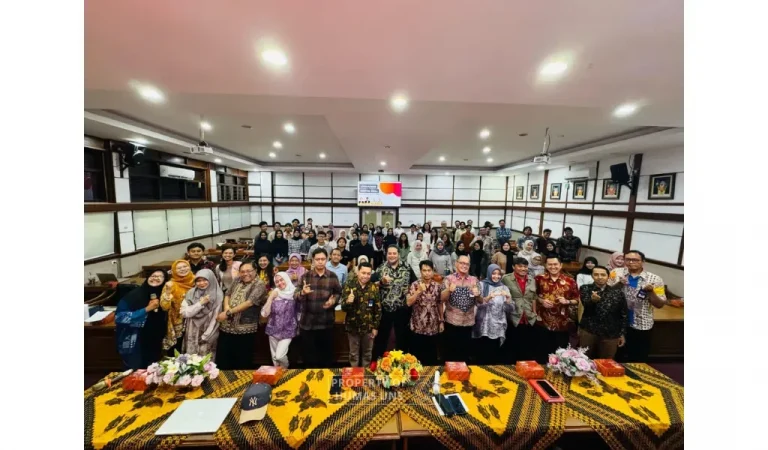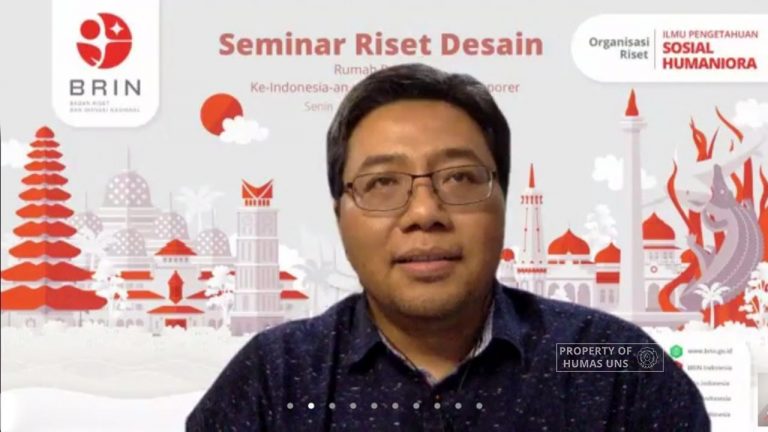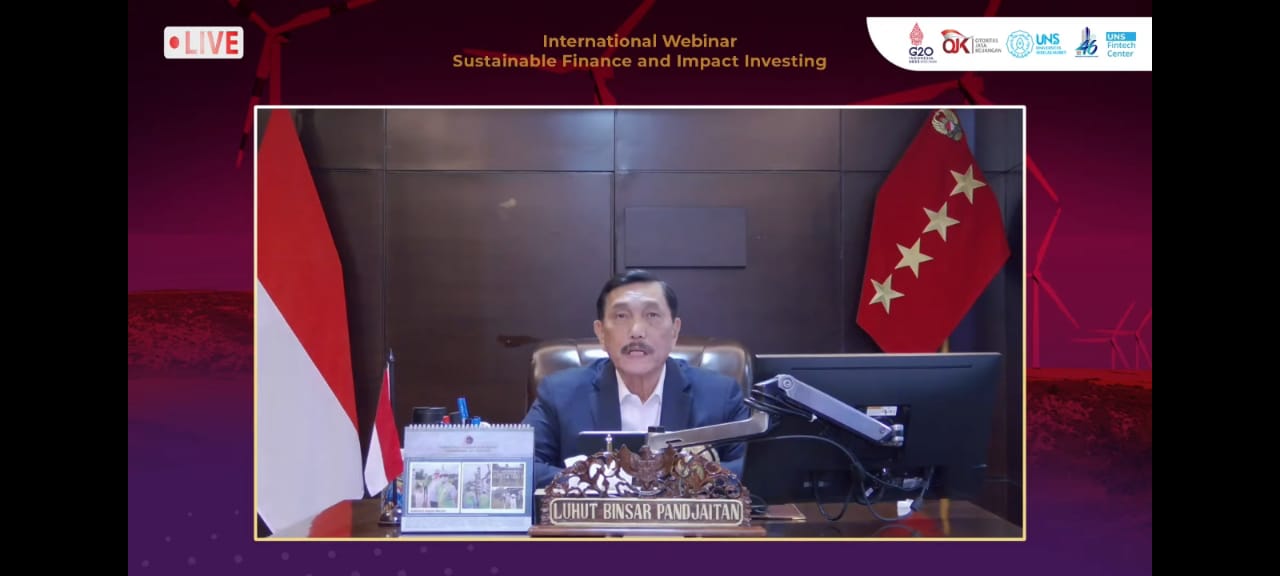
UNS — The Coordinating Minister (Minister) for Maritime Affairs and Investment (Marves) of the Republic of Indonesia, Luhut Binsar Pandjaitan, and the Chairman of the Board of Commissioners (DK) of the Financial Services Authority (OJK) of the Republic of Indonesia Prof. Wimboh Santoso opened an International Webinar entitled “Sustainable Finance and Impact Investing,” Thursday (10/3/2022) evening, through Zoom Cloud Meeting. The international webinar was held to commemorate the 46th Anniversary of Universitas Sebelas Maret (UNS) Surakarta and as a series of events to welcome the G20 Presidency held by Indonesia since the beginning of December 2021.
Luhut Binsar Pandjaitan, in his remarks, appreciated the international webinar hosted by the Center for Fintech and Banking (PUI-PT Fintech Center) UNS. According to him, the event can encourage Indonesia’s economic recovery and provide new insights on the sustainable economy after the Covid-19 pandemic hit the world from the beginning of 2020. “March this year will mark the second year that the Covid-19 pandemic hit Indonesia. In 2020, we were shocked by the Covid-19 pandemic that spread rapidly and claimed 6 million lives worldwide and 150 thousand lives in Indonesia,” he said.
That number, according to Luhut, is enormous, not to mention when Indonesia had experienced the second wave of Covid-19 due to the spread of the Delta variant from India in the middle of last year. He added that the Government immediately took a number of measures to reduce the spread of SARS-CoV-2. One of them is implementing the Community Activity Restriction (PPKM) at different levels in each region. Luhut said that the police managed to control the transmission of SARS-CoV-2 in the community and reduce the number of Covid-19 cases that had jumped dramatically. “Indonesia is also taking emergency steps by accelerating the Covid-19 vaccines shot, including accelerating and intensifying the use of the PeduliLindungi application,” he said.
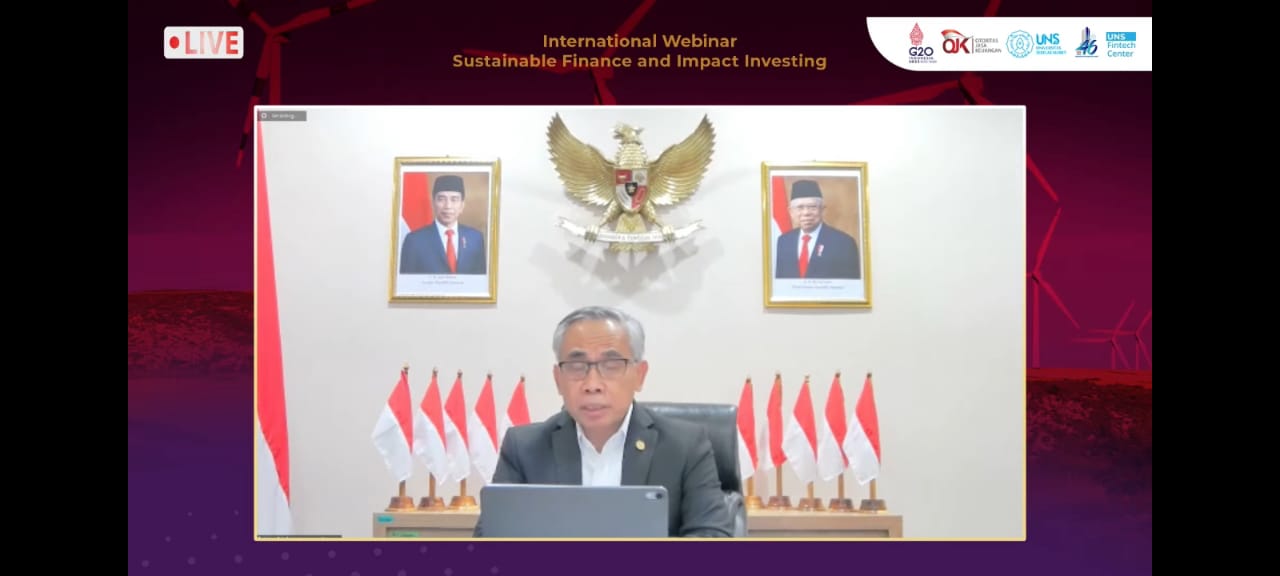
According to the former Chief of Staff of the Indonesian Presidency, those methods can slowly restore the national economy even though it had not been fully recovered. Continuing the remark from Luhut, Prof. Wimboh does not deny that the world economy has slowed down over the past few years. “The IMF expects both developed economies and emerging markets to experience an economic slowdown due to high uncertainties, such as the spread of Covid-19,” he explained.
Meanwhile, he also mentioned normalization policy factors, high inflation in developed economies, a surge in global commodity prices, and geopolitical tensions between Ukraine and Russia fueling the slowdown of the world economy. According to Prof. Wimboh, this statement is a big challenge, especially for Indonesia, which will face many forward-looking agendas and international agreements agendas. For example, the requirement to keep the Earth’s temperature from rising beyond 1.5 degrees was agreed at the COP26 event in Glasgow, Scotland, in 2021, and the agreement to reduce global carbon emissions by 45 percent by 2030.
“For the first time, the COP has agreed to reduce fossil fuels usage gradually, and developed countries are committed to increasing their fund mobilization around USD 100 billion per year in 2021-2025 and achieving the fund’s targets as soon as possible,” added Prof. Wimboh.
Aside from the online remark by Luhut Binsar Pandjaitan and Prof. Wimboh, the International Webinar entitled “Sustainable Finance and Impact Investing” also invited several international class speakers. They are Prof. Lucian Taylor (Wharton School, University of Pennsylvania, USA), Prof. Caroline Flammer (Columbia University, USA), Dr. Renata Kizys (University of Southampton, UK), Prof. M. Kabir Hassan (University of New Orleans, USA), and Dr. Putra Pamungkas (UNS). Humas UNS
Reporter: Y.C.A Sanjaya
Editor: Dwi Hastuti