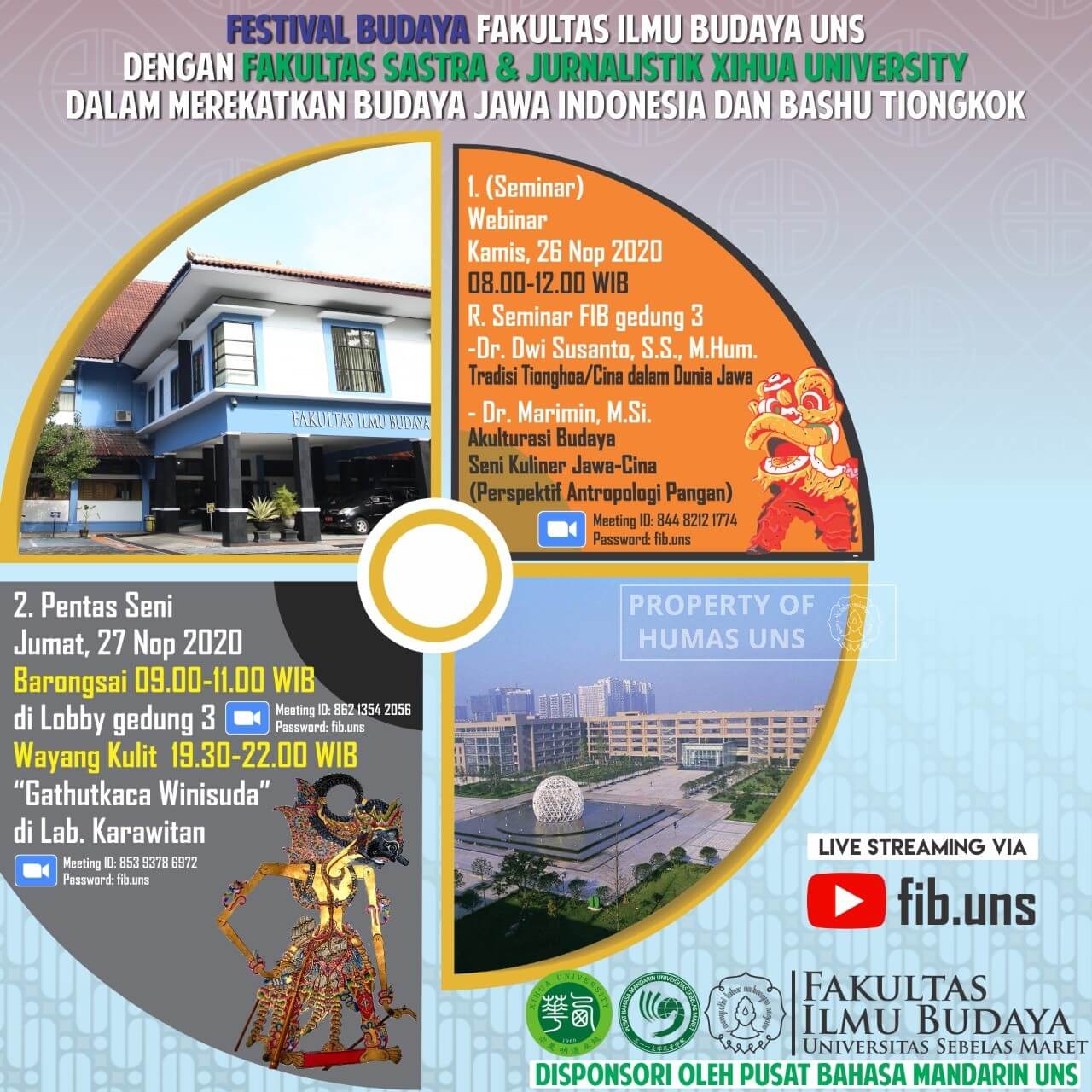
UNS — Faculty of Cultural Studies (FIB) Universitas Sebelas Maret (UNS) Surakarta and the Faculty of Literature and Journalism Xihua University held a cultural performance to bring together the Javanese culture of Indonesia and Chinese Bashu on 26-27 November 2020. This event was held under the close collaboration established between the two universities since 2019.
FIB UNS as host, divided the event into two parts. On the first day, FIB UNS held a seminar on “Chinese Tradition in Java World” delivered by Dr. Dwi Susanto and a seminar on “Javanese-Chinese Culinary Arts Acculturation (Food Anthropology Perspective)” provided by Dr. Marimin.
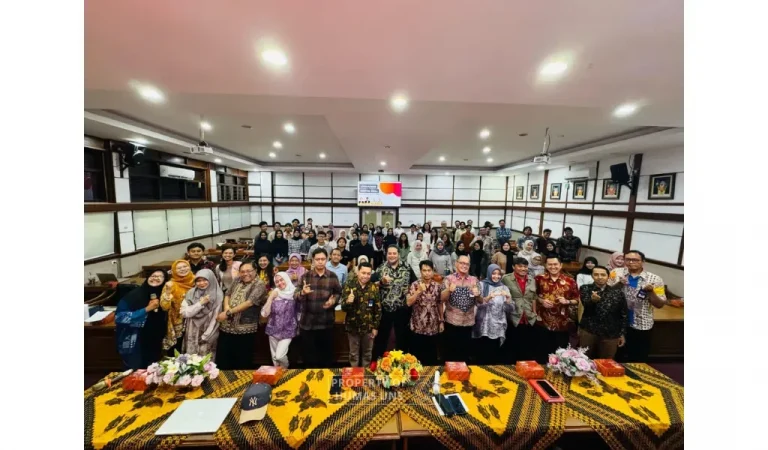
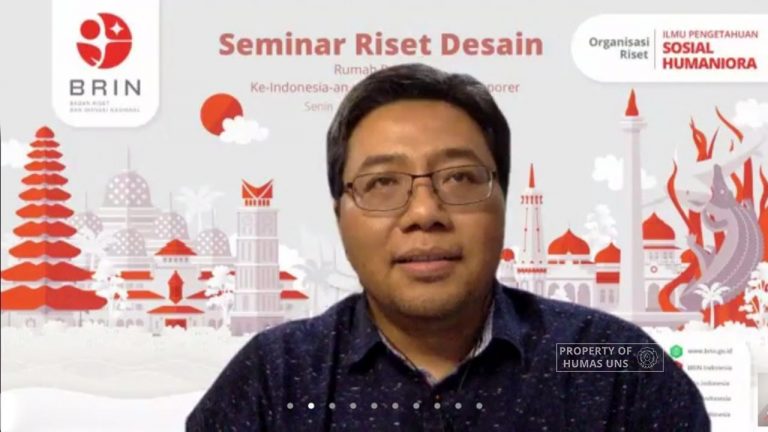
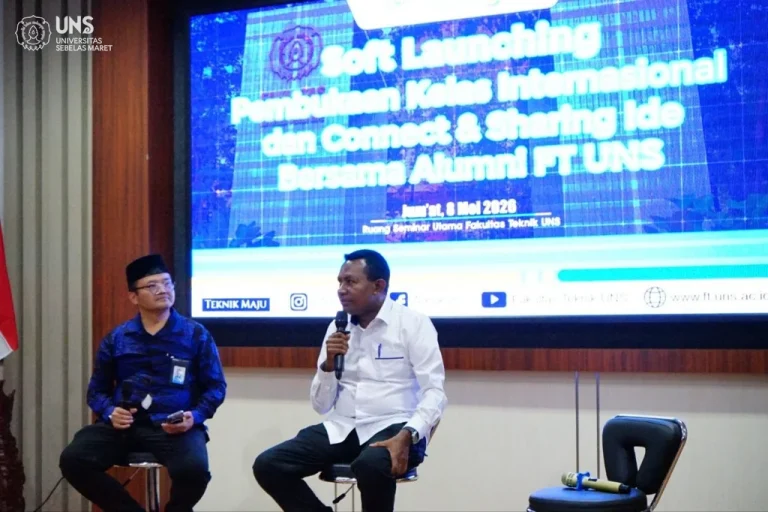
In the offline seminar held for a limited audience in Seminar Room Building 3 of FIB UNS and broadcasted through the Zoom Cloud Meeting, Dr. Dwi Susanto discussed the “The Liang Shanbo and Zhu Yingtai Narration in Javanese Tradition”. He stated that there are proofs that the interaction between Chinese and Indonesian culture, Java, in particular, has been existed centuries ago and caused Chinese tradition to melt into Javanese identity. This interaction is proved from researches such as Salmon (2009) on the word ‘pinjaman’ in Chinese and Javanese language, Kraus (2005) on the influence of painting style in Javanese manuscript, Oetomo (1991) on the reception of Chinese oral stories in the Javanese tradition, Wiryamartana (1985) on the similarity of narrative composition between Old Javanese literature and classical Chinese literature. “As well as from various other researches in culinary arts, architecture, agriculture, fashion/batik, and others,” Dr. Dwi Susanto explained, Wednesday (25/11/2020).
He stated that there are studies to trace Chinese tradition received into Javanese tradition by looking into the case of Zhu Yingtai story. Changes and transformation will follow when these cultures were accepted into the Javanese people tradition. Javanese creativity also proves that adaptation occurred when these two traditions met to adjust it to the space and expression of cultural reproduction. “The main discussion is on Javanese people’s way and strategy to respond and deal with Chinese tradition as a part of how to understand and survive in global cultural relations and the principle of cultural equality,” Dr. Dwi Susanto explained.
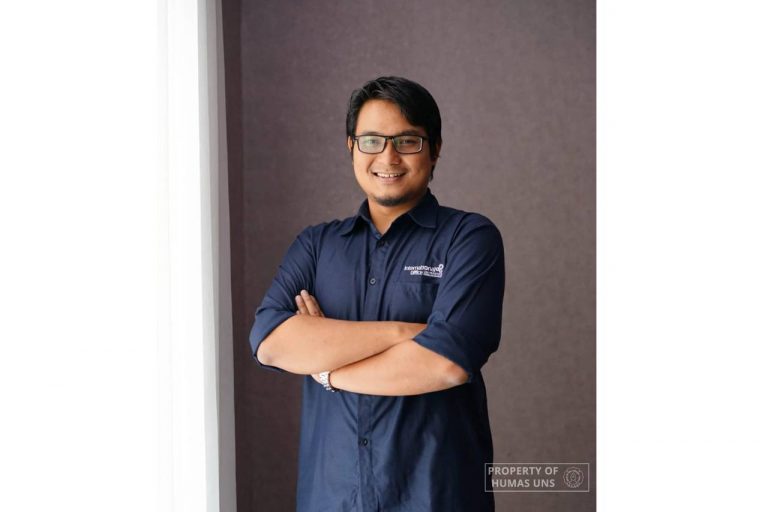
In the second seminar on “Javanese-Chinese Culinary Arts Acculturation (Food Anthropology Perspective)”, Dr. Marimin explained the meeting of Javanese-Chinese cultures that took place in the social stratification of Javanese people on Java North Coast (Pantai Utara Jawa). He stated that the community who live as fishermen establish a connection as a starting point for interacting with Chinese people. Dr. Marimin explained that positive interaction would lead to acculturation and assimilation. This communication, however, does not eliminate the probability of stereotyping and ethnocentrism in the community.
In this case, two cultures that accept and complete one another are mixed, opening an opportunity for innovation. An example of this innovation can be seen in Indonesian cuisine, nasi goreng (fried rice). This food is a part of Javanese culinary, which, according to Dr. Marimin, philosophically affects the pattern of life under the perspective of Javanese and Chinese culture. Nasi Goreng shows that the concept of a frugal lifestyle is shared between the two cultures. “This is seen from how leftover rice can be used by processing it into a delicious meal and meet the nutritious need through the frying process,” Dr. Marimin explained.
On the second day, FIB UNS held a virtual art performance through the Zoom Cloud Meeting platform and FIB UNS YouTube channel. Barongsai and Wayang Kulit were performed as the representation of the two cultures. Macan Putih Barongsai group was selected to provide attractive and exciting performance. In the Wayang Kulit puppet show, FIB UNS presented Gathutkaca Winisuda play with Ki Lucky Gusta Yoga and Ki Sofiyan Aditiya Firman as the dalang (puppeteer). Even though this event did not invite the public, the series of events are expected to provide scientific insight and entertainment. Humas UNS
Reporter: Yefta Christopherus AS
Editor: Dwi Hastuti