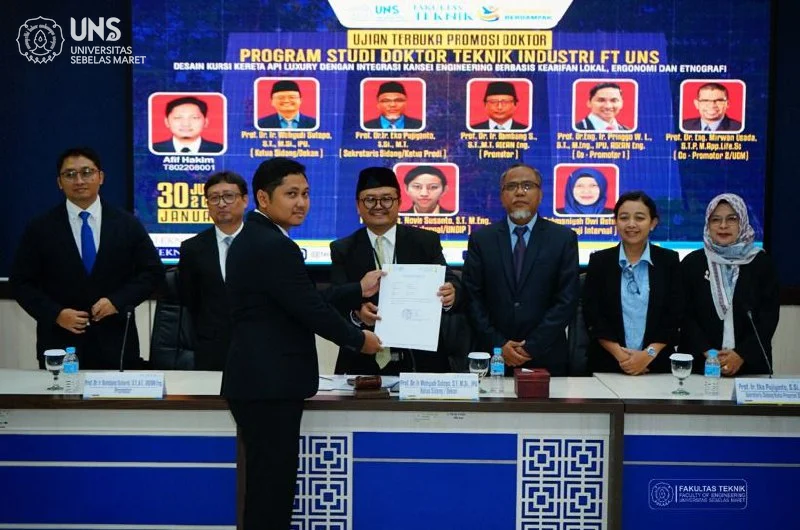
UNS — The Doctoral Program in Industrial Engineering, Faculty of Engineering (FT), Universitas Sebelas Maret (UNS) Surakarta has once again demonstrated its commitment to innovative research development through a dissertation focusing on the design of next-generation luxury-class train seats. The study emphasizes a human-centered design approach while integrating Indonesian local wisdom values into sustainable transportation design.
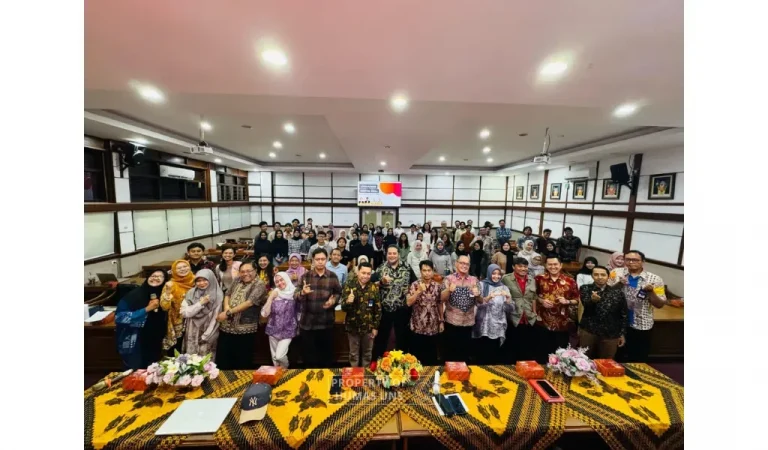
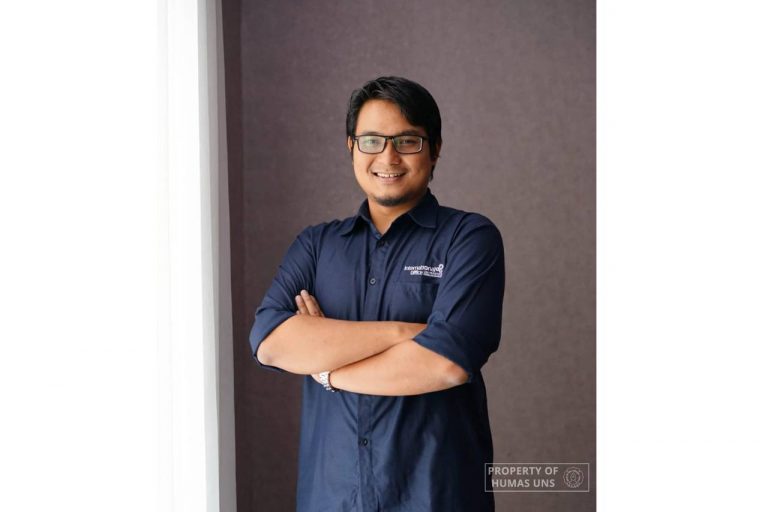
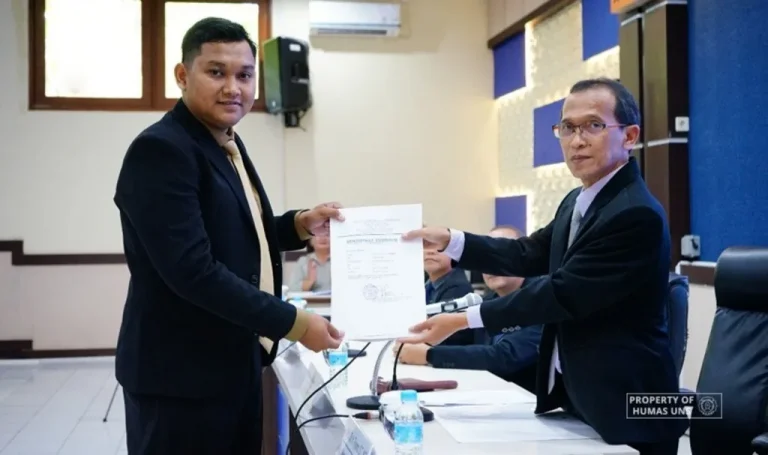
The research was conducted by Afif Hakim, a doctoral student in Industrial Engineering at UNS and a lecturer in the Industrial Engineering Study Program at Universitas Buana Perjuangan Karawang. His Open Doctoral Promotion Examination was held on January 30, 2026, at the Multimedia Room, Building IV, Faculty of Engineering UNS.
During the examination, Afif Hakim was declared to have passed with a Cumlaude distinction, achieving a Grade Point Average (GPA) of 3.93 and completing his doctoral study within 3.6 years.
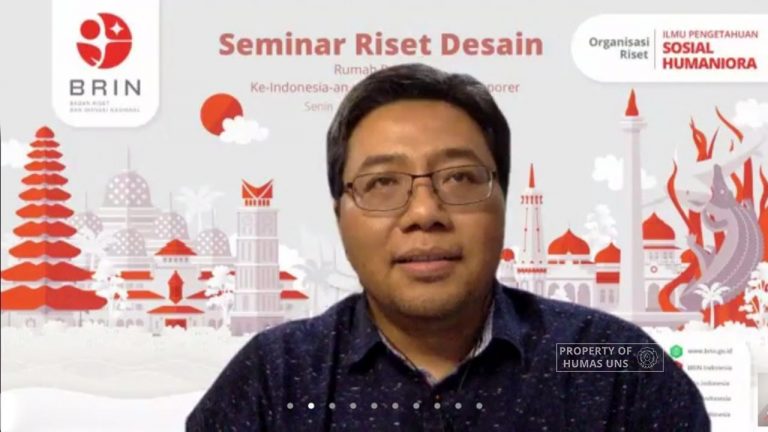
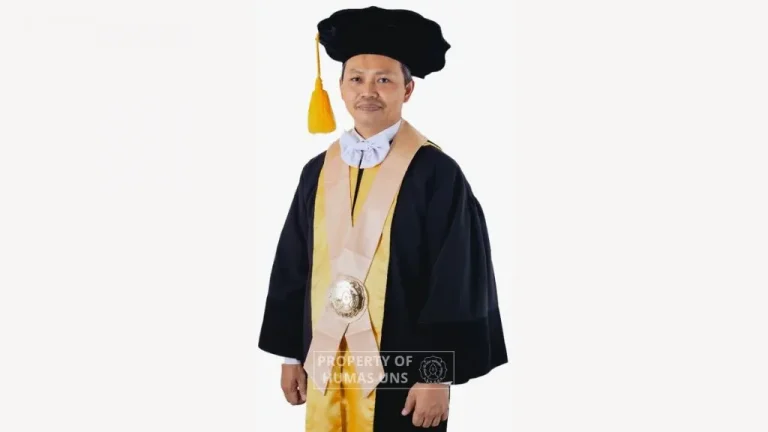
The dissertation was supervised by Prof. Dr. Ir. Bambang Suhardi as Promotor, along with Prof. Dr. Ir. Pringgo Widyo Laksono and Prof. Dr. Mirwan Ushada as Co-Promotors I and II.
The research was based on the understanding that comfort in luxury-class train travel is no longer defined solely by material luxury, but rather by a comprehensive experience that includes physical comfort, safety, privacy, and cultural identity. Luxury passengers are considered to have increasingly complex needs, as they do not simply sit during the journey—they work, rest, enjoy services, and require private and comfortable spaces.
To address these challenges, Afif developed a human-centered design approach by integrating Kansei Engineering, ergonomics, ethnography, and local wisdom into a unified design framework. Kansei Engineering was used to translate passengers’ perceptions and emotions into measurable design elements, ethnographic methods explored real user experiences, while ergonomics ensured comfort and safety through anthropometric analysis. Local wisdom was incorporated as a cultural value that strengthens passengers’ sense of identity and belonging.
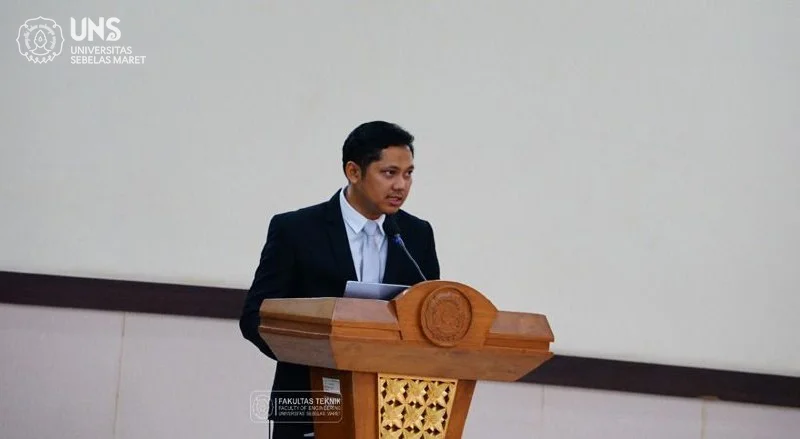
“Around 90 percent of passenger activities on trains take place on the seat, making it the key element of the travel experience. Through a human-centered design approach, the seat is designed not merely as a product, but as part of a safe, comfortable, and distinctly Indonesian travel experience,” said Afif Hakim, as quoted from ft.uns.ac.id.
The research resulted in 34 applicable design elements for luxury-class train seats, covering seat cushions, backrests, armrests and footrests, privacy features, and Audio Video on Demand (AVOD) entertainment systems.
The design was visualized using Virtual Reality (VR) technology to create an immersive cabin experience. Evaluation results showed highly positive responses, with the majority of assessments scoring above 4 on a 5-point scale.
Prof. Bambang Suhardi stated that the dissertation provides both relevant and applicable academic contributions.
“This journey has not been a short one. It is a process that creates a real product design as a conceptual and relevant contribution. This research is an important first step in developing sustainable transportation design,” he explained.
Through this research, the Faculty of Engineering UNS continues to encourage the development of transportation design research that is human-oriented and rooted in local values. This contribution aligns with the Sustainable Development Goals (SDGs), particularly SDG 9 (Industry, Innovation, and Infrastructure), SDG 11 (Sustainable Cities and Communities), and SDG 12 (Responsible Consumption and Production), in the effort to create public transportation systems that are comfortable, innovative, and sustainable.
HUMAS UNS