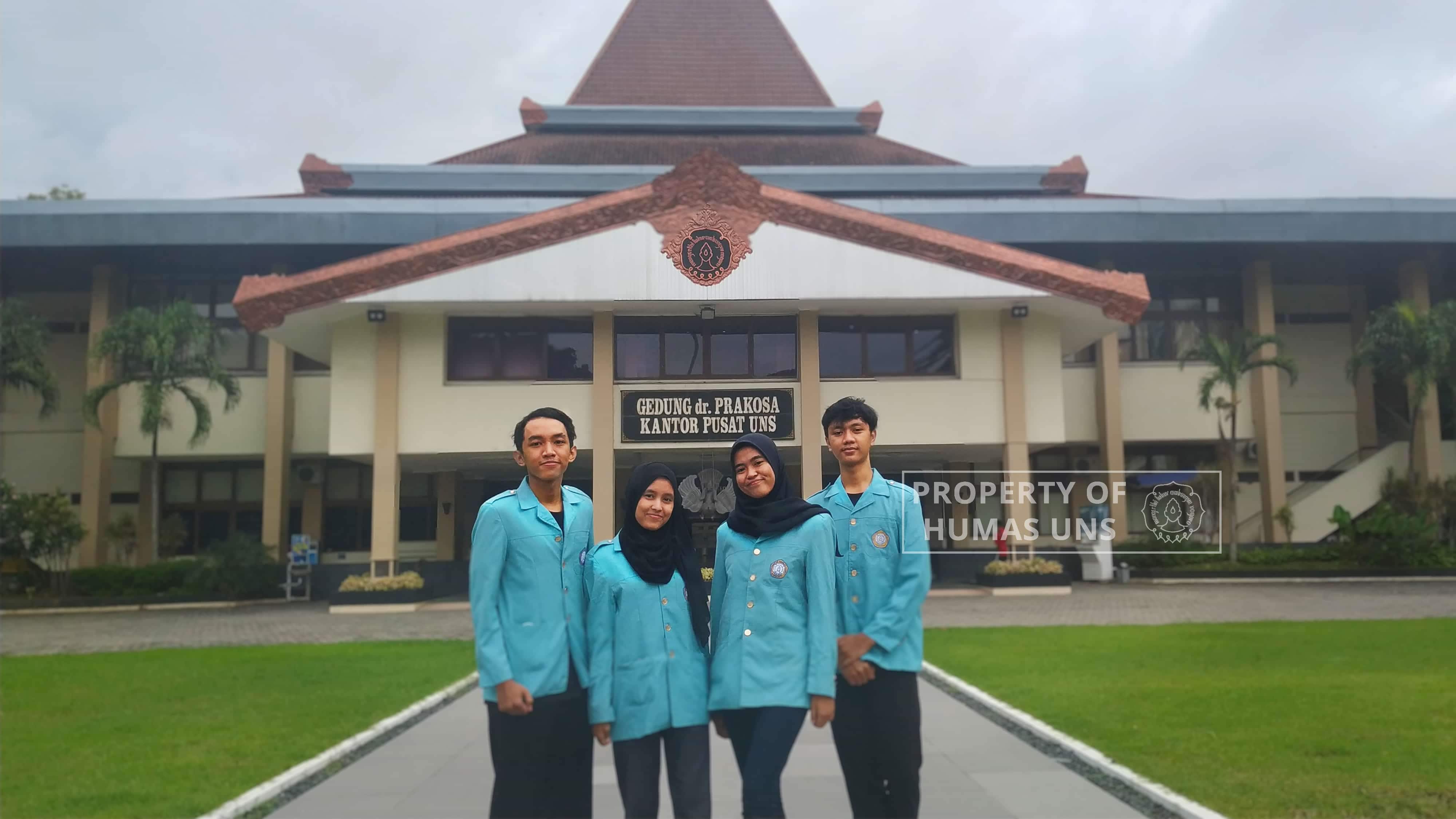
UNS — The students of Universitas Sebelas Maret (UNS) Surakarta succeeded in creating innovation for glucose detector based on Nanocrystalline Cellulose of Empty Oil Palm Bunches Waste (TKKS) by combining graphene-carbon nanotube as a biosensor. The detector is called as Elaeis Glucotest. This innovation was developed by four students from the Chemical Engineering Study Program, Faculty of Engineering (FT) UNS. The students are Royhan Ikbar, Ramanda Ayu Damayanthy, Septy Lestari, and Muhammad Luqman Qadarrusman.
Supervised by Dr. Sunu Herwi Pranolo, the students succeeded in combining the Graphene-Carbon nanotube (NKS TKKS/ G-CNT) as a glucose oxidase (Gox) binder in glucose biosensor. “Biosensor is defined as a sensory device that combines a biological compound with a transducer. This technology is better because the general commercial biosensor uses metal, which does not decompose naturally,” explains Ramanda Ayu Damayanthy in a written release, Monday (25/1/2021).
Further, she explains that Elaeis Glucotest aims to create a biodegradable biosensor to solve medical waste management, which comes from a blood sugar test tool. Moreover, this innovation can also reduce TKKS waste, which has also become a problem in Indonesia as palm oil supplier countries.
Ramada reveals that currently, cellulose nanocrystals have not much developed, especially as a biosensor. In fact, cellulose nanocrystals have the potential to be developed as a biosensor. This motivates the four students to use the material as a biosensor.
“We also consider that Indonesia is ranked 6th as the country with the most with the most diabetes mellitus patients in the world in 2017 based on data from the Indonesia Ministry of Health (Kemenkes),” she said.
While developing the Elaeis Glucotest, Ramada and her friends give a little modification with graphene and Carbon nanotube as supporting material, which has high conductivity and biodegradation. The Graphene-Carbon nanotube (G-CNT) is chosen because it has excellent electrical conductivity, high biodegradation, and this material has never been combined with cellulose nanocrystals (NKS) as a biosensor.
“It is expected that the combination of cellulose nanocrystals as glucose biosensor and NKS/ G-CNT composite can have a good electrical conductivity as well as a good place of immobilization for the enzyme glucose oxidase, thus becoming a goof glucose biosensor,” she added.
This innovation has reached the cellulose nanocrystals characterization. A Fourier-transform Infrared Spectroscopy (FTIR) test shows a reduction in lignin and hemicellulose. Additionally, the amorphous area is reduced as a result of the hydrolysis process along with the crystals’ area size increase.
“Through XRD (X-Ray Diffraction) we find a diffraction pattern from the pure cellulose, which shows crystals and amorphous area. We can also predict the crystallinity index from the nanocrystals cellulose produced, approximately at 87.1%,” Ramanda detailed.
The objectives and [manfaat] of this research is to understand the capability of nanocrystals cellulose from the TKKS/Graphene-Carbon nanotube (NKS TKKS/G-CNT) as glucose biosensor, thus showing the effectiveness of the material in measuring glucose level in urine. The research, however, is conducted independently by the students and supervising lecturer from Chemical Engineering Study Program FT UNS. During the 8 months of preparation of the Elaeis Glucotest, the team had submitted a proposal for Palm Oil Research Competition, organized by Palm Oil Plantation Fund Management Agency (BPDPKS), Ministry of Finance (Kemenkeu) on 5th May and 24th of June 2020.
“We hope this innovation can reduce and at the same time increasing the economic value of TKKS through its utilization as components of glucose biosensor. We also wish that the result of this research can be presented at a national or international conference,” she concluded. Humas UNS
Reporter: Yefta Christopherus AS
Editor: Dwi Hastuti