UNS — The depletion of fossil energy sources encourages the development of environmentally friendly alternative energy. One of which is through the development of a battery that is widely used in human activities such as in electronic devices, electric vehicle, and alternative energy storage such as energy from solar panels.
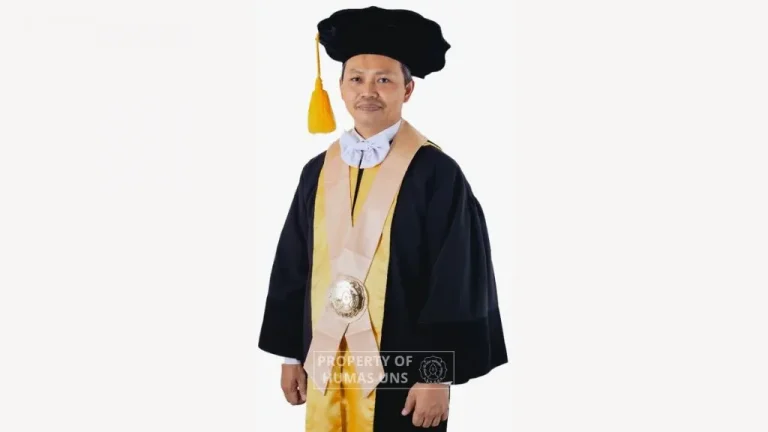
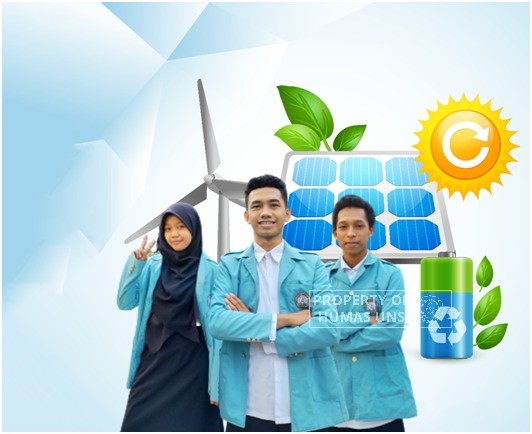
This kind of innovation captured the interest of three students from the Chemical Engineering Program Universitas Sebelas Maret (UNS). They studied the synthesis of hard carbon using coffee grounds as anodes in a sodium-ion battery. These students participated under a Student Creativity Program for Exact Research (PKM PE) team supervised by Prof. Eng. Agus Purwanto, S.T., M.T. This team consists of Hafid Khusyaeri, Dewi Pratiwi, and Haris Ade Kurniawan.
Hafid, as team leader, stated that through this study, he and his team want to create a sodium ion battery (BSI) as an alternative to a lithium-ion battery (BLI). Mainly because, as a battery with the best performance, BLI has high production costs, and lithium has limited natural sources. Sodium or natrium are selected as alternative material because of its availability, and it is very easy to obtain in Indonesia. “It just that BSI has lower performance compared to BLI. Thus, further development is needed to perfect sodium-ion battery, including selecting the appropriate material for electrodes,” Hafid explained Thursday (26/11/2020).
Hafid and the team found an innovative solution for the issue by processing the coffee grounds waste into BSI electrodes. This decision based on the data that Indonesia coffee production in 2018 reached 690,000 tons, and coffee consumption up to 41% of the total output or 282,000 tons. On the other hand, the coffee industry or coffee shop developed and grew rapidly. This also means that the number of coffee wastes that might pollute the environment is increasing. “The idea for the research started when we conducted an observation on the utilized coffee grounds wastes from a coffee shop while the remaining wastes are dumped directly into the environment,” Hafid stated.
Dewi also added that hard carbon, in this case, is made through coffee grounds’ carbonation process. Following the carbonation process is various optimization steps to increase the performance of BSI hard carbon. In Hafid and team research, the optimization of hard carbon performance was conducted through the doping method. This method is the easiest and can improve the electrochemical performance of hard carbon anode.
Based on the literature review result, hard carbon synthetic from coffee grounds can be modified into one carbonization step to reduce energy use and production cost. Natrium chloride (NaCl) doping is then performed to increase its electrochemical performance. The addition of NaCl is an effort to improve the electrochemical conductivity and to manage hard carbon morphology.
This study passed the examination rounds to participate in the 33rd Pimnas and is expected to encourage the development of future large-scale energy storage in the form of BSI. The group also emphasized the importance of exploring the nation’s enormous potential to promote renewable energy development in Indonesia. “The utilization of coffee grounds waste biomass has a potential to increase economic value, reduce the negative impact of coffee grounds, and apply zero waste concept,” Haris concluding. Humas UNS
Reporter: Kaffa Hidayati
Editor: Dwi Hastuti