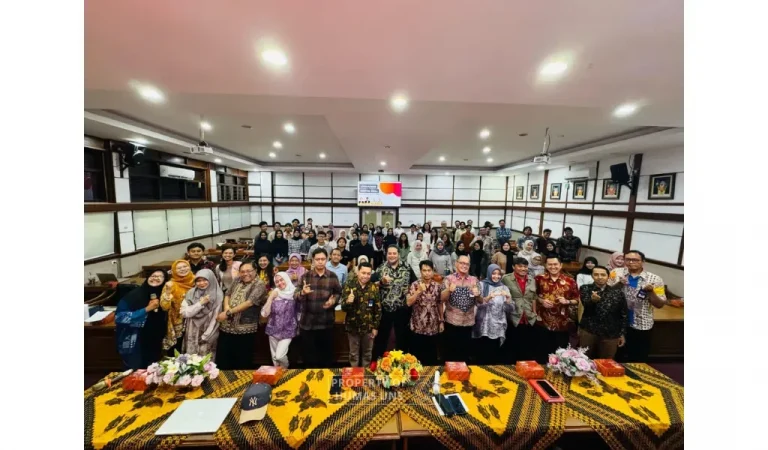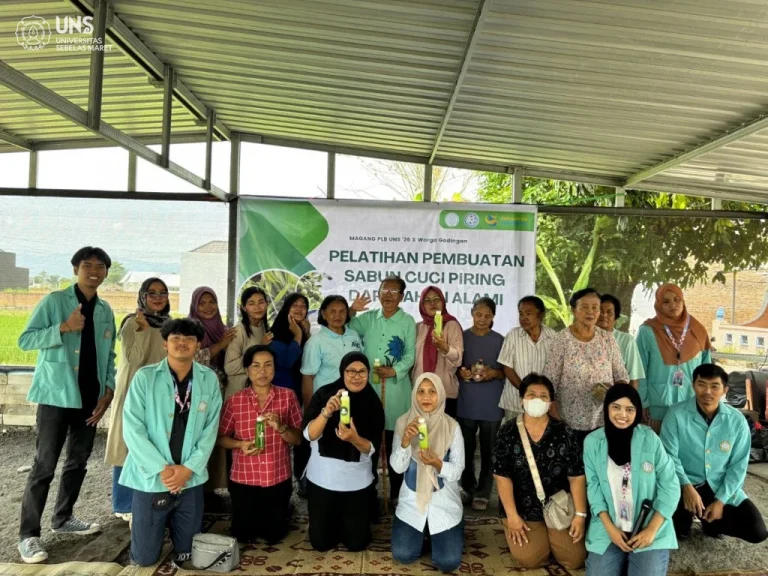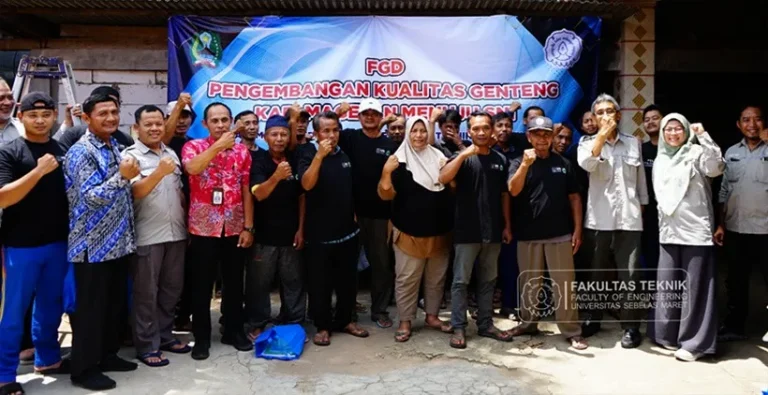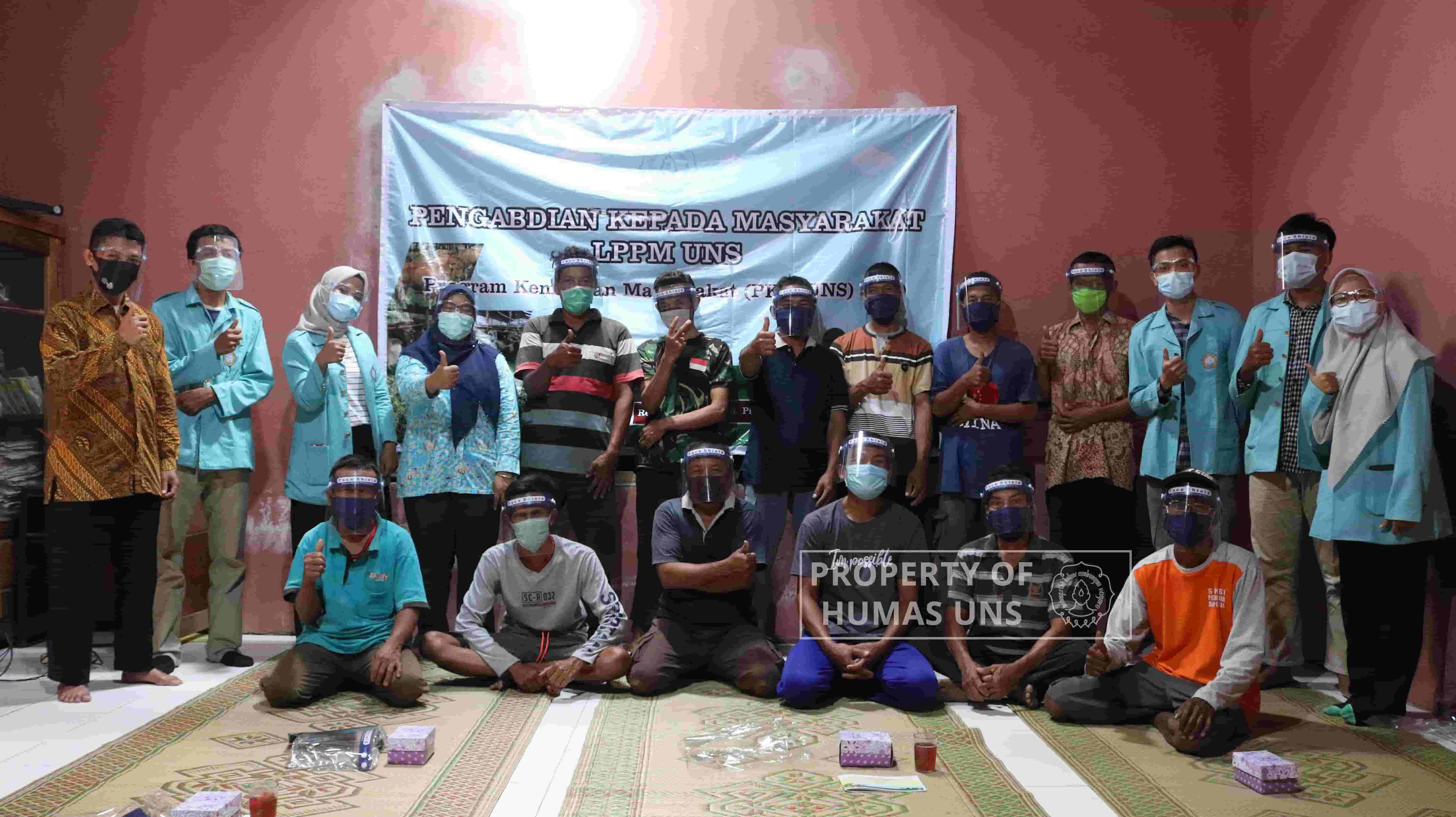
UNS — Community Service Team of Universitas Sebelas Maret (UNS) Surakarta conducted training and mentoring for the production of Silase (preserved forage) from conventional and local forage with Rukun Binantu Farmer Group, Rejosari hamlet, Srimartani Village, Piyungan Sub-District, Bantul District, Special Region of Yogyakarta (DIY). This program was held as an effort to solve the problem of ruminant fodder availability which is usually faced by farmers and stock farmers during the dry season.
Ruminant fodder that consists of forage, concentrate, vitamin and mineral as a supplement which is considered to be adequate in term of quantity and nutritional values for livestock. However, the availability of fodder during the dry season usually becomes a problem for farmers. One of the compositions for the fodder is grass or Hijauan Makanan Ternak (HMT) (forage). To fulfil the need of HMT farmers bought from other regions. But the price of ruminant fodder tends to fall during the dry season.
This problem encourages the team led by Dr. Ari Diana Susanti from Chemical Engineering Program with Dr. Muhammad Cahyadi from Animal Husbandry Program, Ir. Paryanto from Chemical Engineering Program, and Dr. Fadilah from Chemical Engineering Program as members to conduct the training through the Community Partnership Program (Program Kemitraan Masyarakat – PKM) UNS under the funding scheme from State Non-Tax Revenue (Penerimaan Negara Bukan Pajak – PNBP) 2020. The training and practice were held on Sunday (27/9/2020) in the partner’s location by implementing health protocol. During the training, the team received assistance from the students of Diploma Program in Chemical Engineering, Undergraduate Program in Chemical Engineering, and Master Program in Chemical Engineering.
Dr. Ari Diana, as the head of the team, explained that this activity does not stop in training but will be followed by evaluation and monitoring of product after seven days for the fermentation technique and three weeks for silage technique. The team will also conduct dissemination on concentrate fodder from local raw materials of agricultural wastes. The program is expected to continue and provide benefits for the community.
“The silage method has many benefits for examples, fodder can be stored up to one year and can minimize the nutritional loss. While the fermentation technique is used for fodder with low nutritional values,” Dr. Diana explained in a release received by uns.ac.id, Tuesday (20/10/2020).
The benefits that will be received by the community is the improved fodder availability for farmers and stock farmers in sub-critical regions, to improve the nutritional values of ruminant fodder, and lastly to reduce the cost of purchasing forage during the dry season. Humas UNS
Reporter: Ratri Hapsari
Editor: Dwi Hastuti