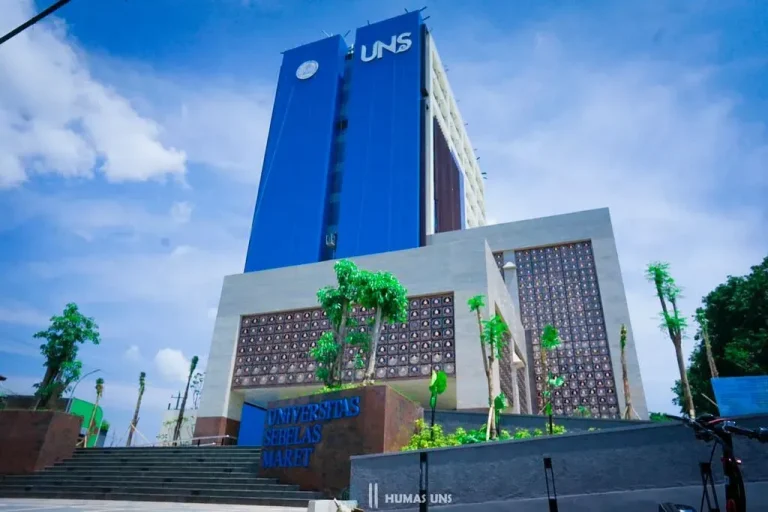
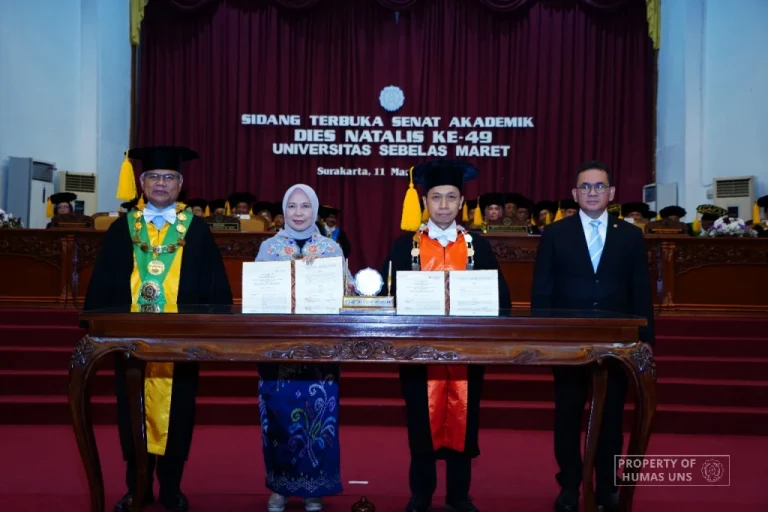
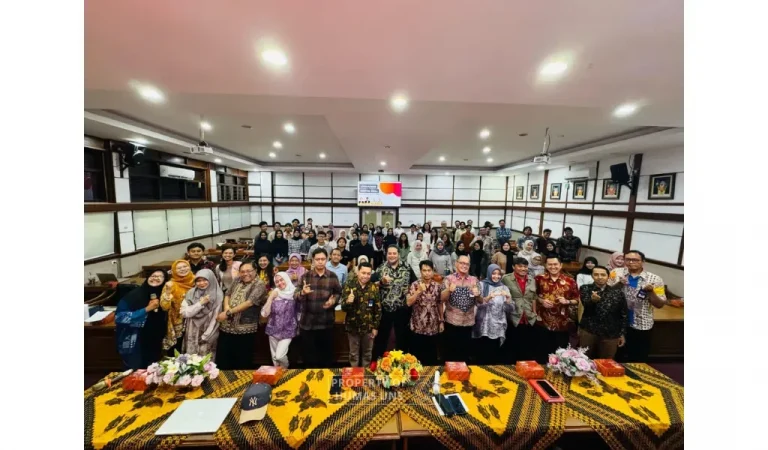
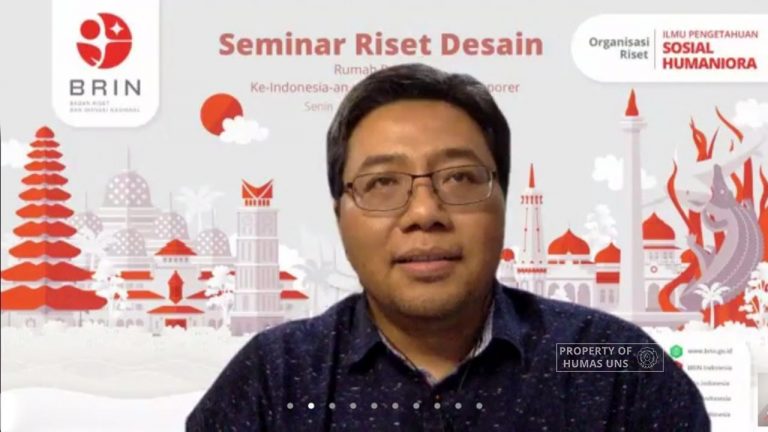
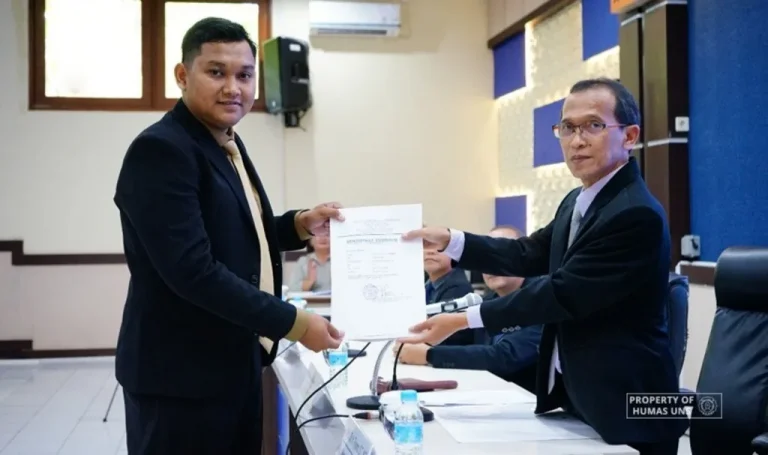
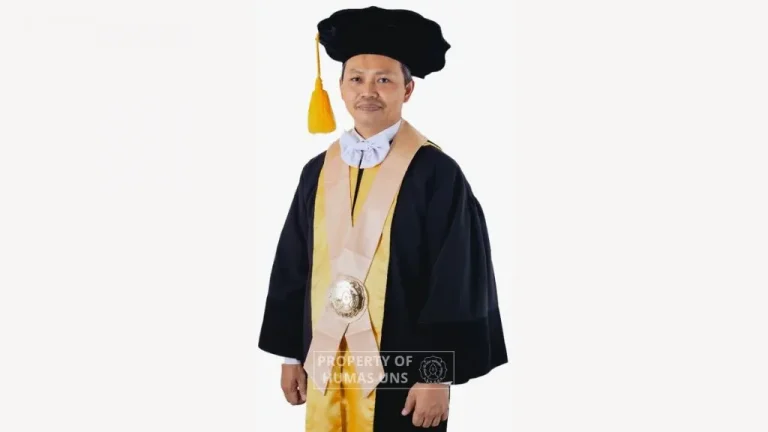
UNS – Universitas Sebelas Maret (UNS) Surakarta has inaugurated Prof. Burhanudin Harahap, S.H., M.H., M.Si., Ph.D. as a Professor of Islamic Law. His appointment makes him the 14th professor at the Faculty of Law (FH) and the 341st professor at UNS.
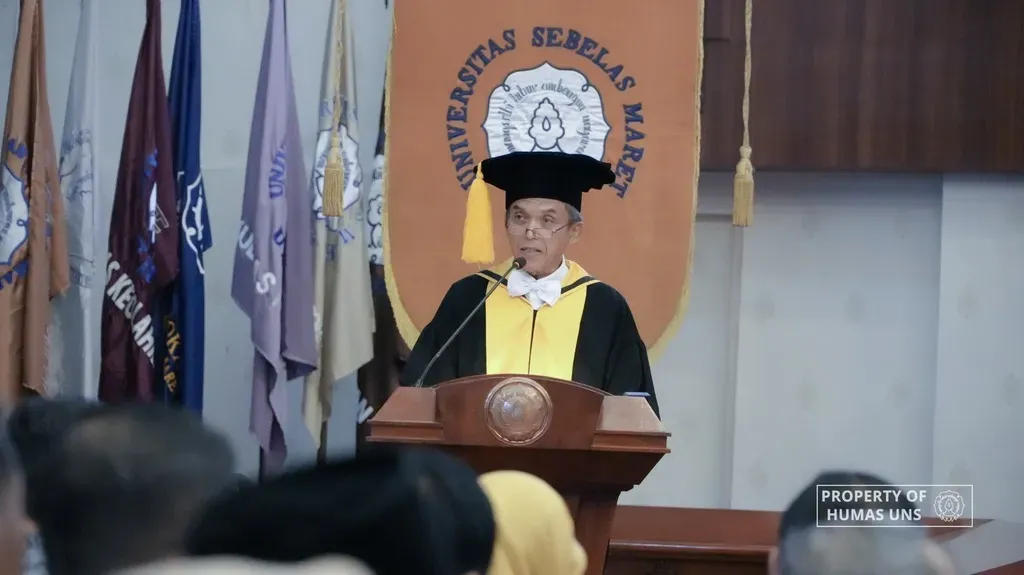
The inauguration ceremony took place at G.P.H. Haryo Mataram Auditorium. The inaugural speech titled “Enhancing the Role of Islamic Law as Living Law in the Development of a People-Based Economy.” He emphasized that Islamic law plays a crucial role in fostering an economy based on public welfare. This is especially important in contrast to the dominance of liberal and capitalist economic systems.
Academic and Professional Journey
Originally from Boyolali, Prof. Burhanudin earned his undergraduate degree in Law from FH UNS. He later pursued a Master’s degree in Islamic Law at Universitas Indonesia (UI). Additionally, he earned another Master’s degree in Islamic Finance at Universitas Islam Negeri (UIN) Sunan Kalijaga. He obtained his Ph.D. in Law from Universiti Utara Malaysia.
In addition to his academic achievements, Prof. Burhanudin has held several key managerial positions, including:
- Head of the Master’s Program in Notarial Law (2013–2019)
- Head of the UNS Central Library (2019–2024)
- Deputy Chairman II of the Indonesian Association of Islamic Law Lecturers (ADHII) (2015–2020)
- Head of Research at the Indonesian Association of Islamic Economics Lecturers (APPHEISI) (2014–2019)
His contributions have significantly shaped the development of Islamic legal studies and Islamic finance in Indonesia.
Islamic Law as a Living Law in a People-Based Economy
Prof. Burhanudin explained that Islamic law is a “living law”, meaning it is deeply embedded in societal practices. Eugen Ehrlich introduced this concept. Eugen Ehrlich suggests that Islamic law operates independently of state regulations and has guided societies long before modern states emerged.
Even in non-Muslim-majority countries, Islamic law holds legal recognition. Countries such as the United Kingdom, France, the United States, Singapore, Thailand, and Philippines incorporate it into their legal systems.
“In a people-based economy, Islamic law offers solutions to the injustices of liberal and capitalist economic systems. These systems have significantly widened social inequalities. Islamic law plays a key role in both public (social) economics and business,” Prof. Burhanudin stated.
The Role of Islamic Law in Public Economics
Islamic law contributes significantly to public economics through waqf (endowment), zakat (almsgiving), infak (charitable donations), and sedekah (voluntary giving). These mechanisms effectively redistribute wealth and help reduce economic disparities.
Several prominent organizations, including Muhammadiyah and Nahdlatul Ulama, have used waqf land to establish:
- Schools
- Hospitals
- Shopping centers
- Office buildings
The revenue generated from these assets supports underprivileged communities. Additionally, cash waqf and ZIS funds (zakat, infak, and sedekah) provide free education and scholarships for those in need.
The Role of Islamic Law in Business and Finance
Islamic law has led to the establishment of Sharia-compliant financial institutions, including:
- Baitul Maal wa Tamwil (BMT)
- Islamic banks
- Islamic bonds (sukuk)
- Islamic stock markets
- Islamic mutual funds
- Islamic insurance
- Islamic pawnshops
These institutions serve as alternative financial solutions for communities lacking access to conventional banking systems.
As of 2019, Indonesia had approximately 4.500 BMTs, catering primarily to lower- and middle-income communities.
Islamic Law as the Foundation for a Sustainable Economy
Islamic law is highly adaptable, allowing it to evolve alongside societal changes. The flexibility of Islamic business law fosters economic innovation while maintaining principles of justice and social welfare.
Prof. Burhanudin emphasized the need to integrate Islamic legal principles into business practices. He encouraged wider applications of Islamic law in economic transactions, ensuring its relevance in a people-based economy.
With his appointment as Professor of Islamic Law, scholars and policymakers expect Prof. Burhanudin to continue contributing to academia and policy-making. His expertise is essential for implementing socially just economic policies in Indonesia.
Humas UNS
Reporter:R. P. Adji
Editor: Dwi Hastuti