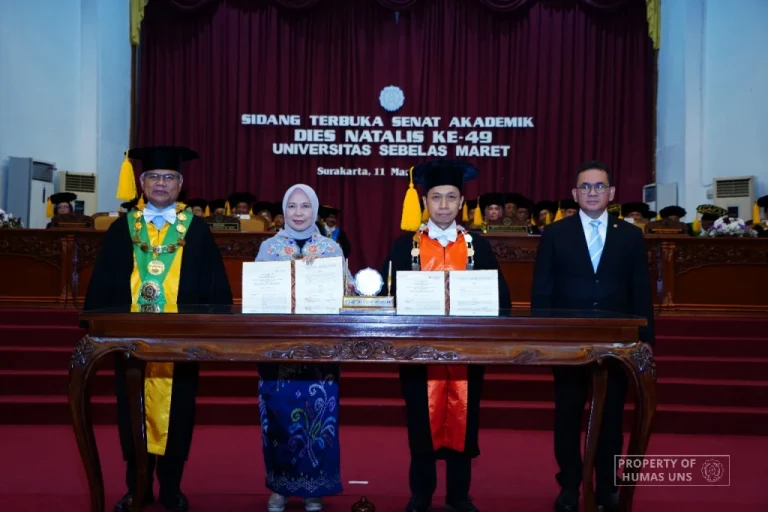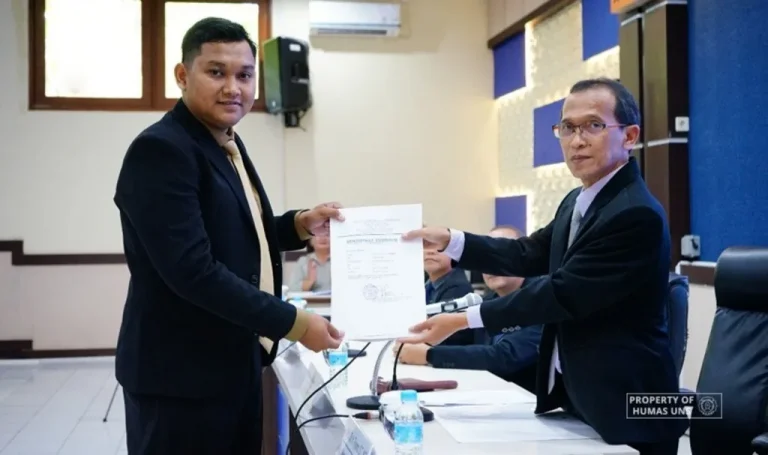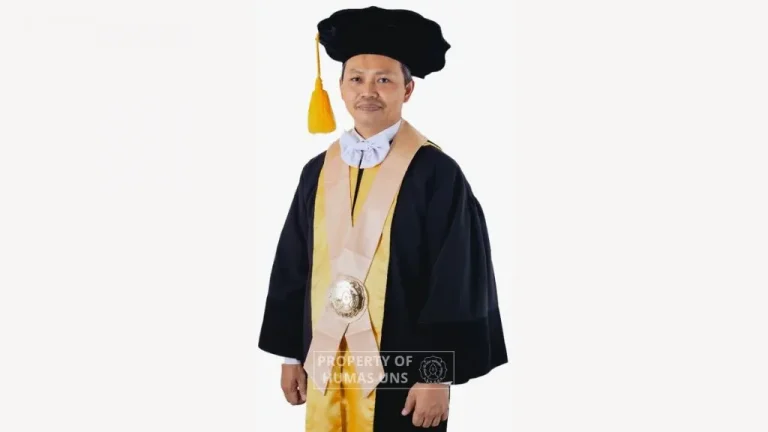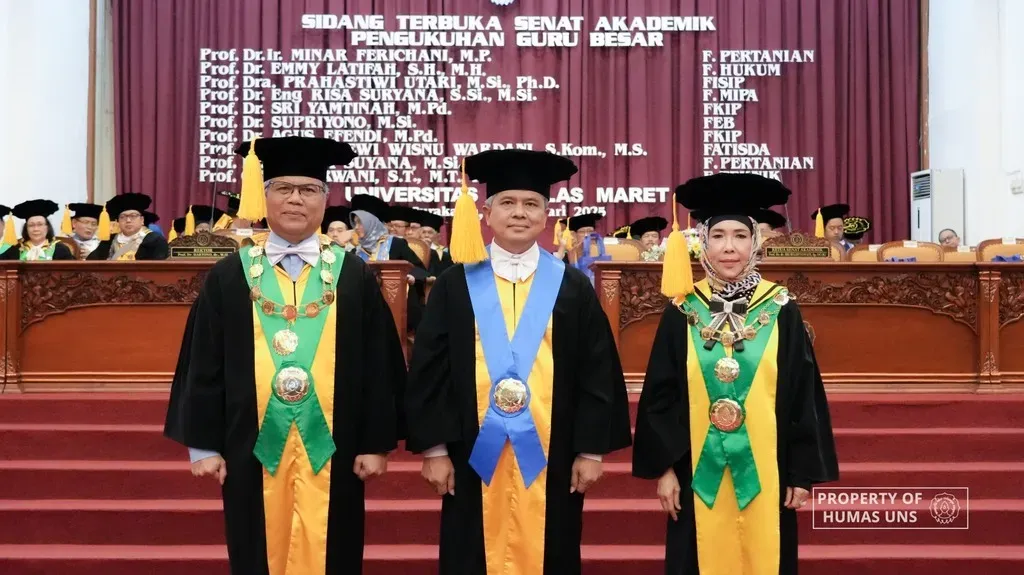
UNS – The Faculty of Mathematics and Natural Sciences (FMIPA) at Universitas Sebelas Maret (UNS) Surakarta continues to attract distinguished academics. These experts bring international expertise to the institution. One of them is Prof. Dr. Eng. Risa Suryana, S.Si., M.Si. The university recently appointed him as a professor in Electronic Material Physics. He is the 36th professor at FMIPA and the 345th at UNS.
Prof. Risa was born in Bandung. He pursued his higher education at Institut Teknologi Bandung (ITB). He earned his Bachelor’s degree in Physics in 1997, followed by a Master’s degree in 2000. He then continued his doctoral studies in Quantum Engineering at Nagoya University, Japan, successfully obtaining his Ph.D. in 2007.
Extensive International Collaboration and Teaching Experience
Throughout his academic career, Prof. Risa has gained valuable international teaching experience. He has lectured at Cukyou Women’s University in Japan. He has also collaborated on research projects with renowned institutions, including Université du Littoral Côte d’Opale (ULCO) in France, Tokyo University, and Nagoya University in Japan. In Indonesia, he has worked with the National Research and Innovation Agency (BRIN).
Additionally, Prof. Risa has served as a visiting professor and researcher at ULCO in France. He has also contributed to Applied Physics at Nagoya University in Japan and The Polytechnic Institute of Bragança in Portugal. Since 2024, he has held the position of Head of the Sub-Laboratory Management Section. He serves in this role at the Integrated Laboratory Unit of UNS.
Scientific Oration on Surface Modification in Nanotechnology
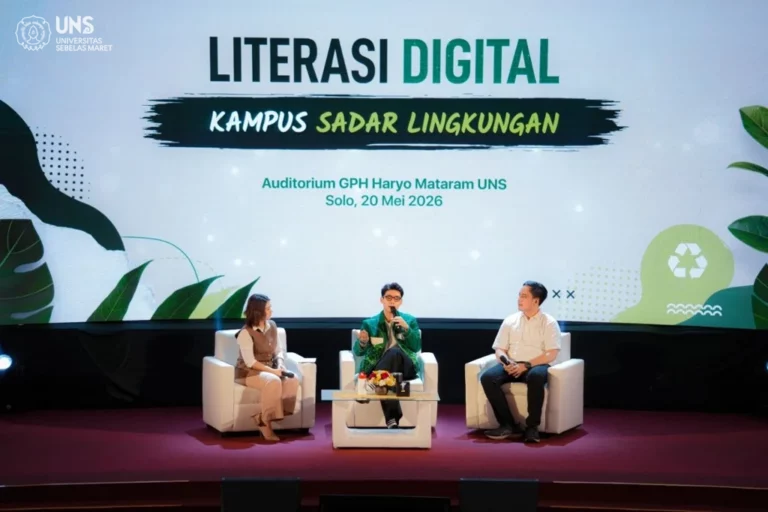
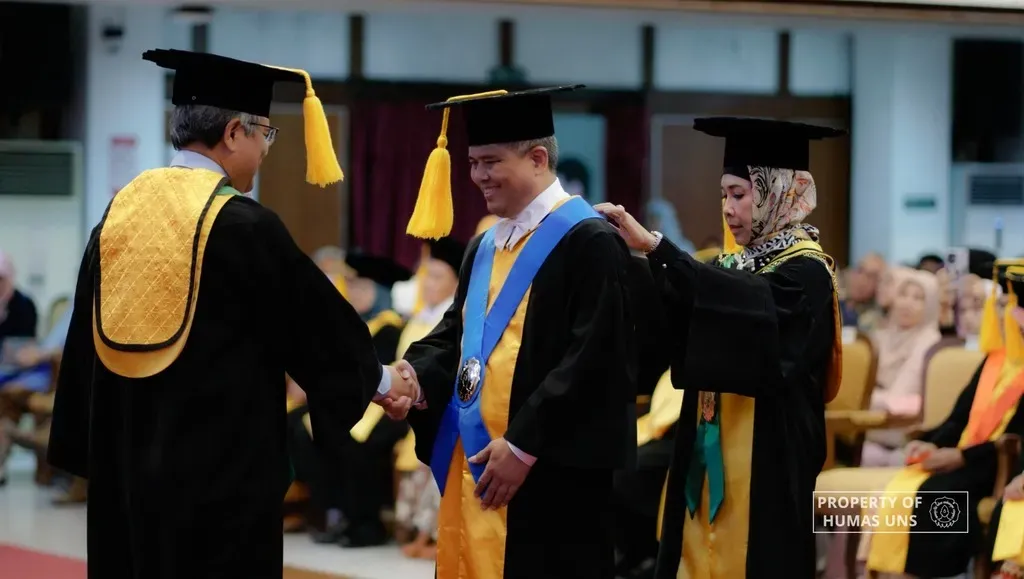
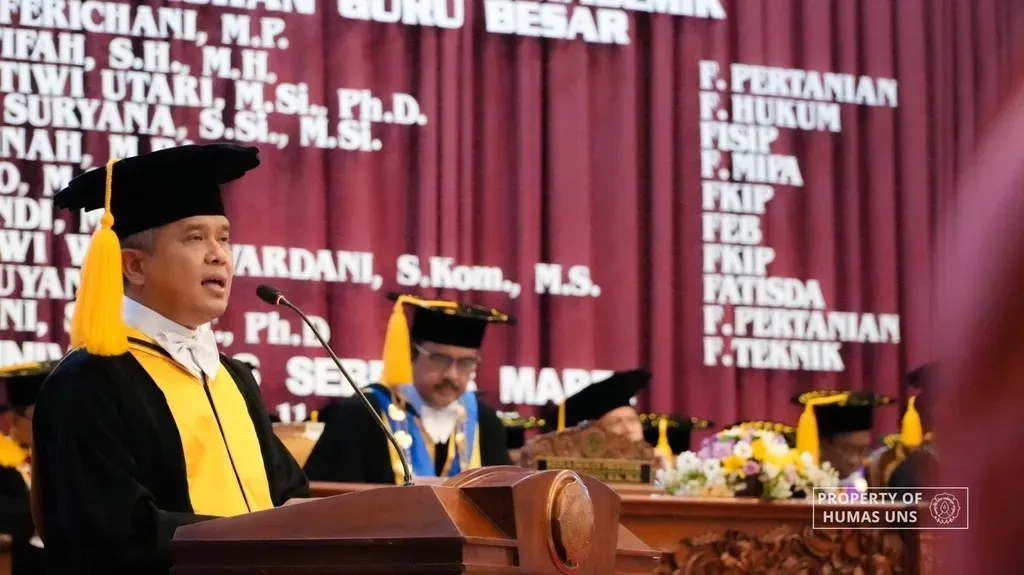
During his inaugural speech at the G.P.H. Haryo Mataram Auditorium, Prof. Risa delivered a scientific oration. His presentation was titled “The Role of Surface Modification in Nanoscience and Nanotechnology.” He emphasized the importance of surface science research. This field examines physical and chemical phenomena at the interface of two phases, such as solid-liquid and solid-gas.
One notable application of this research is the development of hydrophobic coatings for car windshields. These coatings improve visibility in wet conditions by allowing water to flow off easily.
Contributions to Research and Material Technology
Prof. Risa’s research focuses on surface modification in nanoscience and nanotechnology. One of his key studies explores metal-oxide-semiconductor field-effect transistors (MOSFETs). His findings indicate that a 30 nm-thick layer of Palladium Silicide (Pd₂Si) can reduce parasitic resistance. This improvement enhances computer processor performance.
He has also investigated silicon carbide (SiC) substrates, which are highly suitable for growing gallium nitride (GaN). GaN is a primary material in blue light-emitting diode (LED) technology. Since SiC substrates are expensive, he developed a cost-effective method using molecular beam epitaxy (MBE). With this approach, he successfully created a 7,920-layer SiC film at 825°C.
In optoelectronics, Prof. Risa has advanced porous silicon (PSi) technology through electrochemical anodization and reactive ion etching (RIE). His research demonstrated that PSi with uniform pores enhances photoresponse stability in optoelectronic devices. Further studies explored its potential as a substrate for ZnO nanofibers and nanorods. These materials can be applied in solar cell technology.
In sensor technology, he developed a quartz crystal microbalance (QCM) modified with a polyvinyl acetate (PVAc) layer. His findings indicate that PVAc nanofibers exhibit higher sensitivity than thin films. This is especially evident in detecting ecstasy precursors, with a detection limit as low as 0.7 ppm.
A Role Model in Research and Innovation
With his extensive contributions to Electronic Material Physics, Prof. Risa inspires students and young researchers. His work continues to drive advancements in research and innovation in Indonesia. UNS takes great pride in having him as a dedicated academic contributing to the global development of science and technology.
Humas UNS
Reporter: R. P. Adji
Editor: Dwi Hastuti