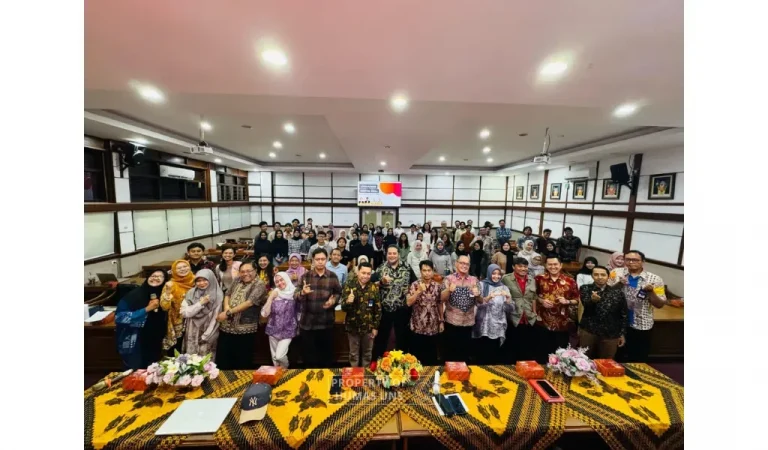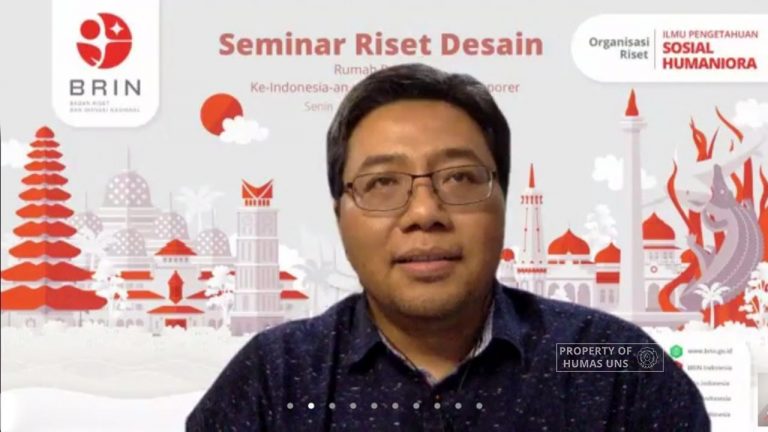
UNS — Japanese Study Center (PSJ) Institute of Research and Community Service (LPPM) Universitas Sebelas Maret (UNS) Surakarta in collaboration with the Urban-Rural Design and Conversation Laboratory (URDC LABO) and Japanese University Association (Persatuan Alumni dari Jepang – Persada) Chapter Solo held an online discussion on the Faces of Urban Tokyo. The discussion was held on Wednesday (16/12/2020) and invited Naya Marsatyasti as the keynote speaker.
Dr. Eng. Kusumaningdyah N.H., S.T., M.T. acted as the moderator for an event attended by more than 70 participants. On this occasion, Naya, an alumnus of Architectural Engineering Program UNS, who is studying Architectural Engineering at the Tokyo Institute of Technology Japan, discussed her observation in Tokyo. She opened her discussion by sharing the main transportation in Tokyo: train. “Wherever you go, you take a train,” Naya said.
The train became the primary means of transportation in Tokyo from 1900-1930. The railway is often used to trigger urban development in Tokyo, connecting suburban areas. Unlike railway lines in Jakarta, which are developed by private companies, in Japan, railway lines were developed by the railway company. The discussion is followed by various unique features that Naya found in Japan. For example, the local street market, shotengai, is a place used by people to buy their groceries and to hold various events. This street market has special characteristics that differ between regions.
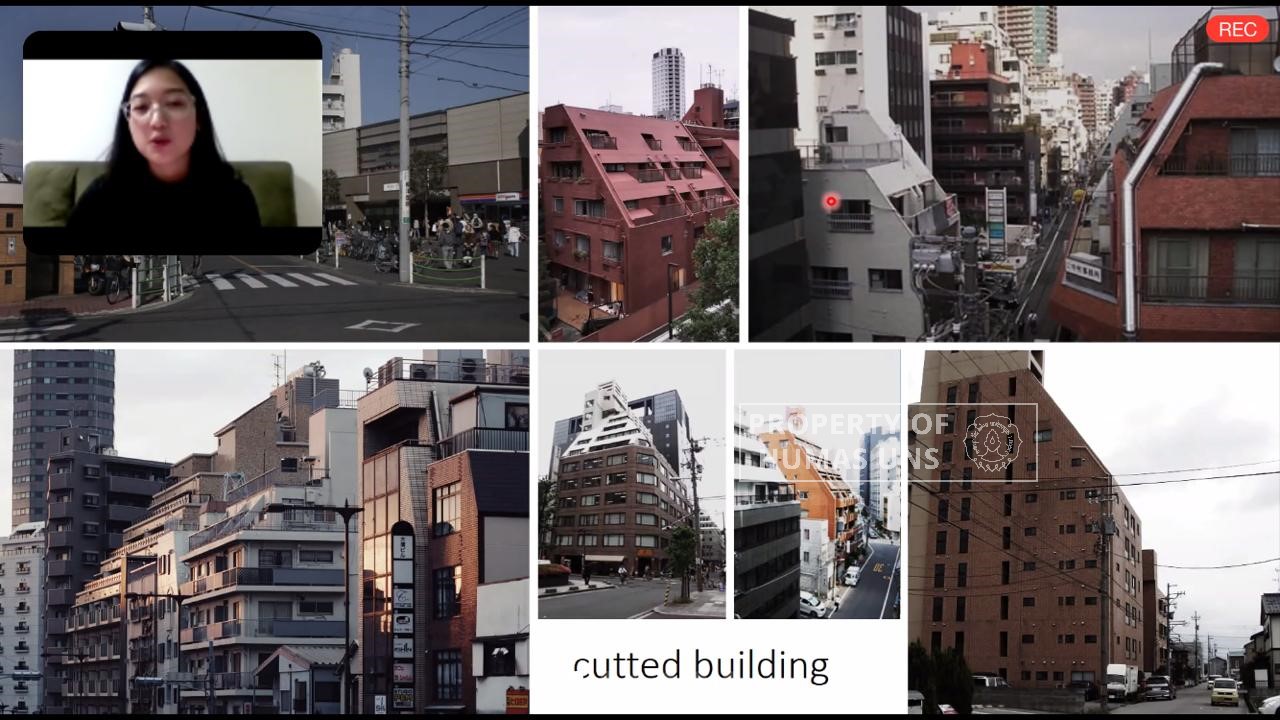
Another unique feature of Tokyo is the number of public stairs which is necessary because of the contour differences around Japan. Therefore, the country has many public stairs, slopes, and highland and lowland areas. The highlands are usually used for high-rise buildings and important buildings such as universities, hospitals, and offices, while the lowland areas are used for housing and shops. Tokyo also has cutted buildings as a solution for building height restriction. This type of buildings maximizes the use of the lower part of the land because they have a limit of building height. The buildings are relatively built close to one another to maximize the use of land.
Japan also identical with the declining number of populations, which becomes the next focus of Naya’s discussion. To solve this problem, Tokyo applies the compact city concept by providing sufficient space for socialization, playground, and close proximity between residential and workplace. Another issue that the country faces is the earthquake, and to tackle this, Japan has an earthquake early warning system connected to people’s phones. The country also has a disaster planning policy with wide open spaces for evacuation, such as schoolyards.
Naya’s discussion was concluded with machizukuri system in which people participate in empowering the environment. The process to build, change, and improve residential quality never leaves the environment’s distinctive value. Humas UNS
Reporter: Zalfaa Azalia Pursita
Editor: Dwi Hastuti