UNS—Universitas Sebelas Maret (UNS) Surakarta, in collaboration with the National Electric Vehicle Centre of Excellence (NEVCE), Australia, is advancing public transportation electrification in Solo City through the Decarbonization Pathways for Indonesia’s Buses Infrastructure (DIBI) project. Supported by the Australian Government, the DIBI project is part of a strategic partnership between UNS and the University of Canberra (UC), established in November 2024 in Canberra. The partnership was witnessed by Dr. Siswo Pramono, Indonesian Ambassador to Australia, and Prof. Dr. Mukhamad Najib, Education and Culture Attaché at the Indonesian Embassy in Canberra. It also involves NEVCE’s Australian partners, ITP Renewables and EVENERGI.
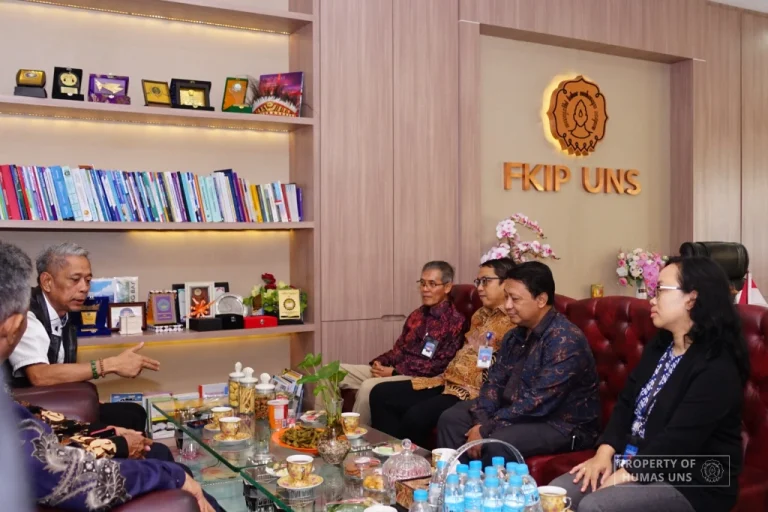
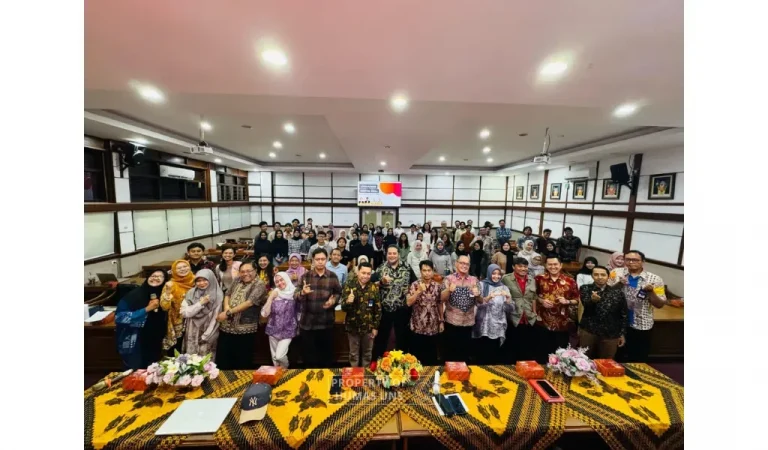
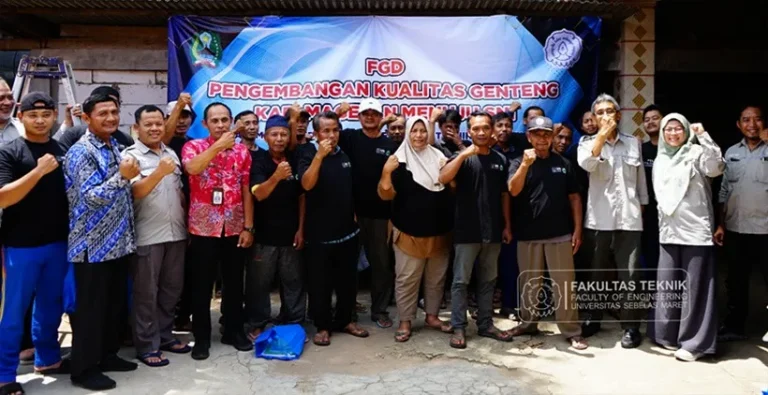
Prof. Dr. Ir. Wahyudi Sutopo, S.T., M.Si., IPU, Dean of the Faculty of Engineering (FT) UNS, stated that the DIBI project addresses Solo’s need for transportation electrification while implementing the Memorandum of Understanding on electric vehicle collaboration between Indonesia and Australia, signed during the 2024 ASEAN-Australia Summit in Melbourne. In a Focus Group Discussion (FGD), FT UNS brought together key stakeholders, including the Surakarta Transportation Agency, PLN, the Bengawan Solo River Basin Authority, Putri Cempo Landfill management, and researchers.
“This discussion emphasizes the potential of renewable energy from waste-to-energy (PLTSa) and floating solar power plants (PLTS), as well as solutions to reduce electrification costs using technologies from UNS and NEVCE to foster a green economy in Central Java,” Prof. Wahyudi explained.
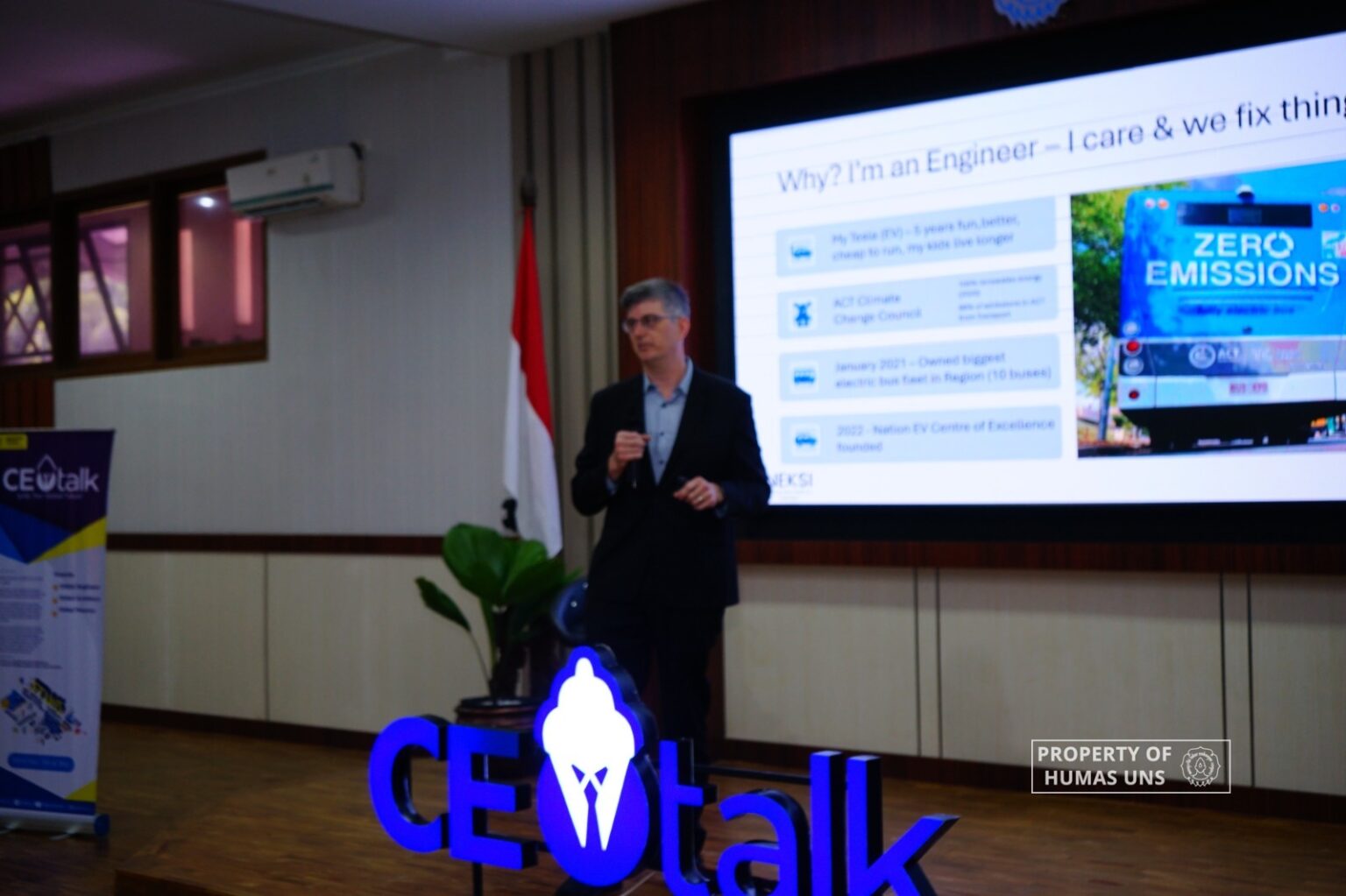
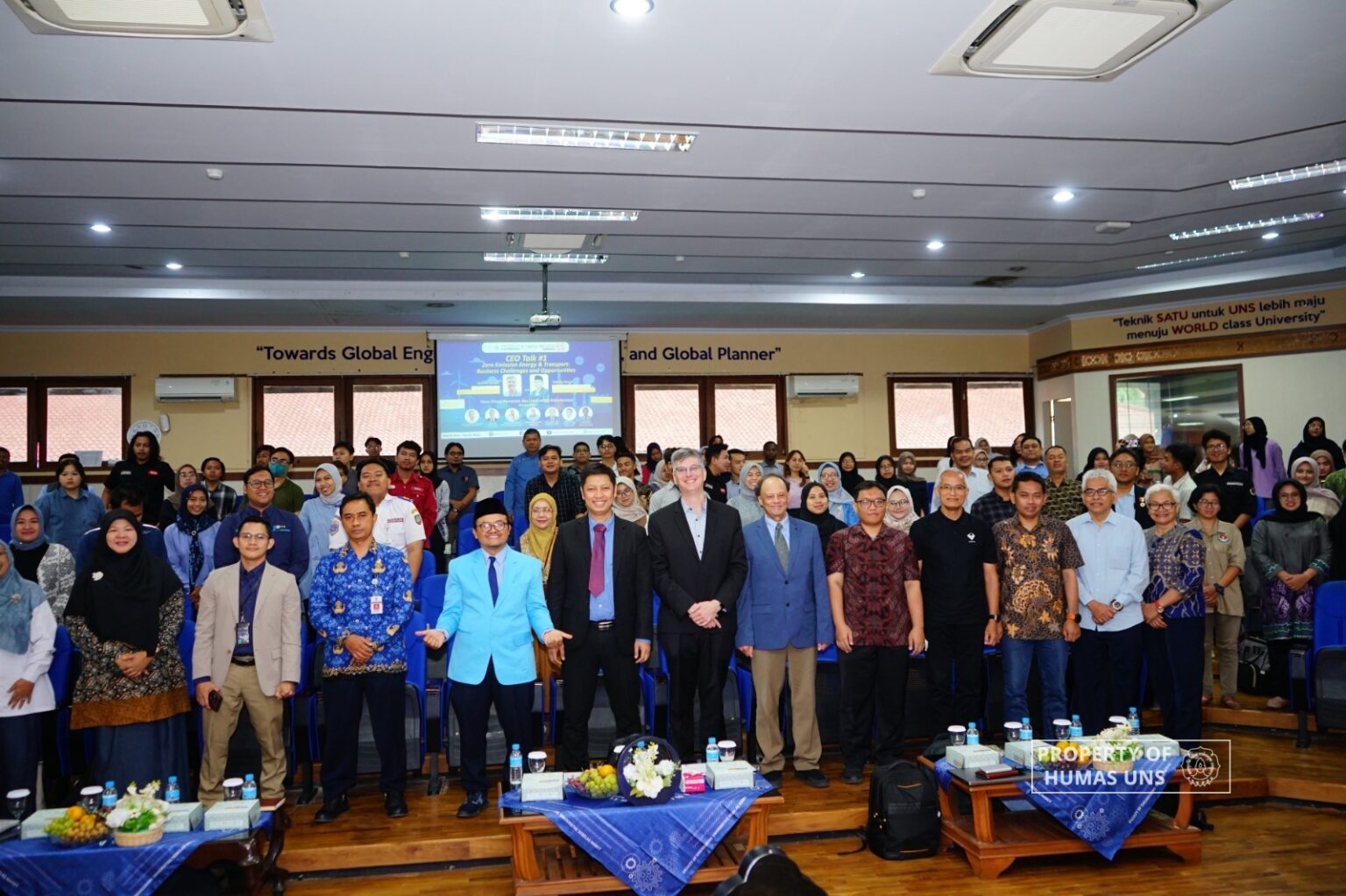
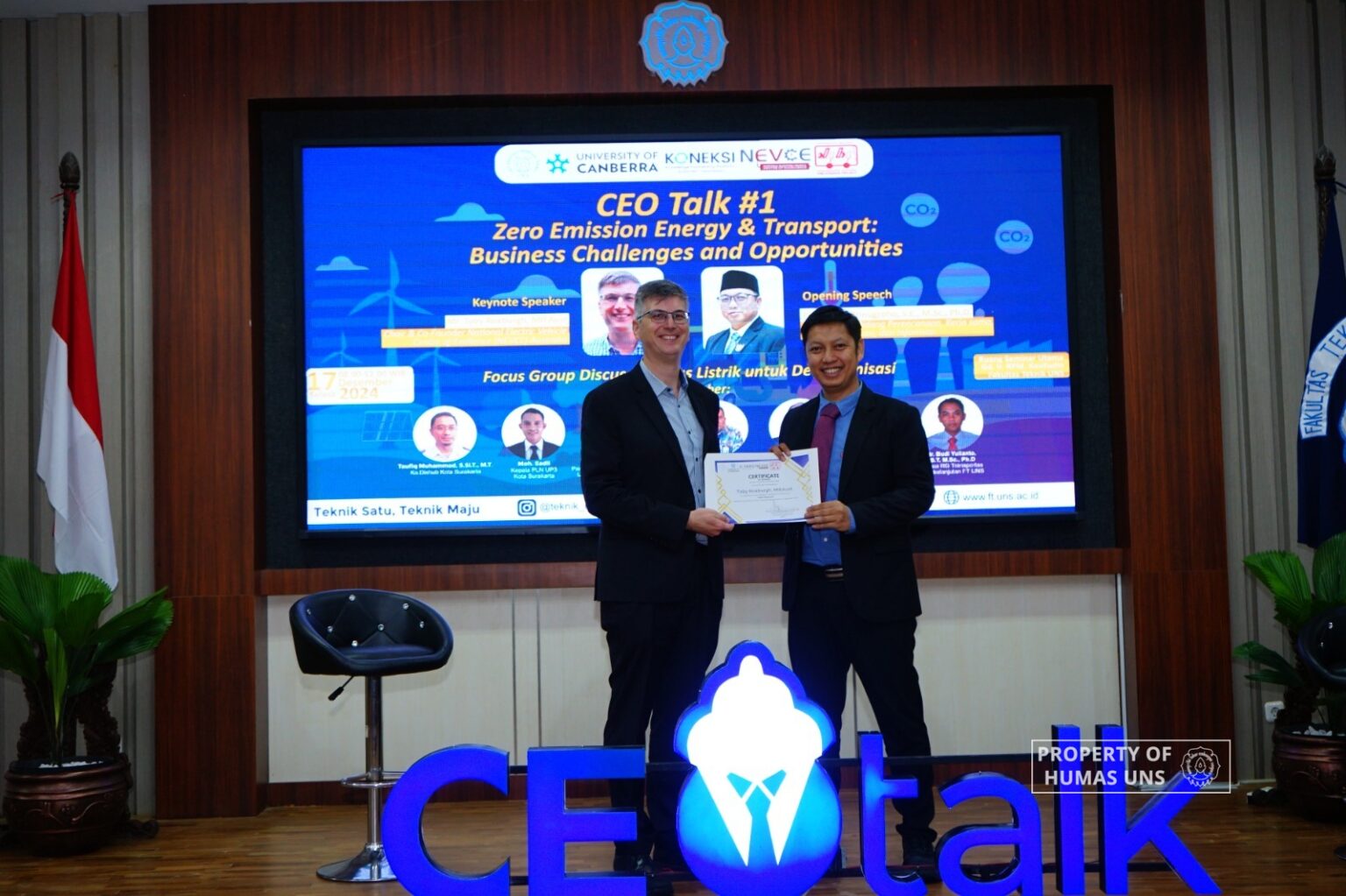
The event, opened by Dr. Ibrahim Fatwa Wijaya, S.E., M.Sc., Ph.D., Director of UNS Directorate of Planning, Cooperation, Internationalization, and Reputation, took place at FT UNS on Tuesday (17/12/2024).
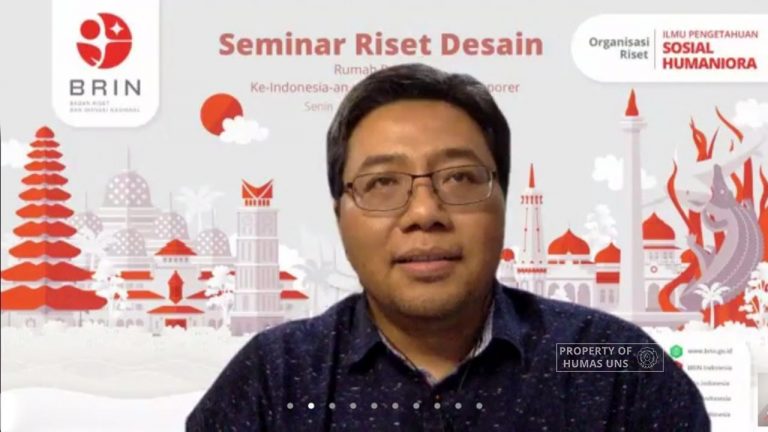
Toby Roxburgh, MIEAust, Chair and Co-founder of NEVCE and a leading advocate for renewable energy and zero-emission transportation, delivered the keynote address during the CEO TALK. He proposed the adoption of electric buses for decarbonizing public transportation.
“Why start with electric buses? Buses have fixed routes, making it easier to integrate solar-powered battery networks as replacements for coal-fired electricity. Buses also reduce congestion, promote social inclusion—encompassing gender equity, disability, and social inclusion (GETSI)—and benefit all societal groups. However, the challenge lies in making buses attractive enough for people to choose public transportation over buying private electric vehicles,” Roxburgh explained.
Solo City has significant potential to transition to eco-friendly transportation while fostering a green economy. Operating over 100 buses across 12 corridors with subsidies from the Ministry of Transportation (Kemenhub), the city has demonstrated strong governance in delivering community-oriented transportation services. However, transitioning to electric buses requires investment in procurement, infrastructure, and skilled workforce training for drivers and operators managing maintenance, charging, and scheduling.
With each bus requiring 320 kWh of daily charging, the transition will demand over 37 MW of power. This need could drive the development of waste-to-energy and floating solar power plants, along with advancements in energy storage technologies spearheaded by UNS.
As solar and battery technology becomes increasingly cost-effective, Indonesia’s abundant solar energy potential is a strategic advantage. Through the DIBI project and this partnership, diplomatic and collaborative ties between Indonesia and Australia are expected to strengthen further. Indonesia, as one of the world’s largest nickel producers, and Australia, with its rich lithium reserves, hold immense potential to synergize in supplying the key materials for electric bus batteries.
HUMAS UNS