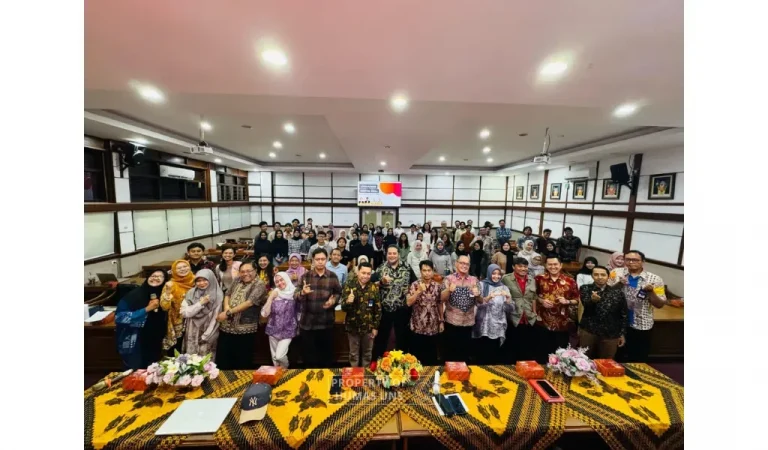
UNS – The Architecture Study Program at the Faculty of Engineering (FT), Universitas Sebelas Maret (UNS), Surakarta, in collaboration with the Urban Rural Design Conservation (URDC) Laboratory, held an International Design Workshop titled “Understanding the Structure, Design, and Housing Environment in Surakarta City.” The workshop was conducted in partnership with the Interdisciplinary Graduate School of Engineering of Science, Department of Interdisciplinary Engineering Science, Kyushu University, Japan.
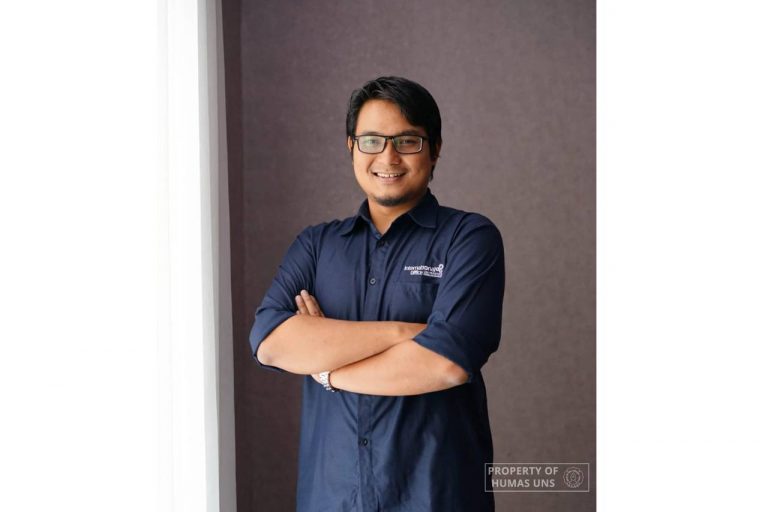
The workshop at the UNS Tower Ki Hadjar Dewantara Building on Wednesday (25/9/2024) featured a collaboration with Prof. Kentaro Yamaguchi from the Department of Architecture and Urban Design, Faculty of Human-Environment Studies, Kyushu University. The event also included participation from Dr. techn. Ir. Sholihin As’ad, M.T., representing the SmartQUake Research Group from the Civil Engineering Study Program at FT UNS.
This event served as a dissemination workshop for international community service conducted by the UNS Architecture Study Program and the URDC Research Group in cooperation with Kyushu University, along with the UNS Japan Study Center and the UNS Institute for Research and Community Service (LPPM).
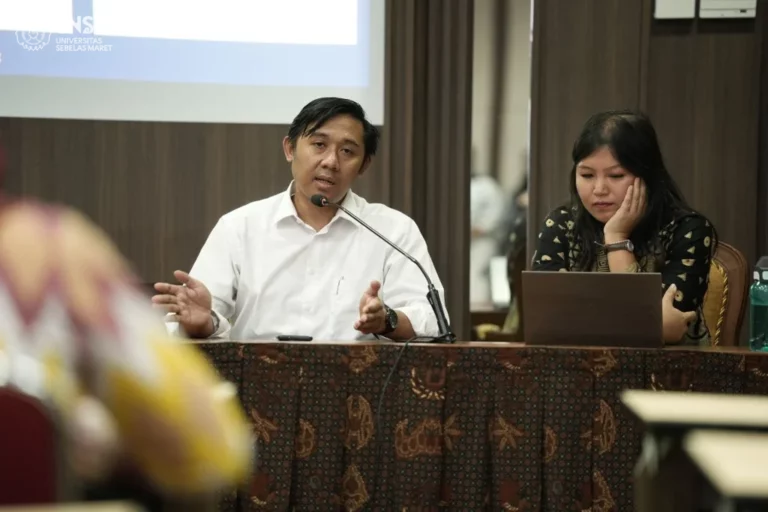
The event began with opening remarks from the Head of the UNS Architecture Program, Dr. Fauzan Ali Ikhsan, S.T., M.T., followed by presentations from relevant stakeholders, including the Surakarta City Housing, Settlement, and Land Department, represented by Head of Settlement Division, Yoyok Darmoko, S.T., M.T.; Tri Cahyo Suksmanto from KOTAKU, and Warsito, S.T., a RUSPIN (Instant Panel Housing System) of Surakarta City. The speakers provided updates on the Kampung Improvement Project (KIP) and the technical implementation of the Instant Panel Housing System (Ruspin) in three areas: Tipes Hamlet in Serengan Village, the former HP 00001 Hamlet in Mojo Village, and Semanggi Harmoni Hamlet in Semanggi Village.
“Solo serves as an economic center for people who come to the city, and when they do not have housing, they often build homes along riverbanks, leading to slum areas. Therefore, we are working on a project to organize these slum areas, dividing them into segments. The areas, which were originally government-owned, are being handed over to the community,” Yoyok explained during his presentation.
Tri Cahyo Suksmanto from KOTAKU elaborated on the collaborative concept of the project, which involves partnerships with the government, Corporate Social Responsibility (CSR) initiatives, and community self-help efforts. He also explained how participatory methods are applied to the project, involving the local community in discussions to ensure the village organization aligns with their needs. “This project involves the community in participatory mapping and invites discussions to ensure the village planning meets their needs,” Cahyo said.
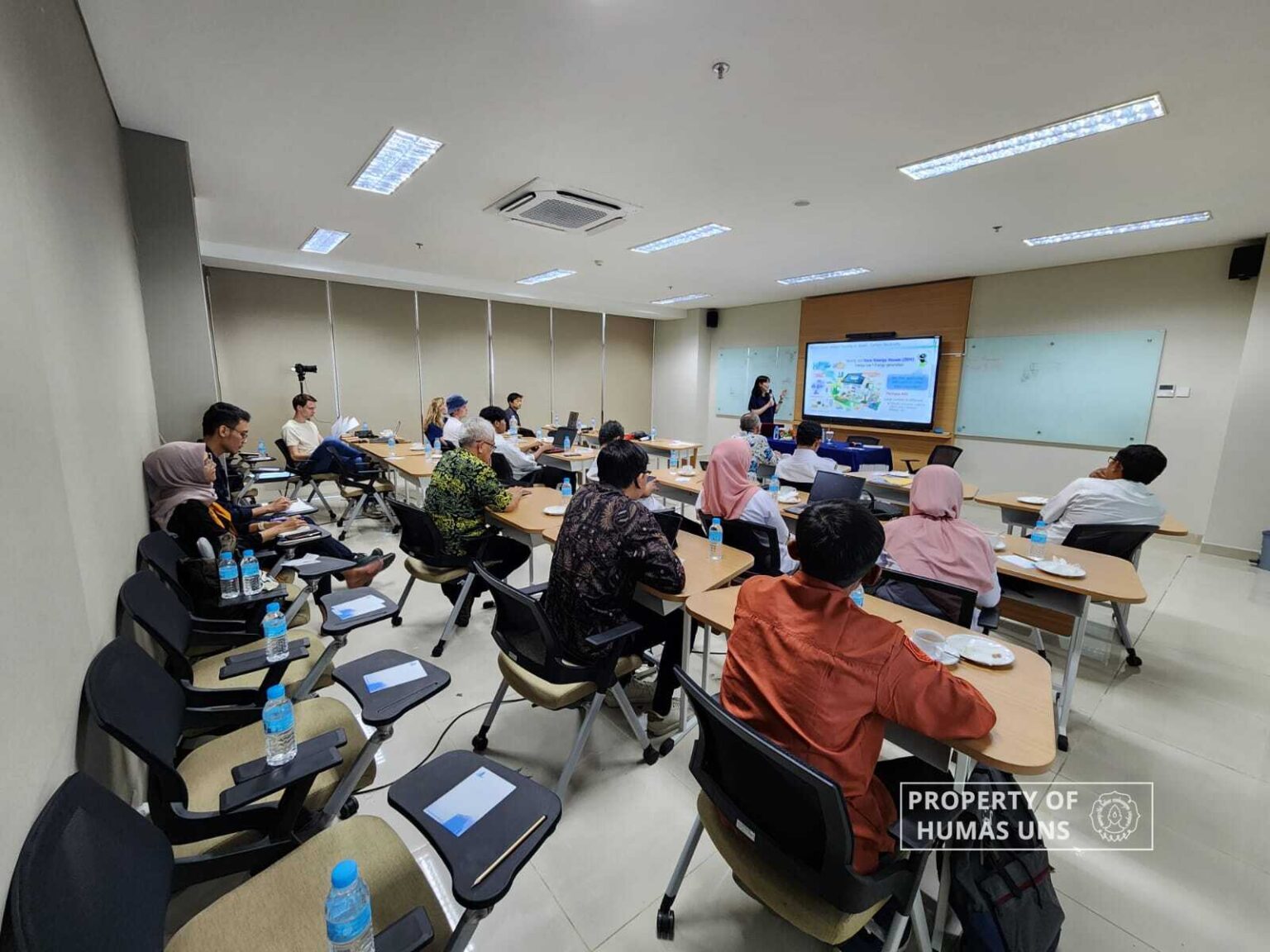

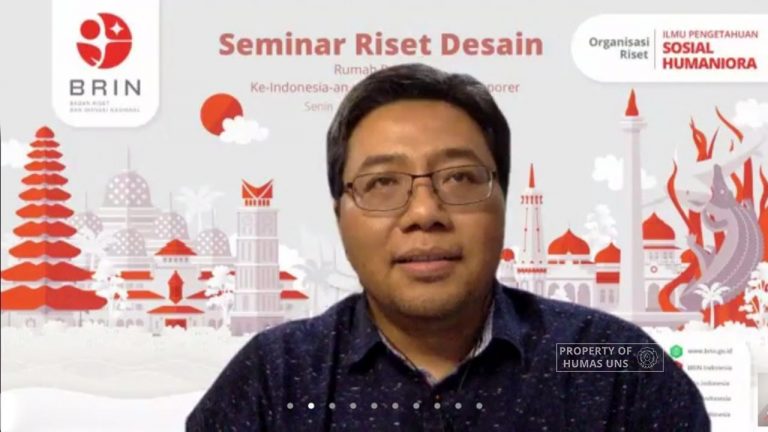
The seminar continued with presentations from Kyushu University experts, Prof. Kentaro Yamaguchi and Prof. Aya Hagishima. Prof. Yamaguchi presented an analysis of brick building structures located in Tabriz Bazaar, Iran, a marketplace area measuring 150 by 400 meters in northwest Iran. He explained the structural features, including domed brick roofs and openings. His research involved material stress tests, wall compression strength simulations, and comparisons with materials used in Japan.
The final session featured Prof. Aya Hagishima, who discussed thermal comfort in densely populated urban areas in Surakarta, a result of research conducted since 2020 in collaboration with Dr. Eng. Kusumaningdyah Nurul Handayani, S.T., M.T. (URDC Laboratory). Prof. Aya Hagishima highlighted global issues like global warming, heat waves, and urban heat islands, which significantly affect thermal comfort in many of Surakarta’s densely populated settlements, particularly in the Kampung Improvement Project (KIP).
“Based on thermal comfort measurements taken in 2023 at the former HP 00001 Mojo settlement, Tipes Village, and Metal Mojo Village RW 01, several conditions contribute to increased interior heat, including the lack of architectural detailing in building openings, the quality of Ruspin materials, and the layout of rooms,” Prof. Aya Hagishima explained.
Prof. Hagishima and her team recommended several solutions, such as passive cooling design interventions, using shading methods like soft space plantings in front of buildings or hard space elements like paranet or bamboo curtains. Additional suggestions included painting roofs white to improve heat reflection, installing ceiling panels in homes, and creating cross ventilation.
Following the presentations, a question-and-answer session took place, where participants enthusiastically asked questions about the materials presented by the speakers.
HUMAS UNS
Editor: Dwi Hastuti