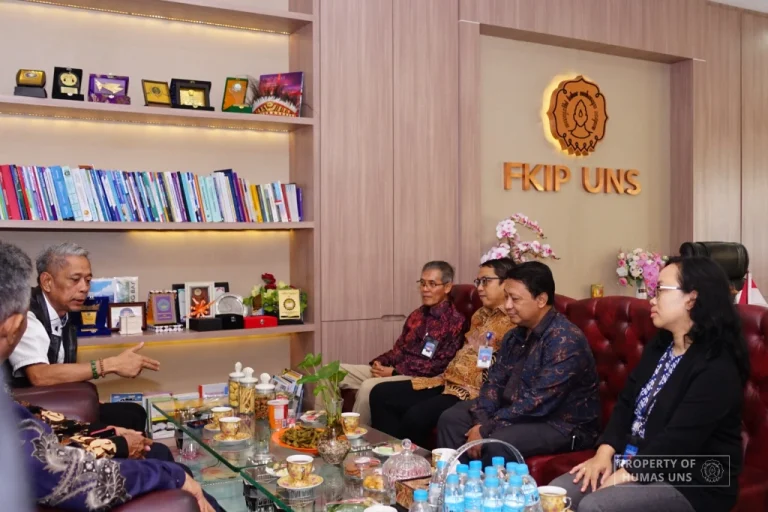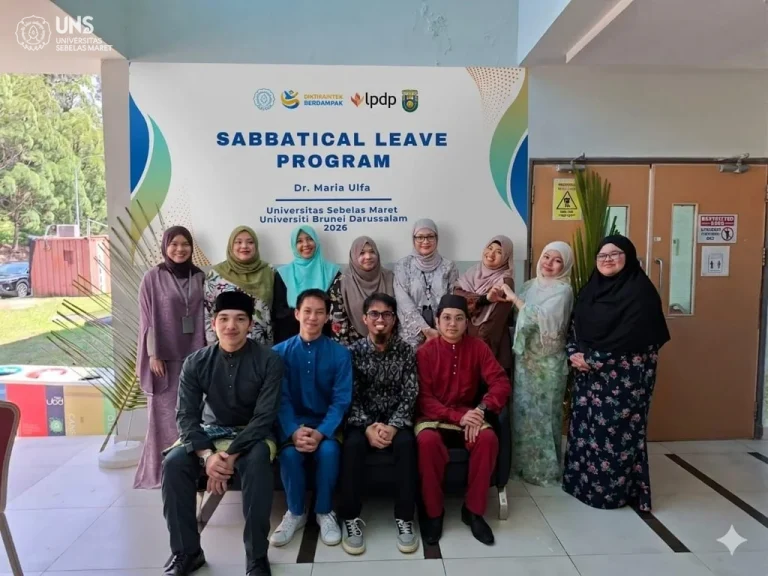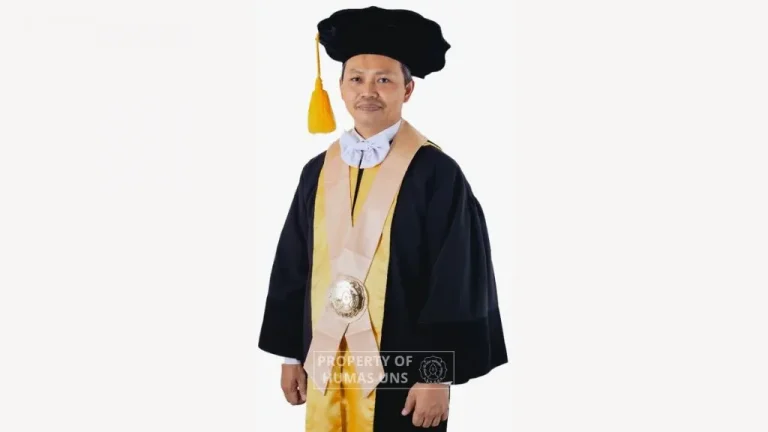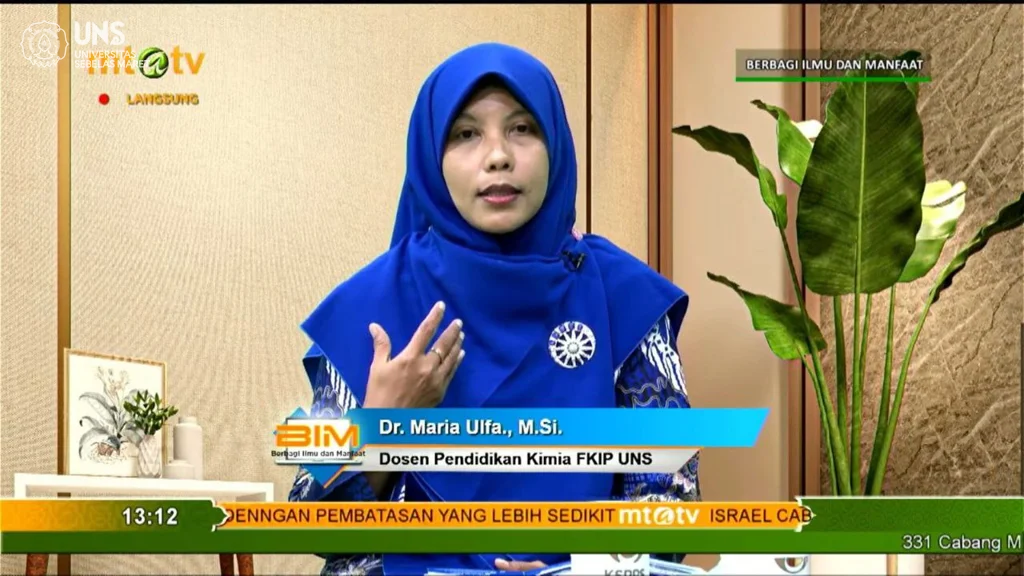
UNS — Chemistry expert from Universitas Sebelas Maret (UNS) Surakarta, Dr. Maria Ulfa, S.Si., M.Si., provided public education regarding the issue of liquid waste from the batik industry, both from large-scale industries and Micro, Small, and Medium Enterprises (MSMEs), whose dangers often go unnoticed.
In her explanation, Dr. Maria Ulfa stated that batik wastewater is not always indicated by dark or striking colors, yet it can still contain high levels of toxicity. This condition often creates misunderstandings among the public, as if clear or colorless wastewater is safe to be discharged into aquatic environments. In reality, chemically, such waste may still contain hazardous compounds that can damage aquatic ecosystems and pose serious risks to human health.
Furthermore, she highlighted common waste treatment practices currently applied, such as adsorption using activated carbon or sludge. According to her, these methods have not fully solved the problem because they essentially only transfer dyes and their toxic properties to another medium without truly eliminating or neutralizing the harmful compounds.
“Therefore, a more sustainable treatment approach is needed, namely technology that can degrade dyes into safer and more environmentally friendly compounds,” explained Dr. Maria Ulfa to uns.ac.id on Friday (23/1/2026).
This effort aligns with the Sustainable Development Goals (SDGs), particularly SDG 6 on clean water and sanitation, SDG 12 on responsible consumption and production, and SDG 14 on protecting aquatic ecosystems. Within this framework, universities play a strategic role as centers for scientific development and innovation in sustainable waste treatment technologies.
The government also plays an important role in formulating regulations, conducting supervision, and providing policy incentives so that industries are encouraged to implement environmentally friendly technologies.
On the other hand, the industrial sector, especially batik business owners, is required to commit to safer and more responsible waste management. Meanwhile, the community plays a role in raising awareness, conducting social monitoring, and supporting environmentally conscious production practices.
“The synergy between universities, government, industry, and society is the key to maintaining the sustainability and safety of aquatic environments,” said Dr. Maria Ulfa, who is also a lecturer in Chemistry Education at the Faculty of Teacher Training and Education (FKIP) UNS.
As a response to these concerns, Dr. Maria Ulfa introduced SPAMCAT (Smart Pelletized Sulfonated Mesoporous Silica Catalyst), an innovative catalyst designed to assist in the degradation of dye substances in batik wastewater.
“SPAMCAT works by accelerating the reaction process of breaking down dye molecules, so it not only removes the color of the wastewater but also reduces its toxicity level,” she added.
In the educational session, Dr. Maria Ulfa also explained the stages of SPAMCAT research development, which currently focuses on designing and developing a photocatalytic reactor. This reactor is designed to support SPAMCAT’s performance so that the degradation process of hazardous compounds can run more optimally and practically.
In the future, SPAMCAT technology is expected to be utilized more effectively by MSMEs as well as the batik industry.
“This educational effort is expected to raise public awareness of the hidden dangers of batik waste, while also encouraging the implementation of more environmentally friendly and sustainable waste treatment technologies,” she concluded.