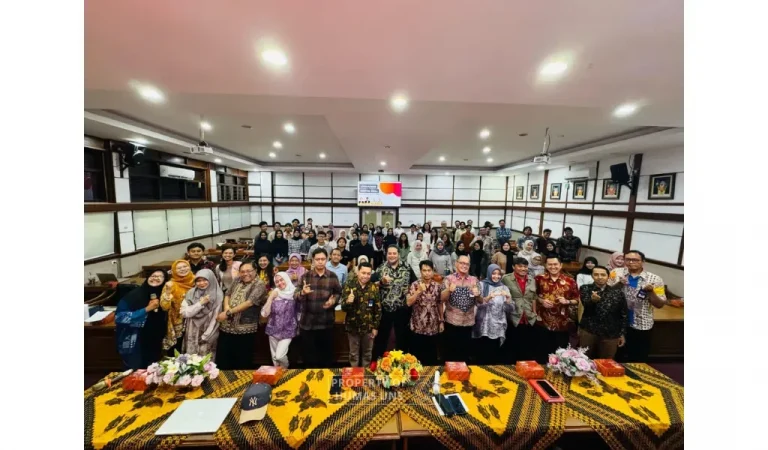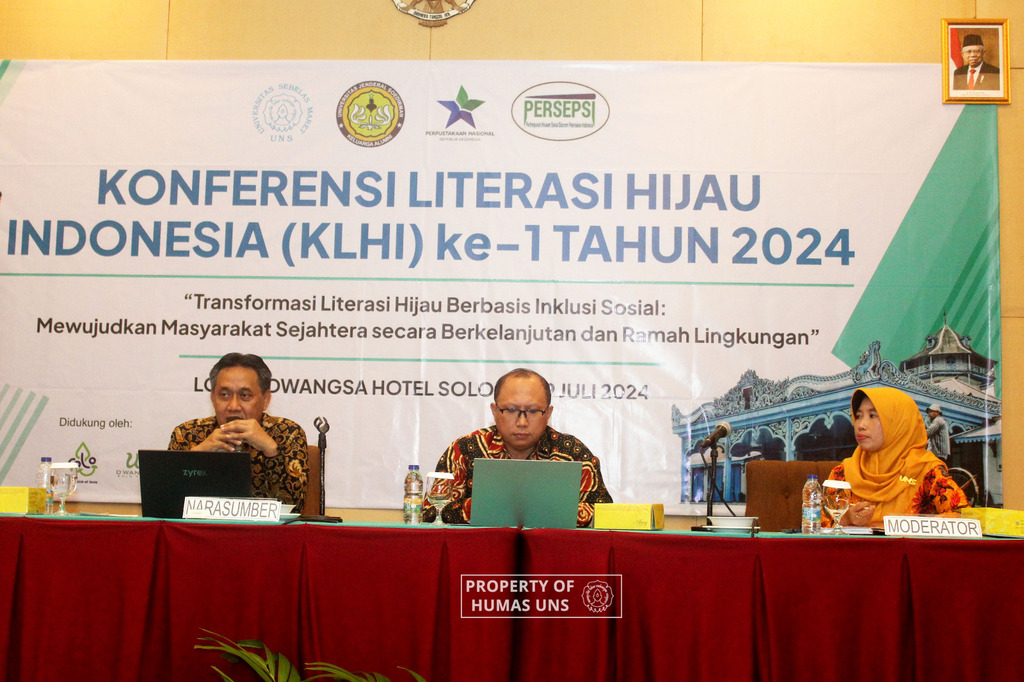
UNS – The National Library of the Republic of Indonesia (Perpusnas RI) in collaboration with the Faculty of Agriculture (FP) at Universitas Sebelas Maret (UNS) Surakarta, the Alumni Association of Jenderal Soedirman University (KAUNSOED) Solo Raya Region, and the Association of Indonesian Livestock Socio-Economic Scientists (PERSEPSI) Solo Raya successfully organized the first Indonesian Green Literacy Conference (KLHI) 2024. The event took place at the Puri Nalendra Ballroom, Dwangsa Lor-In Hotel, Surakarta, from July 16-19, 2024. The theme of the first KLHI 2024 was “Transforming Green Literacy Based on Social Inclusion: Achieving Sustainable and Environmentally Friendly Societal Welfare.”
The first KLHI aimed to serve as a platform for sharing experiences, knowledge, suggestions, and formulations regarding the implementation, utilization, and transformation of green literacy based on social inclusion for sustainable and environmentally friendly societal welfare.
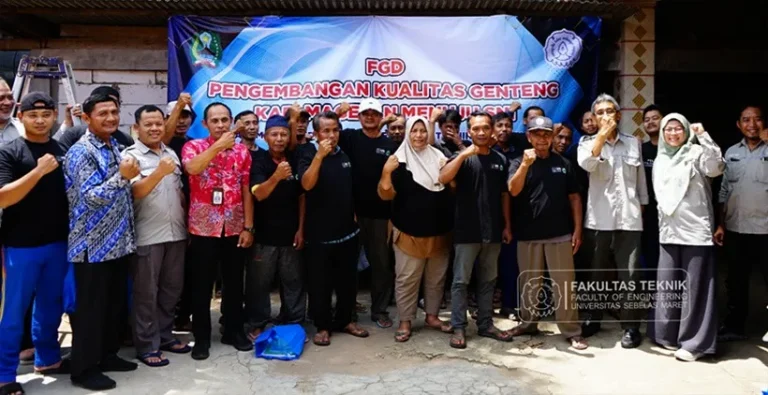
The KLHI 2024 activities included a national seminar, Focus Group Discussions (FGD), a national essay writing competition, and a field trip city tour. The event was officially opened by the Dean of FP UNS, represented by the Vice Dean for Academics, Research, and Student Affairs, Prof. Dr. Ir. Eka Handayanta, M.P., IPU, ASEAN Eng.
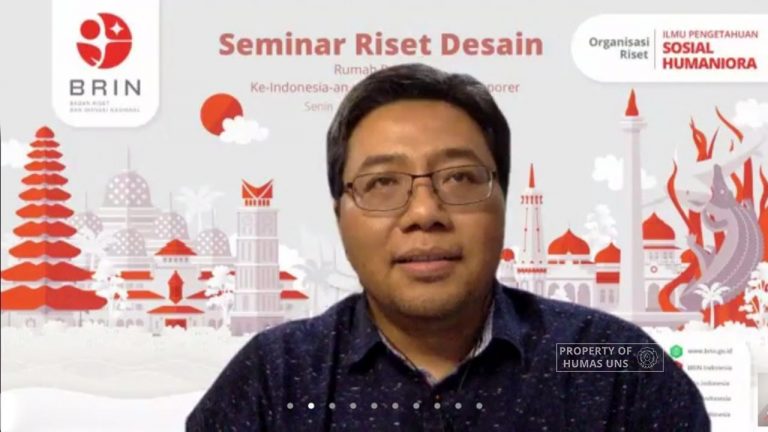
The first KLHI 2024 featured several keynote speakers. Drs. Nurcahyono, S.S., M.Si. (Head of the Center for Education and Training, Perpusnas RI) presented a paper on “Synergy and Collaboration in Accelerating Library and Green Literacy Transformation Based on Social Inclusion.”
Prof. Ir. Budi Guntoro, S.Pt., M.Sc., Ph.D., IPU, ASEAN Eng. (Dean of the Faculty of Animal Science, Universitas Gadjah Mada Yogyakarta and Chair of PERSEPSI) discussed “Green Literacy in the Agrocomplex Sector Based on Social Inclusion: Solutions for Community Empowerment, Food Security, Societal Welfare, and Natural Resource Utilization.”
The third speaker, Prof. Ir. Sutrisno Hadi Purnomo, S.Pt., M.Si., Ph.D. (Professor of Animal Science at UNS and Chair of PERSEPSI Solo Raya), delivered a presentation on “Implementing Paperless Concepts to Support Green Literacy Programs: Potential and Challenges in Indonesia.”
The fourth speaker, Dr. Muhammad Rohmadi, S.S., M.Hum. (Lecturer at FKIP UNS, former Head of the UNS Library 2015-2019, Chairman of the Association of Indonesian Language and Literature Lecturers (ADOBSI), and activist at the Arfudz Ratulisa Literacy Institution, presented a paper titled “Building Green Literacy through Independent Learning towards Indonesia Emas 2045.”
Dr. Wiji Suwarno, S.PdI., S.IPI., M.Hum. (Head of the Library at Universitas Islam Negeri (UIN) Salatiga and Chair of FPPTI Central Java Province 2017-2023), provided an overview of “The Existence of Green Literacy Amid Social, Cultural, Economic, Science, and Technology Changes.”
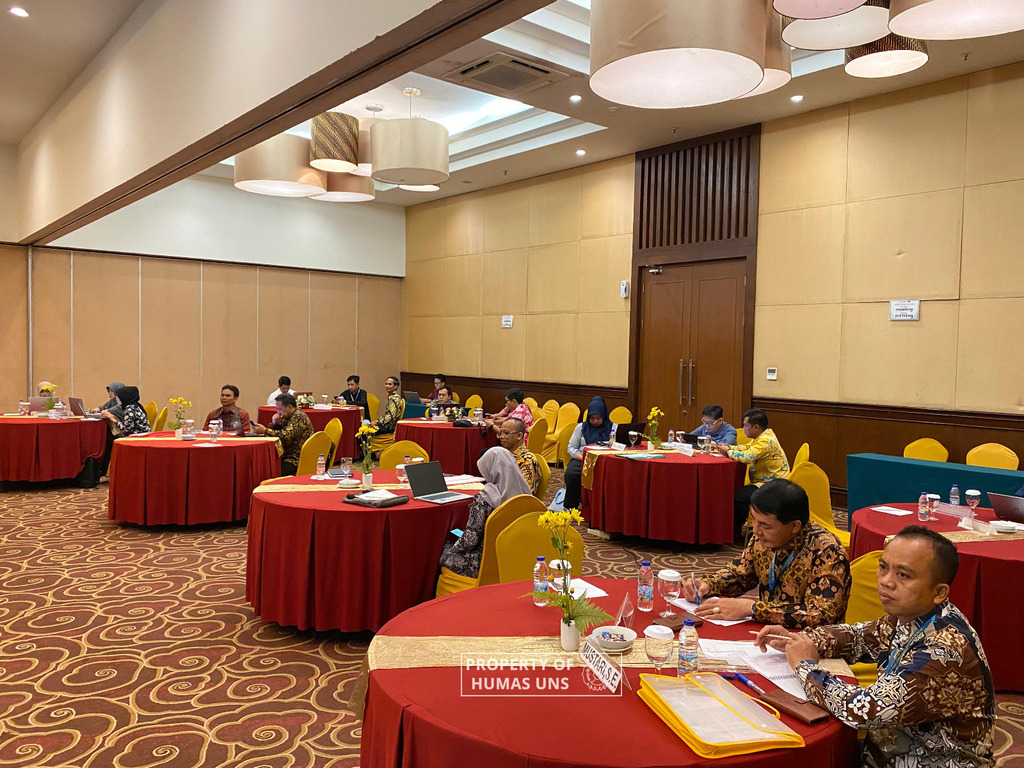
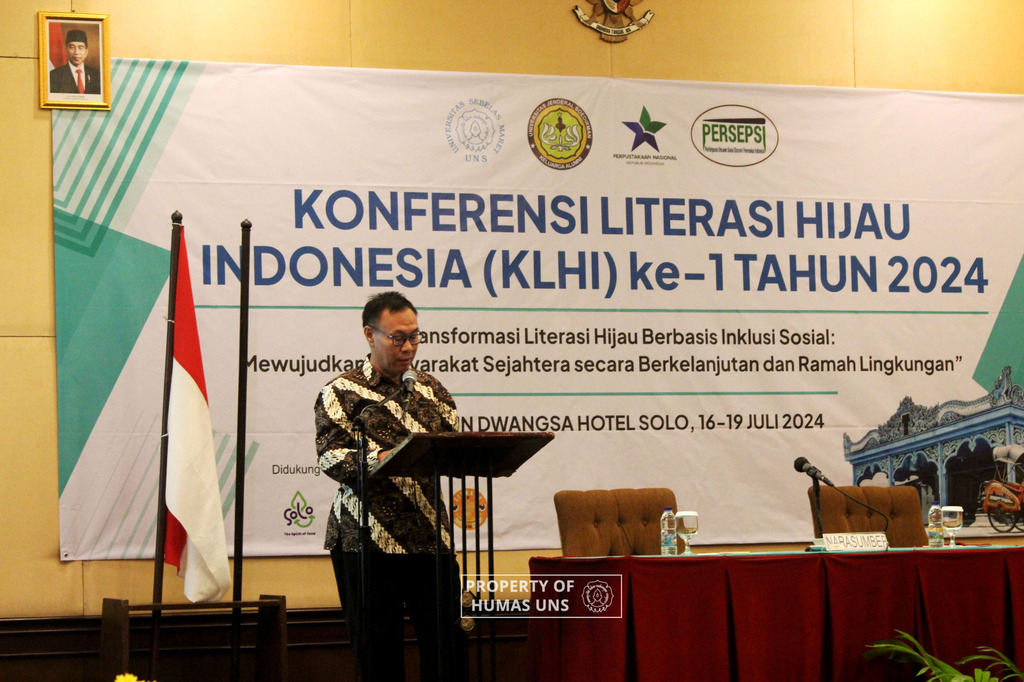
The first KLHI 2024 was attended by 43 participants and invitees, including central and regional officials, library and archive services, lecturers, students, green literacy researchers or observers, librarians, and library managers.
Achmad Nur Chamdi, S.Pt., M.Si., the Chair of the Organizing Committee, stated that the first KLHI 2024 resulted in several important recommendations and decisions. First, following the conference, the Association of Indonesian Green Literacy Activists (APeL Hijau Indonesia) was established, with Drs. Nurcahyono, S.S., M.Si. (Head of the Education and Training Center, Perpusnas RI) appointed as Chairman, Achmad Nur Chamdi, S.Pt., M.Si. (UNS) as Vice Chairman, and Dr. Wiji Suwarno, S.PdI., S.IPI., M.Hum. (UIN Salatiga) as Secretary-General. “The organizational structure will be gradually completed from the national level (DPP) to provincial (DPW) and regency or city (DPD) levels in the near future,” Achmad Nur Chamdi explained.
Second, the conference defined green literacy as the ability to know, understand, analyze, and apply knowledge that influences attitudes and behaviors to improve decision-making quality, environmental protection, and management to achieve sustainable societal welfare.
Third, the conference defined a green library as a library that considers the sustainability of environmental, economic, and social aspects, including components such as buildings and equipment, best practices, operational services, programs, management, information systems, and library collections.
Fourth, the scope of green literacy was outlined to address the development of issues related to green literacy on local, national, and global scales; discuss best practices achieved by the community in green literacy; and promote environmental conservation efforts through literacy activities. The scope of a green library includes discussing green library indicators; achieving green library indicators; discussing issues related to green libraries based on social inclusion on local, national, and global scales; discussing best practices achieved by libraries in green literacy; and promoting environmental conservation efforts through library activities.
HUMAS UNS
Editor: Dwi Hastuti