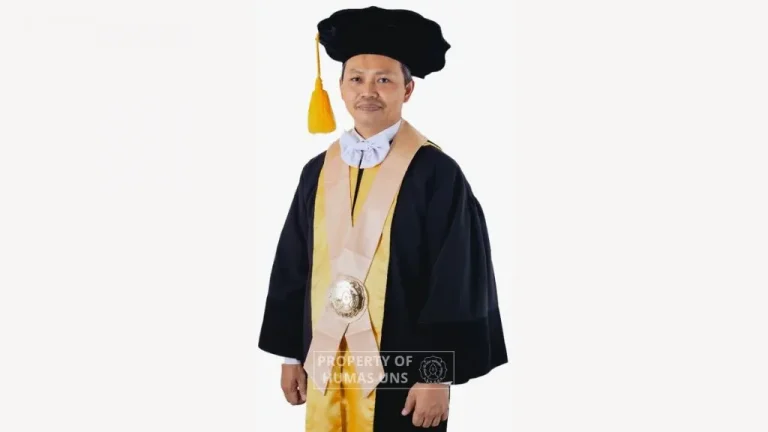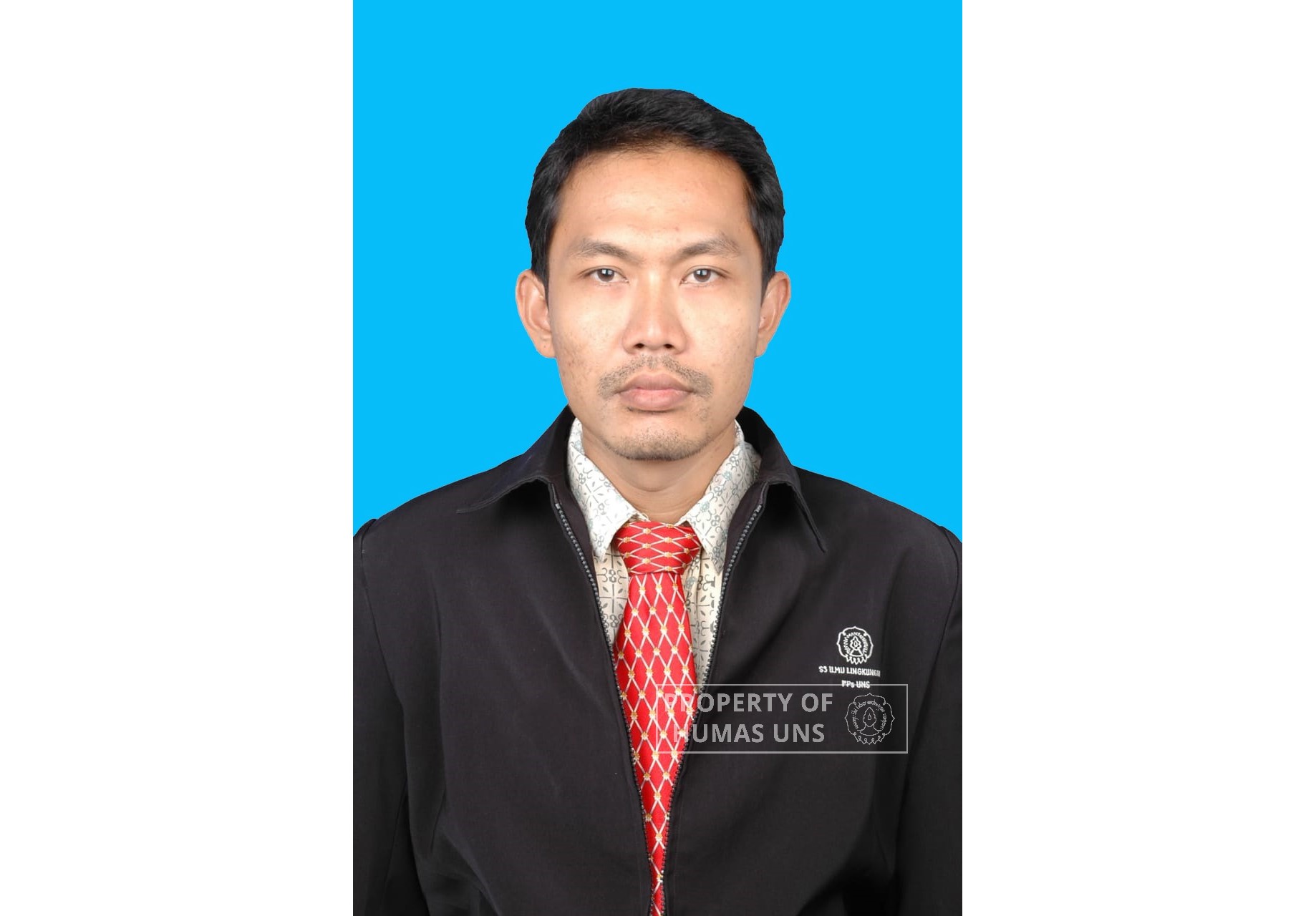
UNS — A lecturer and environmentalist from the Environmental Science Study Program, Faculty of Mathematics and Natural Science (FMIPA), Universitas Sebelas Maret (UNS) Surakarta, Dr. Prabang Setyono, mentions the role of local wisdom in managing disasters. This concern is related to the recent numbers of disasters in Indonesia, such as floods in Kalimantan and Java.
“Disaster is a logical consequence of a natural dynamics,” Dr. Prabang explained as quoted from mipa.uns.ac.id, Thursday (4/2/2021). According to him, disasters can be categorized as natural disasters and environmental disasters.
A natural disaster is an event beyond human intervention because it occurs as the authority of the dynamics of nature itself, such as earthquakes, eruptions, and tsunami. Meanwhile, an environmental disaster is an event that is highly related to human and environmental interaction. Thus, the human is the trigger for such an event. “Based on these criteria, therefore, the recent disaster can be categorized as hydrometeorological disasters associated with human activities,” Dr. Prabang states.
Further, Dr. Prabang explains that currently, the member of the academic can deliver enlightenment based on empirical evidence or scientific data, in order to describe the disaster triggers systematically, transparently, and methodologically, thus, it can have a clear measurement value and the proposed solution has an operational structure.
On the other side, considering the local value concept and context, then it can be said that environmental management must be done wisely. Locality can be divided into three aspects namely local knowledge, local genius, and local wisdom. Those three values will be eroded by policies on behalf of the regional development and increasing regional income. Non-environmentally friendly policies tend to be exploitative and not inventive in maintaining the sustainability of the nature and environment.
Dr. Prabang considers that the wisdom in managing disasters among the local community must be the basis for establishing policies and programs based on disaster risk. The hydrometeorological disasters management in Indonesia must refer to the local value. The wisdom in handling a disaster can be implemented through the objective courage among regional and central leaders in addressing a disaster as an environmental disaster, thus it will be easier to untangle the cause of the disaster.
Restoration of a damaged environment, according to Dr. Prabang, will be realized if there is a collaboration among the environmental management stakeholders in accordance with their field of expertise. The stakeholders include government, the local community, non-governmental organizations, academics, entrepreneurs, and the press.
“The power of Indonesian community in facing the disaster, one day will be valuable social capital and knowledge towards achieving the Sustainable Development Goals,” Dr. Prabang concluded. Humas UNS
Reporter: Dwi Hastuti