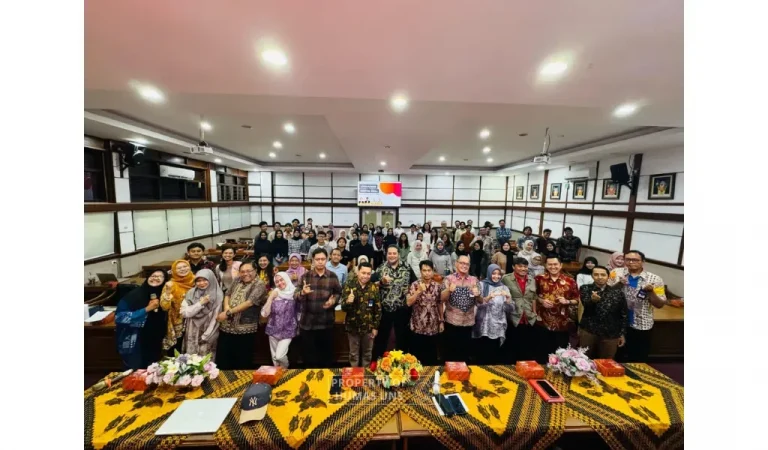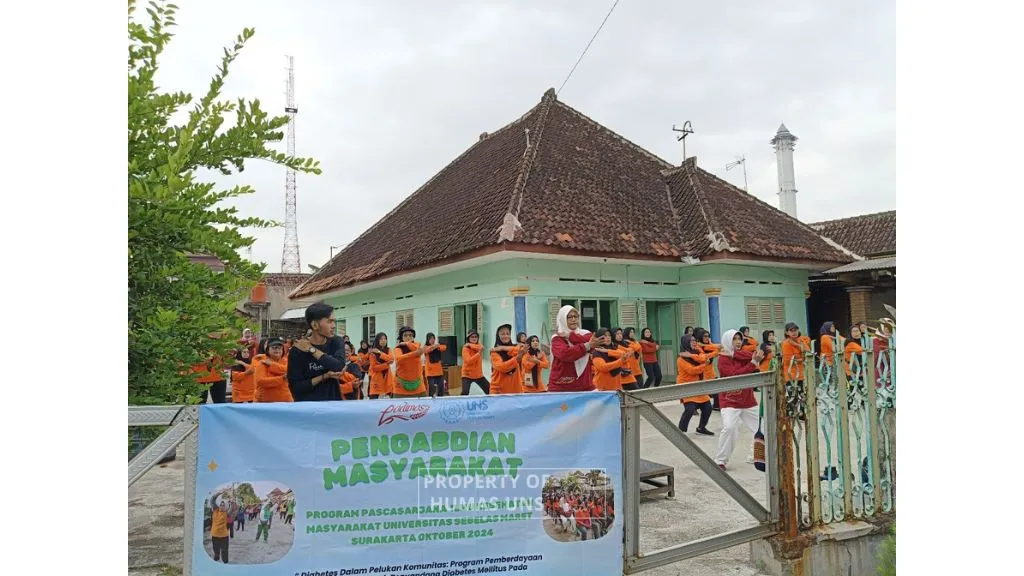
UNS – A community service team from the Postgraduate Public Health Science Program at Universitas Sebelas Maret (UNS) Surakarta conducted a community outreach activity at Gleges Street Number 23, Priobadan, Sriwedari Village, Laweyan District, Surakarta City. The initiative partnered with the Elderly Group of the Diabetes Mellitus Association of Surakarta (PADIMAS), under the auspices of the Jasmine 2 Primary Clinic, focusing on diabetes education and monitoring physical activity through diabetes-specific exercise sessions with PADIMAS members.
The team comprised four members: Muh. Anan Wais Lahay, S.Tr.Kes, as the team leader; Erlangga Yusa Bachtiar, S.K.M; Sari Tyaswikaning Aji, S.H.; and Miswanto, S.Tr.RMIK, all of whom are students from the UNS Postgraduate Public Health Science Program.
“PKM partnered with the PADIMAS Elderly Group under Jasmine 2 Primary Clinic, led by Mr. Joko Prabowo, S.Pd, and supported by Mrs. Sari Tyaswikaning Aji, S.H., the Head of Jasmine 2 Primary Clinic. The activities were funded personally and took place at Gleges Street Number 23, Priobadan, Sriwedari Village, Laweyan District, Surakarta City,” Muh. Anan Wais Lahay, S.Tr.Kes explained in an interview with uns.ac.id on Tuesday (24/12/2024).
Several activities have been carried out, including education on Diabetes Mellitus and the implementation and monitoring of physical activities in the form of diabetes exercise sessions conducted by the PADIMAS Elderly Group. This program was held over two sessions.
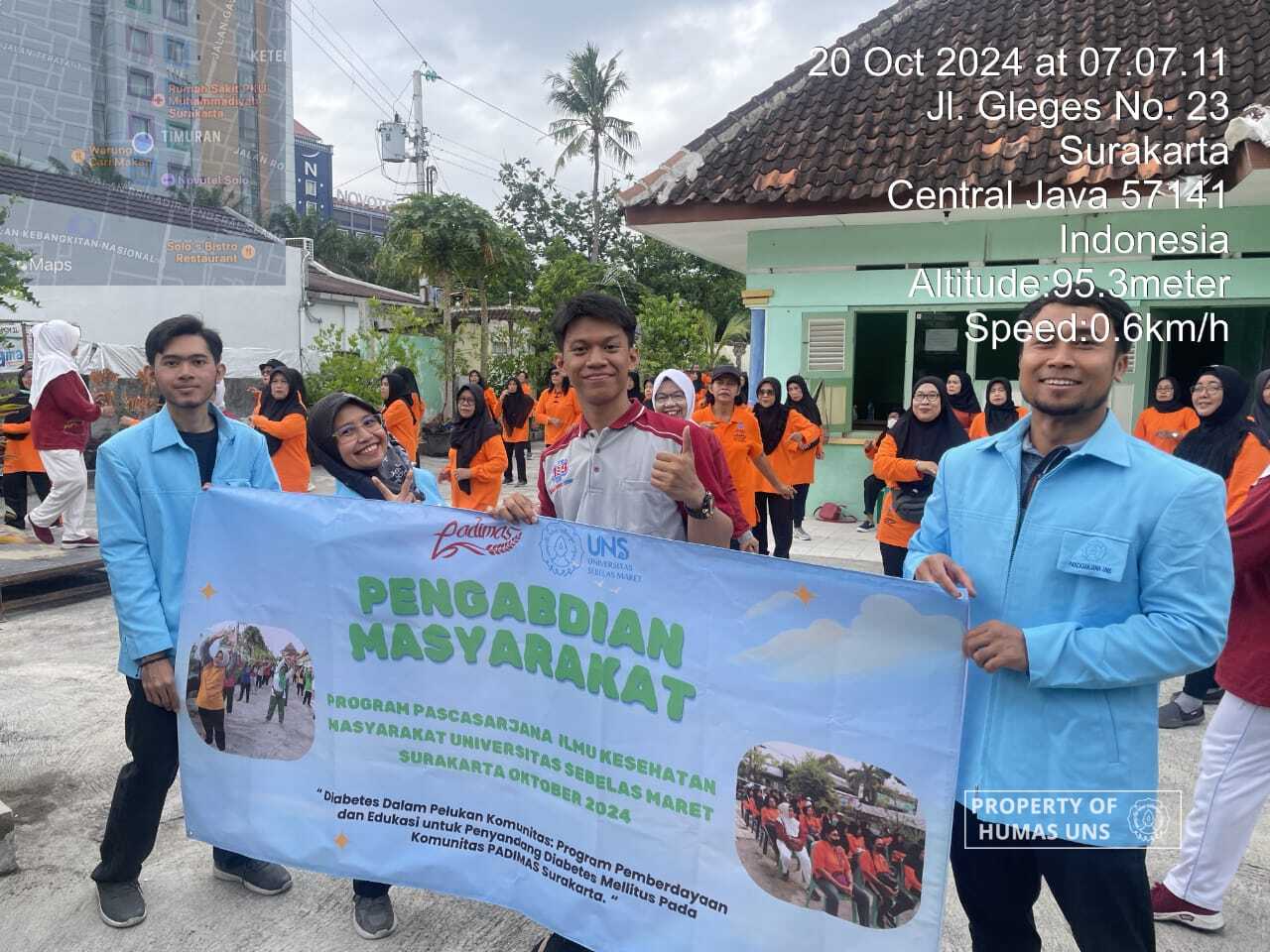
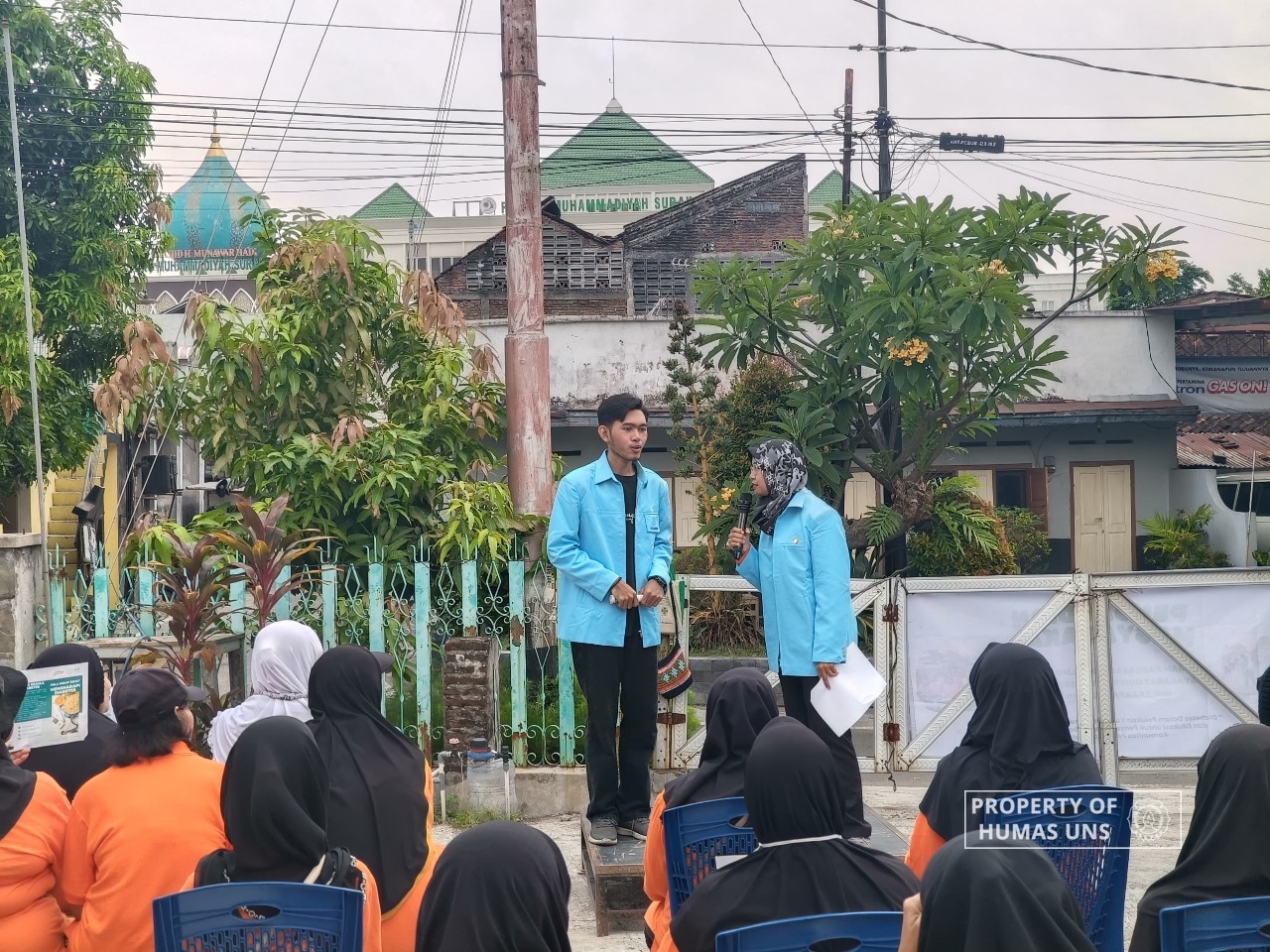
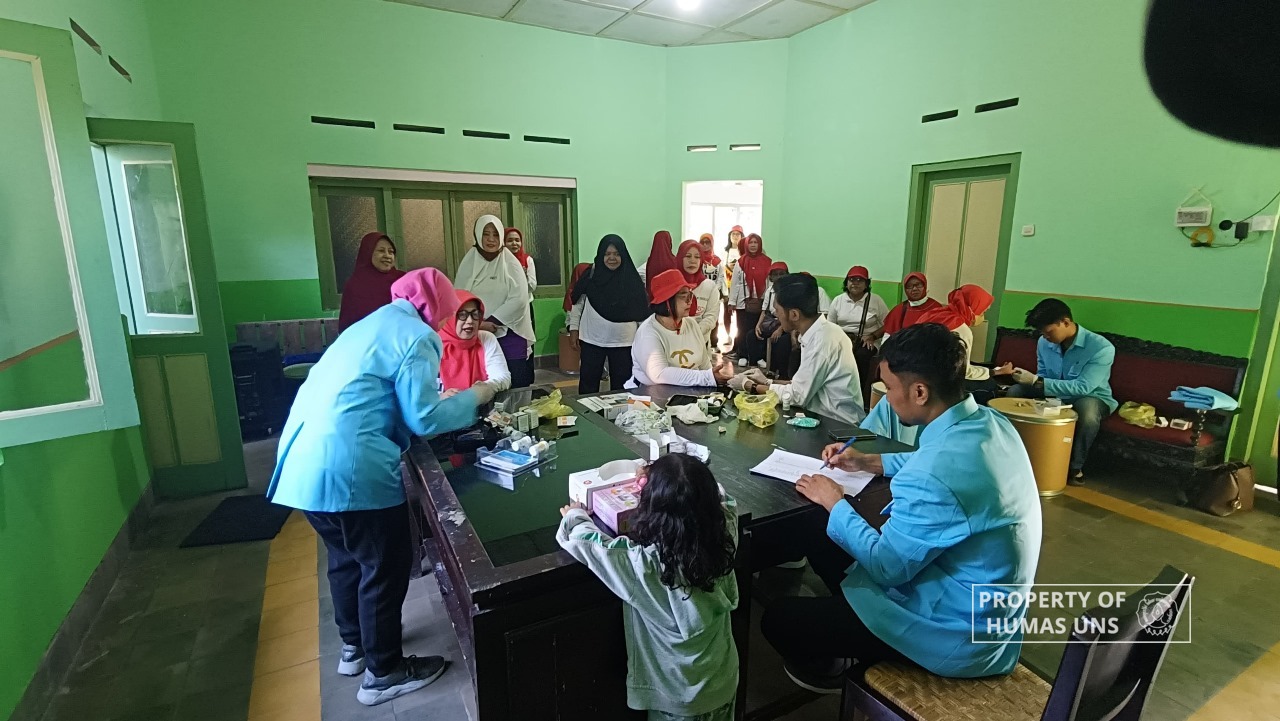
PADIMAS members were given the opportunity to learn various healthy lifestyle practices for individuals with Diabetes Mellitus. Following this, the UNS community service team organized a health exercise session specifically designed for diabetes patients, which was followed by blood sugar level checks after the exercise. The participants were very enthusiastic about this activity.
The first session began with participants completing a questionnaire before receiving educational materials and filling out another questionnaire afterward to assess their understanding of the provided information. The second session started with a blood sugar level check before the exercise, followed by another check after the session concluded.
During the educational activity, the UNS community service team introduced the definition of diabetes, its causes, and the symptoms it may present. Additionally, the session covered topics such as blood sugar level management, the importance of physical activity, the characteristics of healthy foods, adherence to medication schedules, and proper dietary patterns and portions for individuals with Diabetes Mellitus.
After delivering the educational materials, participants were rewarded with door prizes for correctly answering questions about the topics discussed, adding an interactive and motivational element to the session.
During the second activity, the UNS community service team and PADIMAS conducted a health exercise session, which began with a blood sugar level check before the exercise and concluded with another check afterward. This activity aimed to assess the impact of physical exercise on blood sugar levels in individuals with Diabetes Mellitus.
After collecting data on blood sugar levels and participants’ knowledge, the team conducted a detailed analysis. The results showed a significant impact of physical activity in reducing blood sugar levels. Additionally, the analysis of the educational session revealed an improvement in participants’ knowledge following the Diabetes Mellitus education program.
Several PADIMAS members expressed that the program provided significant benefits and motivated PADIMAS elderly members to remain consistent in engaging in physical activities and maintaining a healthy lifestyle.
This activity supports UNS in achieving two Sustainable Development Goals (SDGs): Good Health and Well-Being (SDG 3) and Quality Education (SDG 4).
Humas UNS