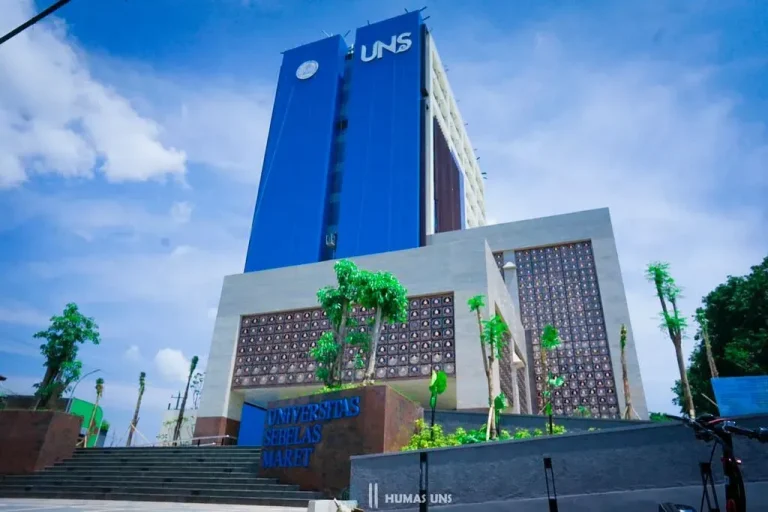
UNS – Universitas Sebelas Maret (UNS) Surakarta prepares four entrance schemes for ‘Seleksi Mandiri (SM) UNS. The schemes are the Written Exam (SMJU), Achievement Track (SMJP), Disability Track (SMJD), and Partnership Track (SMJK). This in accordance with the mandate of the Regulation of the Minister of Education and Culture of the Republic of Indonesia No. 6 of 2020 Regarding New Student Admission (PMB).
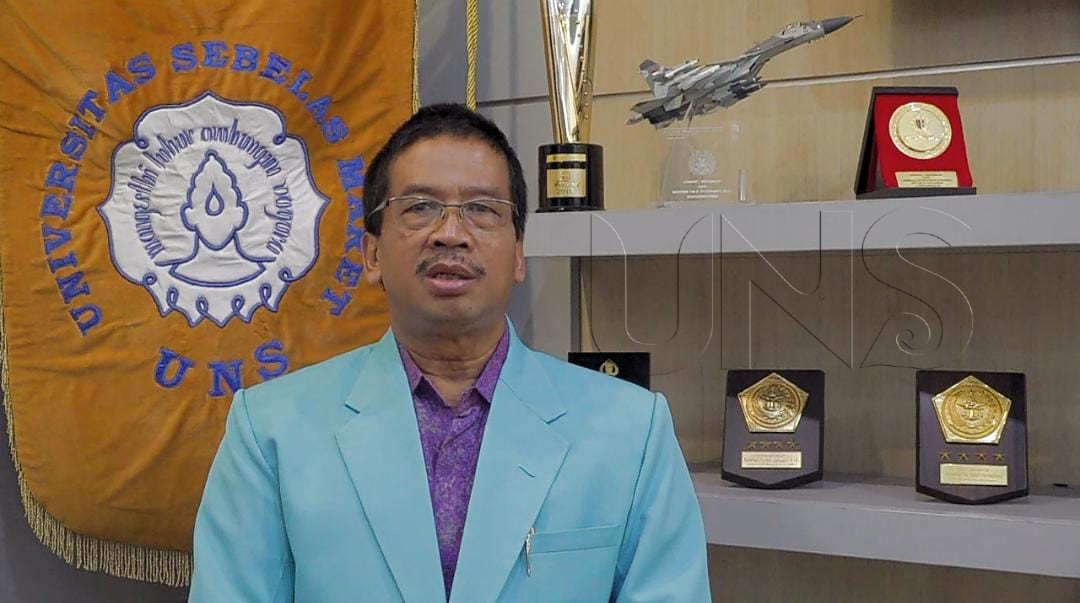
The Rector of UNS, Prof. Jamal Wiwoho states that SM UNS is carried out by following the fair, accountable, flexible, and efficient principle. All processes and mechanisms in SM UNS are conducted through an online system with an aim to limit the mobility of all parties involved to prevent Covid-19 transmission either among participants, the organizing committee, and the wider community.
“Detailed information on the procedure and requirements for SM UNS is available on spmb.uns.ac.id,” explains Prof. Jamal, Saturday (25/7/2020).
As for the Written Exam track, participants are given the option to use LTMPT UTBK score or joining the UNS computer-based written exam, which consists of Scholastic Potential Test. The exam conducted through an online system, thus all prospective students from all parts of Indonesia can participate in the test and can take the test from their respective residences. To ensure the credibility of the online examination, UNS Written Exam will use information and communication technology that allows supervision carried out directly by officers assisted with artificial intelligence technology (artificial intelligence).
As for tuition fees, all prospective students who admitted through SM UNS will bear to types of tuition fees, the Single Tuition (UKT), and Institutional Development Endowment (SPI). UKT is designed to support routine academic activities. The amount of UKT is determined based on the economic ability of the prospective student’s parents. While SPI will be utilized to support various quality improvement and institutional development activities at UNS. Several activities supported by SPI funds are internationalization program, student exchange to abroad university, scholarships for outstanding S1 graduates to continue their studies at UNS, laboratory equipment updates. Prospective students can choose the amount of SPI according to their abilities.
Prof. Jamal further added that UNS provides the opportunity to apply for UKT and SPI waivers, both in the form of reduction and fee waivers. This policy is addressed to three types of prospective students, the holder of KIP-Kuliah card, who will be exempted from UKT and SPI fees. Each year UNS ensures that at least 20% of the total student admitted is KIP-Kuliah cardholder. The second group is a non-KIP student who faces economic difficulties.
As of June 2, 2020, the Rector of UNS has issued a policy to provide UKT relief for UNS students who are experiencing economic difficulties due to the Covid-19 pandemic, in accordance with Rector Regulation No. 18 of 2020. This policy specifically targets UNS students who do not have a KIP card, because, before the pandemic, the economic conditions of their families were included in the middle class or even above average. To ensure the policy is right on target after prospective students have been accepted, they can apply for UKT and SPI waivers, in accordance with procedures and mechanisms stipulated in Rector Regulation No. 18 of 2020.
The third group is designed for outstanding students. UNS provides an opportunity for outstanding student candidates to apply for UKT and SPI waivers. Some examples of achievements that can be considered to obtain SPI and UKT relief are the first-place winners in a reputable competition both at national and international levels.
“UNS held an SM with the aim of expanding access to higher education for all levels of Indonesian society. Through SM, UNS wants to attract prospective students who have high potential, high achievers, and people with disabilities. UNS also issued policies to ensure that all prospective students who were accepted through SM UNS can participate in learning activities well, including those who were experiencing economic difficulties,” Prof. Jamal concluded. Humas UNS
Reporter: Dwi Hastuti