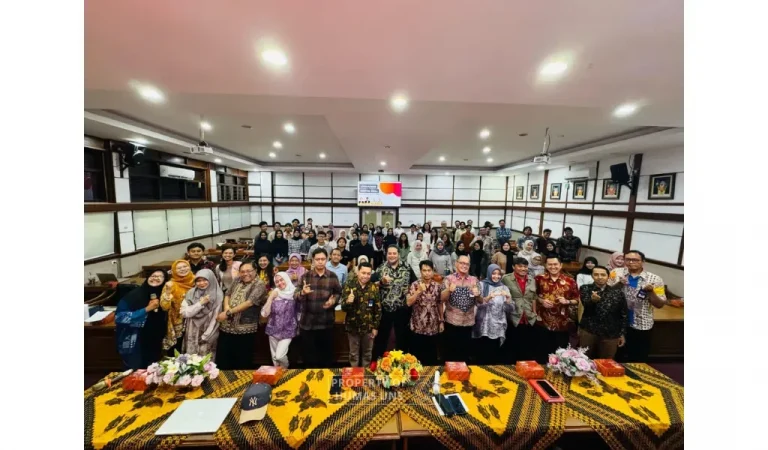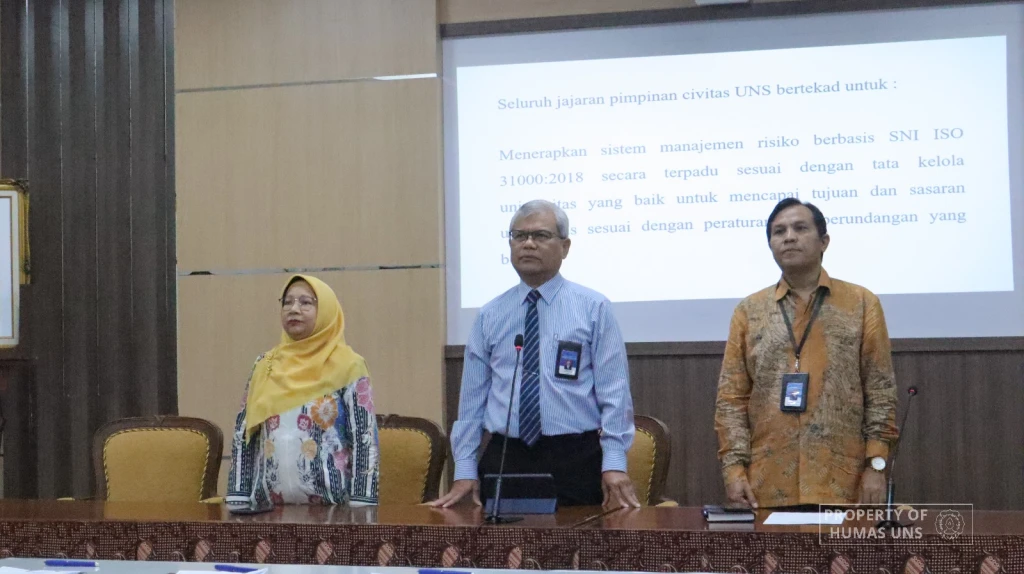
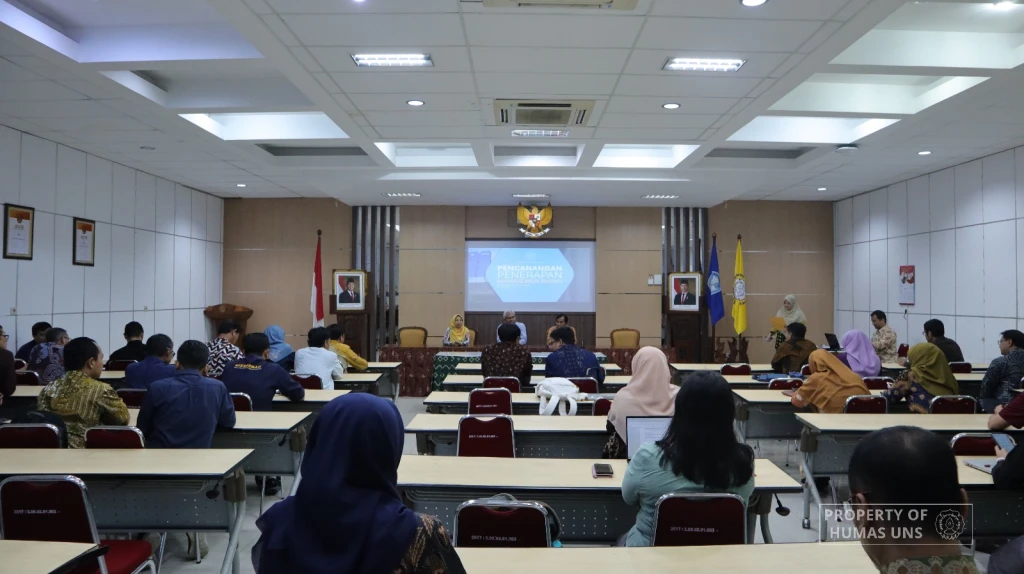
UNS – Universitas Sebelas Maret (UNS) Surakarta has officially launched its risk management implementation. The Risk Management Division of the UNS Secretariat spearheads this initiative. It aims to enhance governance by fostering a structured and systematic approach to risk mitigation. On Wednesday (5/3/2025), UNS hosted the event in Meeting Room IV of the Dr. Prakosa Building. Deans, directors, institutional heads, and other key leaders attended the gathering.
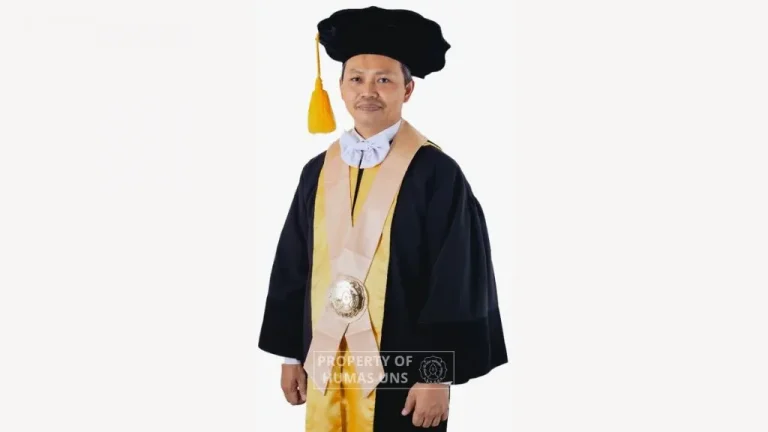
In his opening speech, UNS Rector Prof. Dr. Hartono, dr., M.Si. emphasized the necessity of structured risk management. He highlighted its importance as the university continues to expand and adapt to evolving challenges. He also pointed out that a well-implemented risk management system strengthens institutional effectiveness and ensures the achievement of strategic goals. It also helps mitigate potential disruptions.
“At UNS, we integrate risk management into every policy and strategic decision. A robust system allows us to anticipate and minimize risks while improving efficiency. Setting clear priorities and timelines is crucial for achieving our vision as an internationally reputable university. This approach enables us to address potential risks effectively and proactively manage uncertainties,” Prof. Hartono stated.
He also underscored that risk management is a shared responsibility across the university. Every academic unit must proactively identify, assess, and manage risks in their respective operational areas. By engaging the entire academic community, UNS fosters a culture of accountability, professionalism, and preparedness.
“The launch of this initiative marks the foundation for a strong and sustainable risk management framework at UNS. However, its success depends on collective participation. Each academic member plays a vital role in ensuring its effective implementation. By embedding risk management into daily operations, we strengthen resilience and adaptability,” he added.
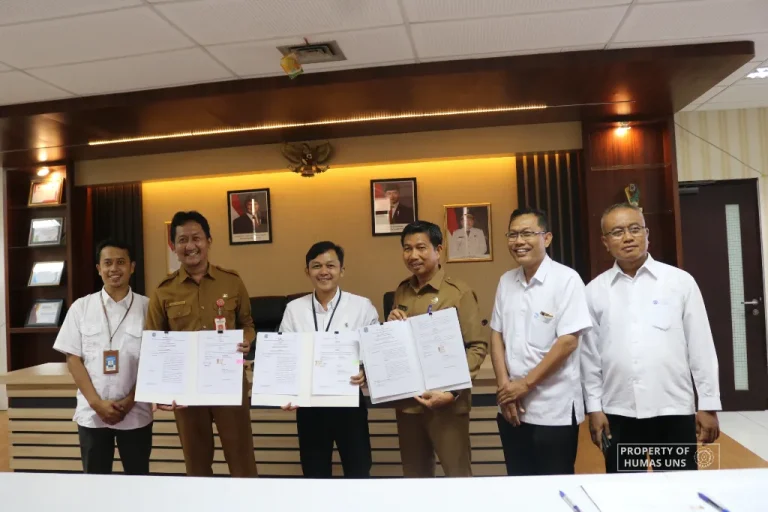
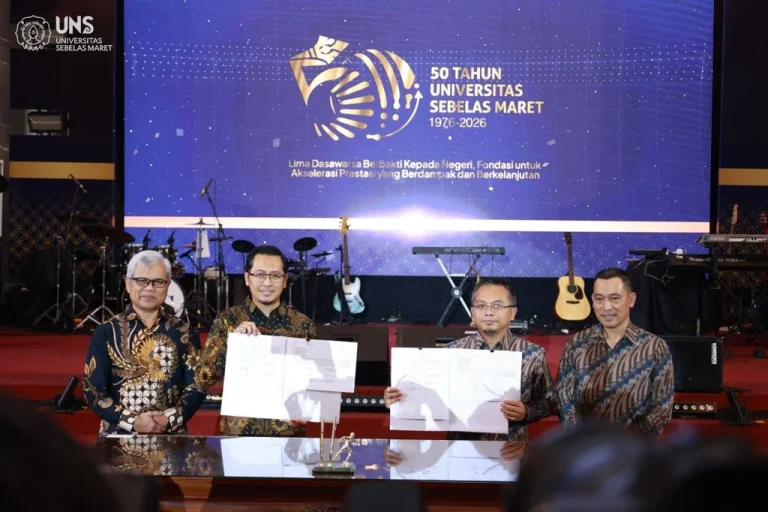
Signing of the Integrity Pact
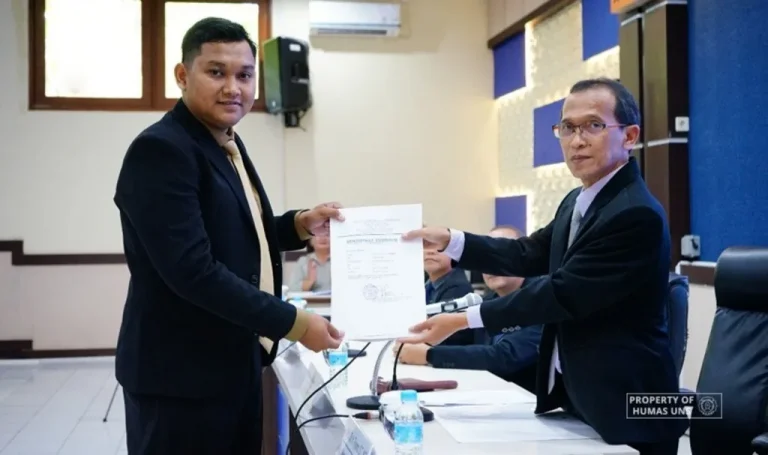
Forty designated risk owners from various university units attended the event, as confirmed by UNS Secretary Prof. Dr. Agus Riwanto, S.H., S.Ag., M.Ag., M.H. They represented various university units. These include representatives from 16 faculties/schools, seven directorates, three institutions, three offices, and three Integrated Service Units (UPT). Additionally, there are representatives from three Institutional Excellence Centers (PUI), one Business Management Agency, and one Procurement Unit. Lastly, there is one Language Center.
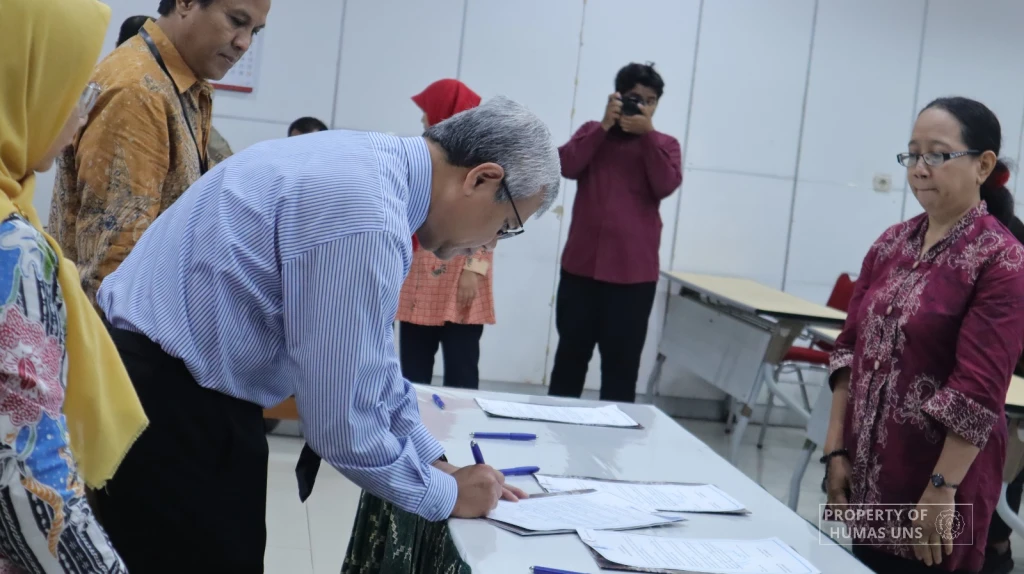
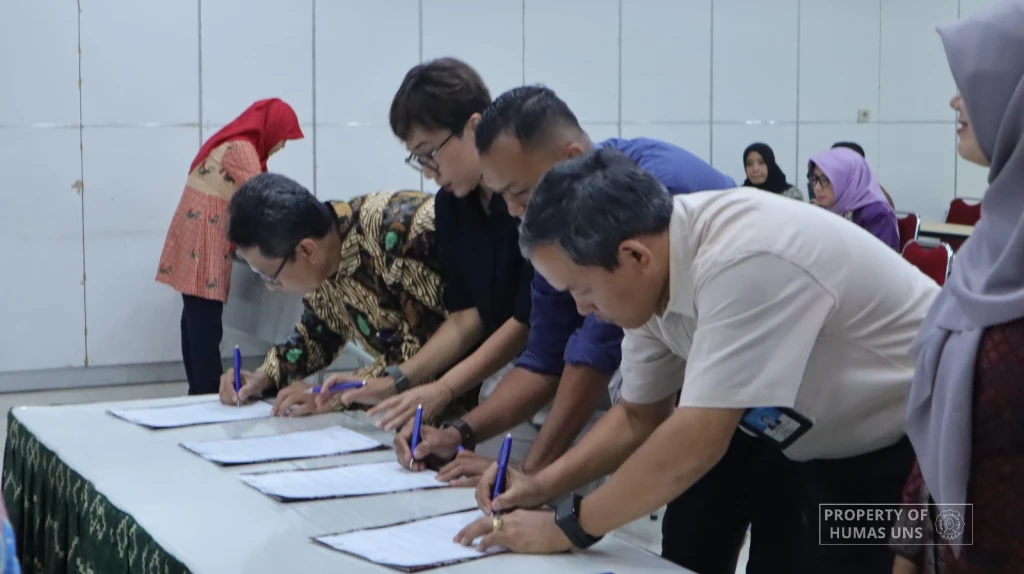
“A total of 40 unit leaders have signed the Integrity Pact for Risk Management Implementation, officially commencing this initiative. These risk owners are responsible for assessing risks within their units. They also serve as key contacts for consultation and reporting to the Risk Management Division. Additionally, they will oversee risk monitoring, documentation, and education within their respective units,” Prof. Agus explained.
Each unit must actively assess risks to ensure continuous updates in identification, mitigation, and monitoring. This initiative strengthens UNS governance and aligns risk management practices with international standards.
Aligning with Sustainable Development Goals
This initiative reflects UNS’s commitment to Sustainable Development Goal (SDG) 4: Quality Education. By implementing structured risk management, UNS ensures a well-organized academic environment that supports long-term educational excellence. The integration of risk management enhances institutional resilience and promotes a culture of continuous improvement. It positions UNS as a model for higher education institutions in governance and accountability.
The university strengthens its risk management system by providing training, fostering collaboration, and evaluating strategy effectiveness. UNS creates a proactive, transparent, and forward-thinking academic environment to navigate future challenges.
Humas UNS