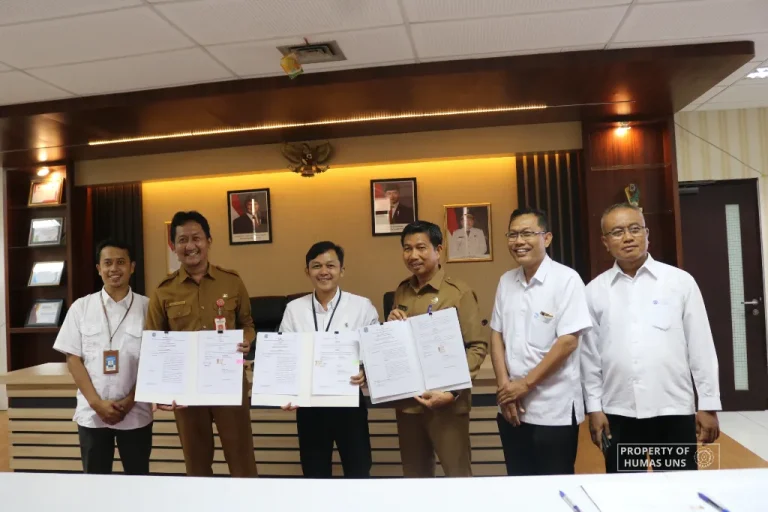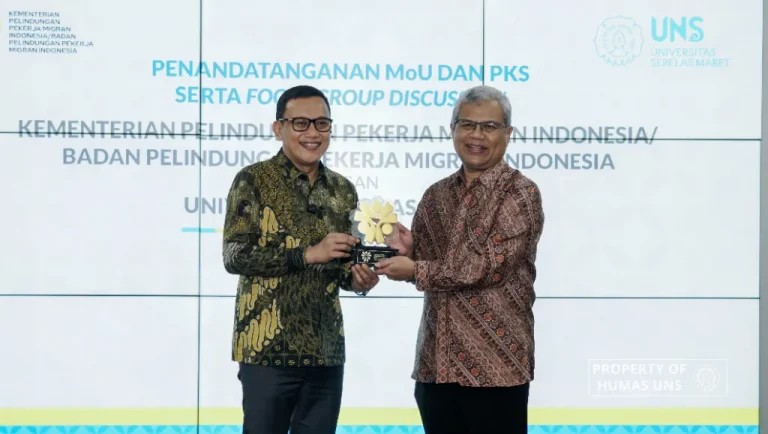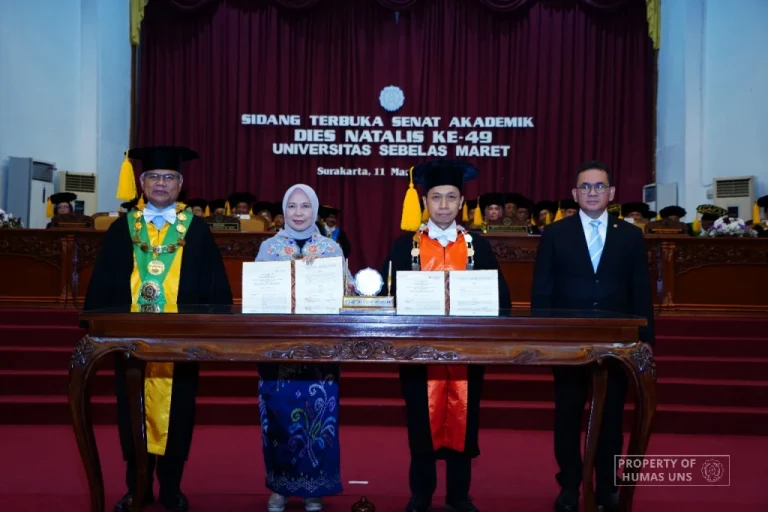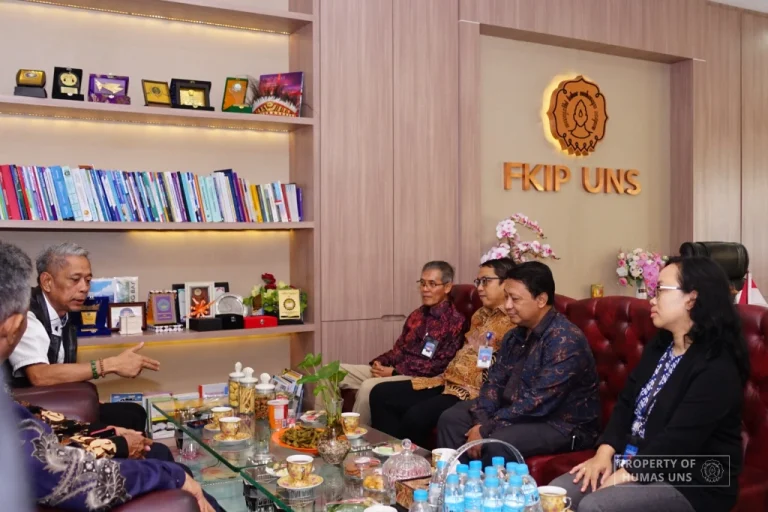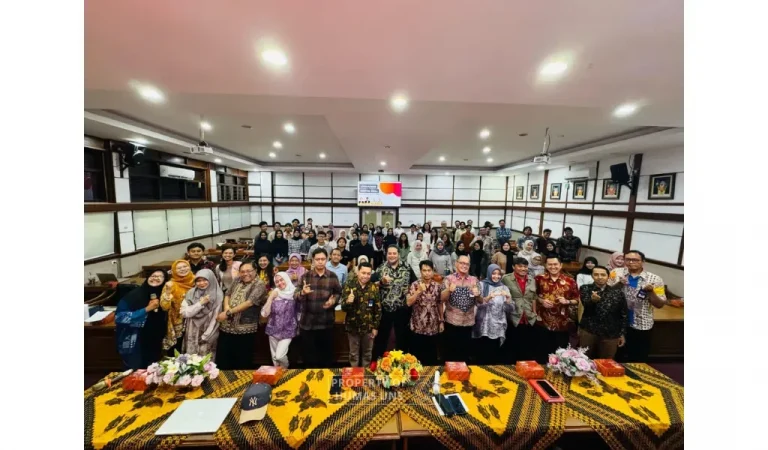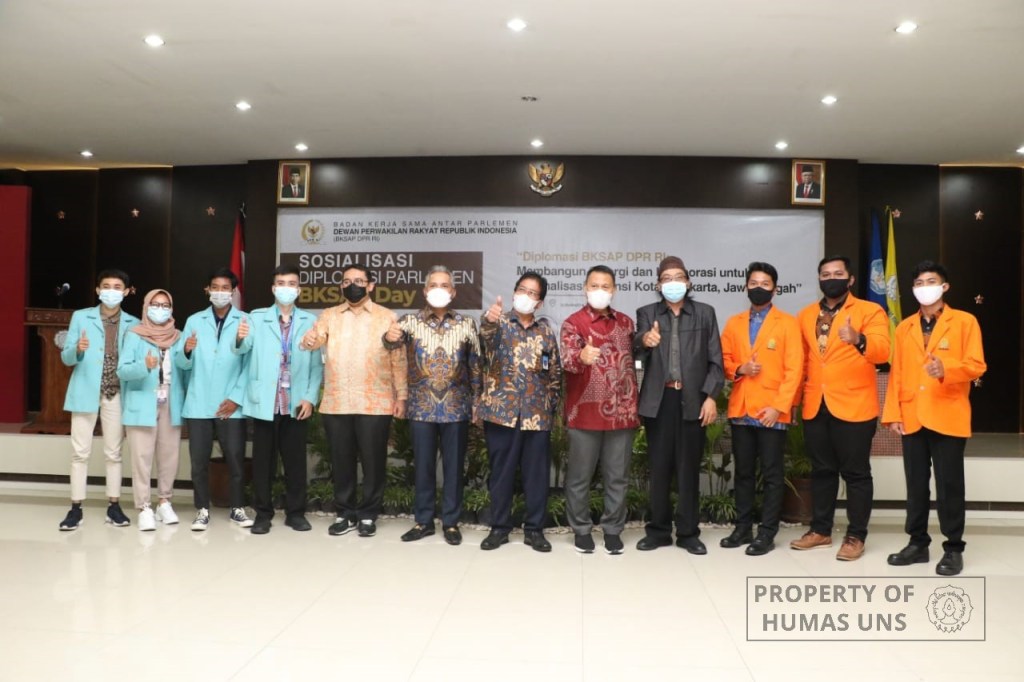
UNS — The student of Universitas Sebelas Maret (UNS) Surakarta and Inter-Parliamentary Cooperation Agency (BKSAP) House of Representative (DPR) RI sit together to discuss international political issues on Thursday (8/4/2021) in UNS Inn. This discussion is a part of BKSAP Day, a Socialization of Parliamentary Diplomacy attended by the Rector of UNS, Prof. Jamal Wiwoho, Vice Chairman of MWA UNS Prof. Hasan Fauzi, Chief of Academic Senate UNS, Prof. Adi Sulistyono, and UNS executive board and institutes.
BKSAP DPR members that attended the event are Fadli Zon (Chief of BKSAP DPR), Mardani Ali Sera (Vice Chairman of BKSAP DPR), Hafisz Tohir (Vice Chairman of BKSAP DPR), Mulan Jameela (BKSAP DPR Member), Arzeti Bilbina (BKSAP DPR Member), and Hasani Bin Zuber (BKSAP DPR Member).
The issues discussed in the event are Myanmar’s military coup, Indonesian challenges in purchasing defense equipment from Russia and United States (US), and conflict in the South China Sea. The Chief of BKSAP DPR RI, Fadli Zon, firstly discussed the political turmoil in Myanmar after the military coup. He condemned the coup and despotism in capturing Aung San Suu Kyi, President Win Myint, other state officials, and other political figures.
“The first to respond was BKSAP, and we issued a statement of position from Indonesia parliament. Through BKSAP, we condemned the military coup in Myanmar that was injuring and tarnishing the democracy,” Fadli Zon said.
BKSAP DPR RI has requested the South East Asia parliamentary organization in ASEAN Inter-Parliamentary Assembly (AIPA) to freeze the Myanmar parliament. Fadli Zon also stated that BKSAP DPR RI would publish a resolution regarding the Myanmar issue representing the Indonesian parliament in the Inter-Parliamentary Union online meeting. He suggested Myanmar learn from Indonesia’s experience in abolishing military double-functions from the parliamentary system. Indonesia has a bitter experience during Soeharto’s presidency when the military has a strong government position and vast opportunity in civil works, which led to some deviations. The system was abolished smoothly without significant political turmoil, unlike Thailand and Myanmar.
“Transition went peacefully and smoothly in Indonesia. But is not the case with the Myanmar military because they are afraid of losing their role when the civil party won the election,” he added.
He also answered a question from UNS students who questioned the challenges in military equipment purchase from Russia and the US. Fadli Zon explained that Indonesia was under the threat of Countering America’s Adversaries Through Sanctions (CAATSA) during Trump’s presidency. This regulation mentioned that US would give a sanction in the form of financial transaction prohibition, termination of financial assistance, and visa bans for the individual for countries that purchase military equipment from Russia. Through its Ministry of Defense (Kemenhan), Indonesia was forced to rethink and consider its plan to buy Russia’s Sukhoi Su-35 jet.
Despite of the forcing nature of the regulation, he stated Indonesia should maintain its free and active foreign policy and play its bargaining position well. This policy is based on Hatta’s ideals that Indonesia is located between two big powers, the west and the east. Indonesia’s bargaining position and foreign policy are the keys to solve ASEAN countries and China issues in the South China Sea. Humas UNS
Reporter: Yefta Christopherus AS
Editor: Dwi Hastuti