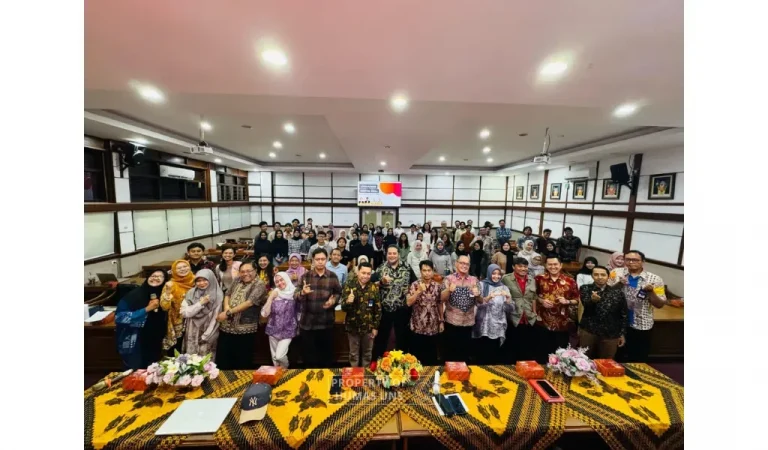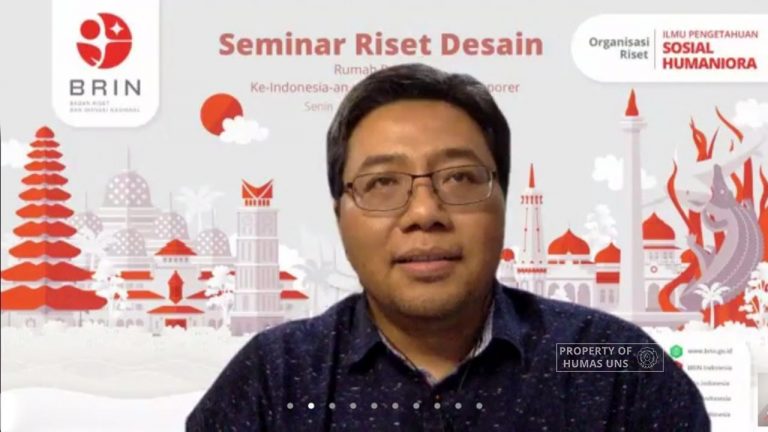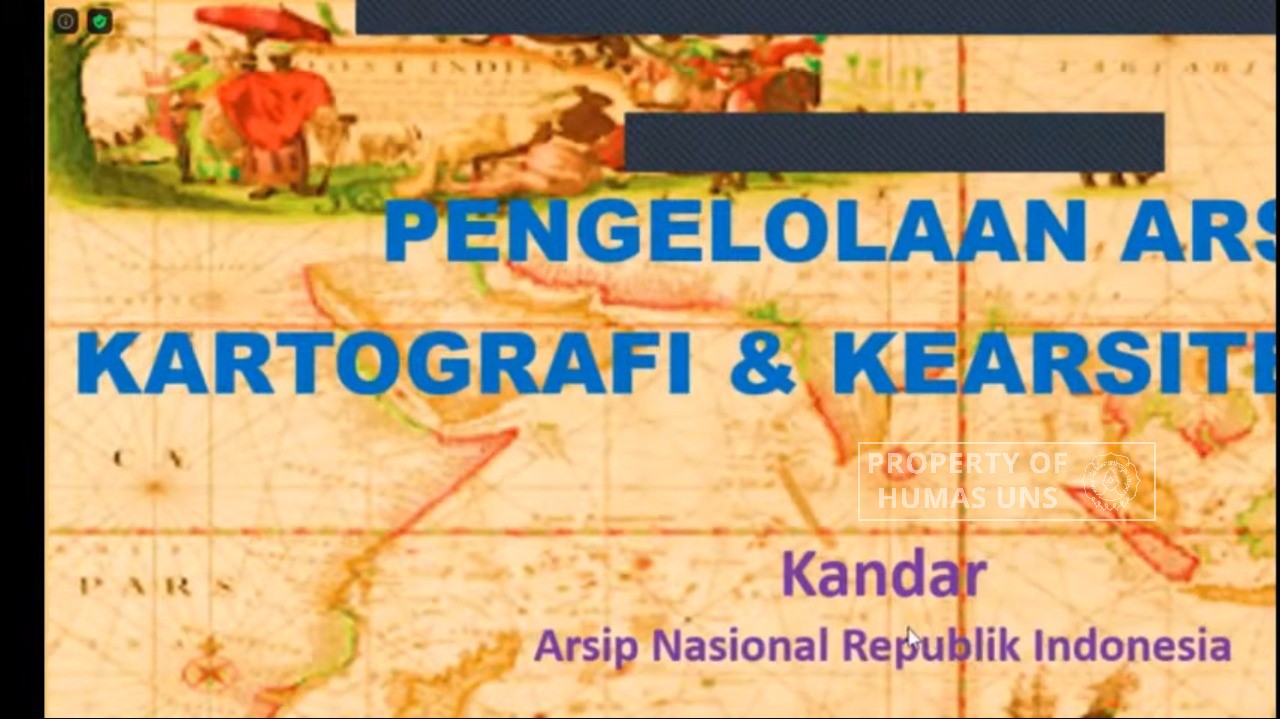
UNS — The Technical Implementational Unit of Archives Universitas Sebelas Maret (UNS) Surakarta held a webinar on Management of Cartographic and Architectural Archive. This event was held on Wednesday (2/9/2020) through Zoom Meeting application and YouTube live stream. UNS Management of Cartographic and Architectural Archive invited Dr. Kandar, the Director of Preservation of the National Archives of the Republic of Indonesia (ANRI) as a speaker in the webinar.
Kandar explained that cartographic archive is an archive that contains information in the form of graphic or photogrammetric images depicting a certain area which includes cartographic elements in the form of titles, scales, legends, and astronomical lines, for example, maps and atlases.
“While the architectural archive is an archive that represents unmovable object such as the construction of buildings, monuments, forts, gates, places of worship, tombs, reservoirs, bridges and the like,” he explained.
Archive management in each institution is vital because the archive has a value that can be used as a source of information in the future. There are regulations concerning archive in Indonesia, one of which is the Law Number 43 of 2009 concerning Archive Management.
He added that one of the urgencies of archive management is to avoid damages that can threaten the archives. For example, humidity in the storage which does not support the preservation of archives, and to avoid disaster in disaster-prone areas. “If a disaster occurs, at least the archives are managed and digitalized,” he added.
Besides discussing the importance of archive management, Dr. Kandar also discussed the archival management guidelines on static and dynamic archives. Dynamic archive management can be categorized into creation, use, maintenance, depreciation and vital archive programs. While static archive management consists of the acquisition, processing, preservation, and granting of access.
“Dynamic archive instruments are also different, in static archives, it is similar to its management. While the dynamic archive consists of manuscript management, classification, and security system and access,” Kandar explained.
In the archive acquisition, some procedures need to be done, such as monitoring, search, assessment, and handover of archives. Different from the archive management procedure, Dr. Kandar stated that there are procedures that must be considered when processing archives, such as archive management, preparation of technical plans, reference tracing, provisional schematics, descriptions, and definitive schemes. Besides, it must also pay attention to maneuvers, drafting, endorsement, refinement, and assessment and review. Humas UNS
Reporter: Bayu Aji Prasetya
Editor: Dwi Hastuti