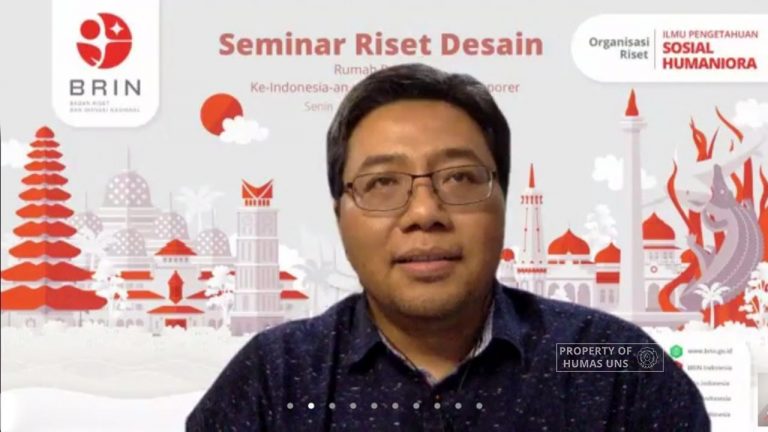
UNS — Kine Klub Faculty of Social and Political Sciences (FISIP) Universitas Sebelas Maret (UNS) Surakarta has conducted a series of “Basic Training Kine” through Google Meet and Zoom Cloud Meetings. This event is a briefing on film production materials for first- and second-years Kine members. These series include Large Class on “Film Production Management and Film Production SOP” that collaborated with Rangkai Indonesia (Rangkai.id) and Indonesian Film Community Network (IFCNetwork).
Unlike the previous years, the large classroom event this year was opened for the public through the YouTube Kine Klub FISIP UNS channel. The speakers invited to this event were Arief Akhmad Yani and Said Nurhidayat from IFCNetwork. Delivering the first material, Arief Akhmad Yani explained the film ecosystem in Indonesia. The Indonesian film ecosystem has many components, starting from education, production, distribution, exhibition, appreciation, and archiving. These components are interrelated and form a cycle.
“Participating in a workshop like in Kine UNS falls under educational component as an important part of Indonesian film development. (It) will affect the values of the national film. There are basic components that we learned, and you could learn, and you could explore further during film production,” Mas Yani, his short name, explained on Saturday (21/8/2021).
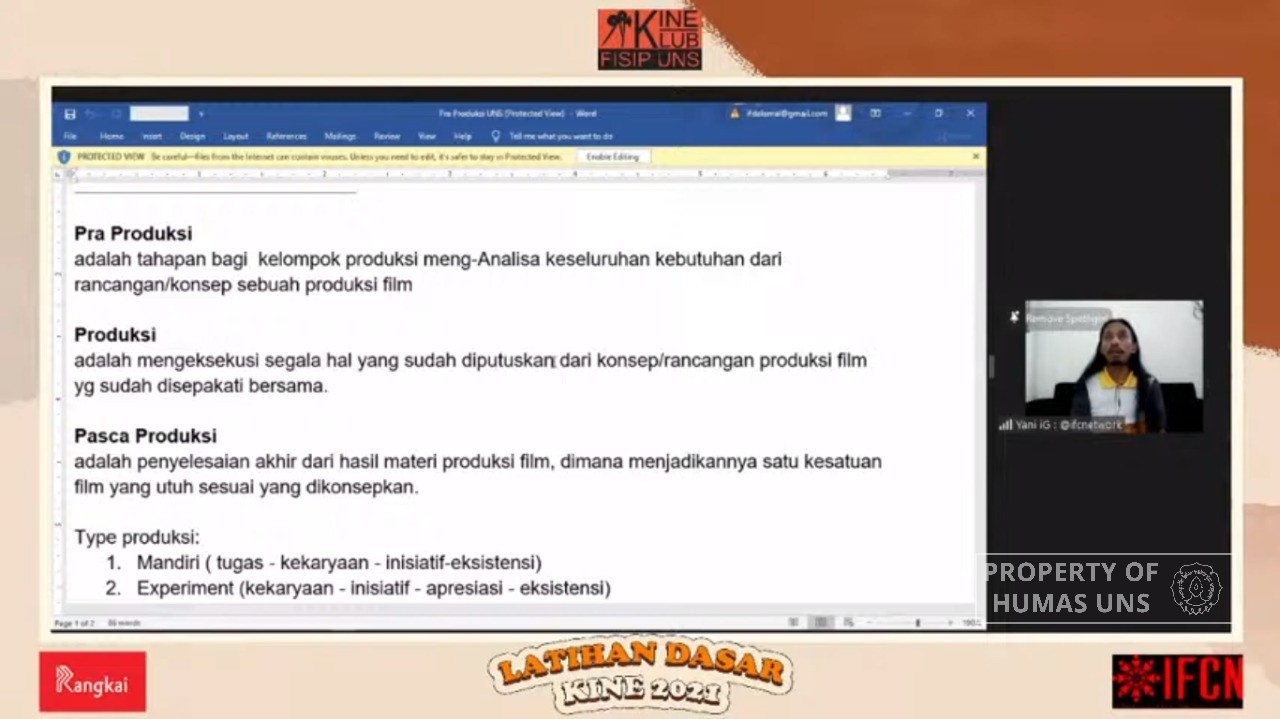
Yani followed with the three stages in production management of film production: pre-production, production, and post-production. In pre-production, there will be a triangle system; the writer, producer, and director, who have the same willingness to apply their ideas to a film. The producer will bring together several people to analyze every detail of the production plan. “Thinking the risk that might happen, all resources needed in the production, funding, job description, who take care of the wardrobe, which secure the location, who take care of the foods, and such,” he explained.
The production process is the execution of the concept or plan of film production agreed upon by all related parties. Good management and distribution of roles in the pre-production stage will ensure no debate and inter-division issues during the production process. Post-production includes the final approach that combines all production materials into a complete film according to the initial concept.
Yani also explained that based on his experiences, there are three types of film production, independent, experimental, and professional productions. However, these categories cannot be used fully by filmmaker because it is solely based on his experiences. Independent production is usually conducted by an individual, small group, and community. For example, university students who make film assignments from their teachers. Or independent work, when someone has an idea and wanted to put it into implementation. This type of production does not have any sponsors. The experimental production could be a means to achieve new ideas after going through the stages in the independent production process. Usually, this type is also independent works that are exhibited in various channels or festivals until they reached recognition. The professional production also started with the willingness to create but approached through a professional method. In this type, the economic value and material benefits from the production are considered during the production.
“Professional management. When produced, can it generate profits? Producer and director tried with the available funds to achieve their ideas,” Yani added.
The Importance of Contract and Intellectual Property Rights
After the exciting material on film production, the participants learned about the importance of the contract and Intellectual Property Rights (IPR) from Said Nurhidayat. This material emphasized the importance of setting the right of ownership for the film at the beginning to avoid discourse in the future.
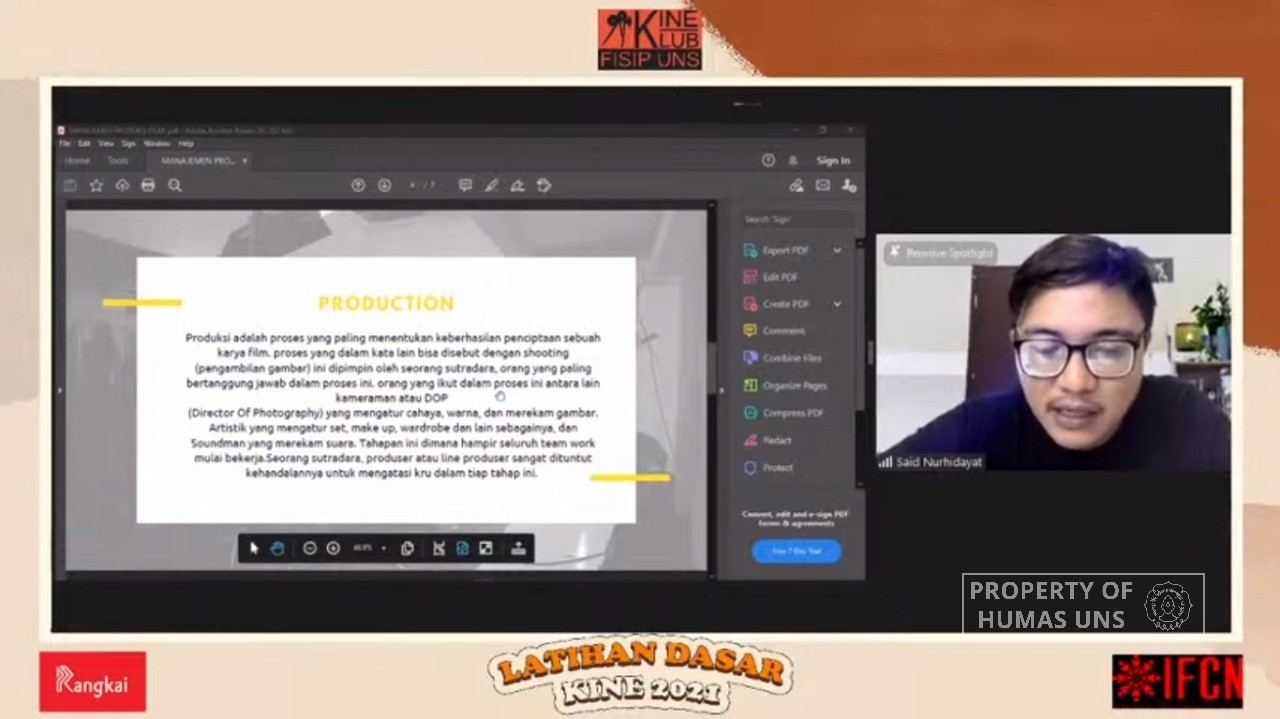
“Especially in independent production funded by collection. The IPR contract needs to be agreed upon at the beginning. After it is distributed, generate profit, who owns the money. (If) it gets an award to whom the award belongs. Discourse often appears when it is not agreed beforehand,” Said stated.
If the producer owns IPR, Said also mentioned that producers could have a long-life work regarding the film they produce. “For example, if the film will be re-broadcasted in a channel, then it should deal with the producer,” he said. Humas UNS
Reporter: Kaffa Hidayati
Editor: Dwi Hastuti