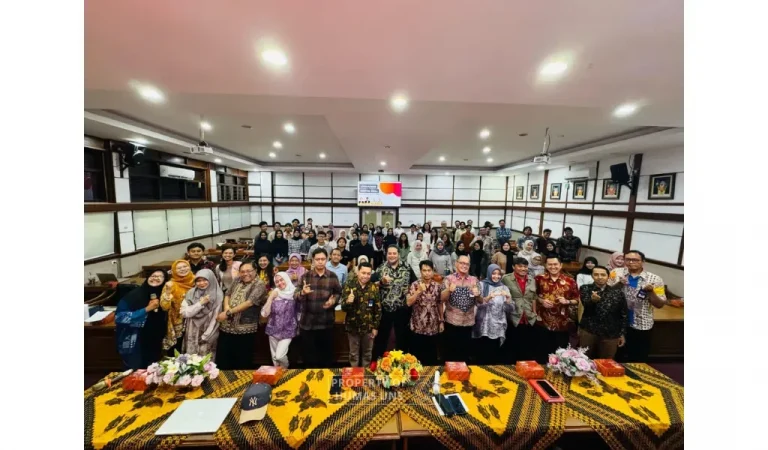
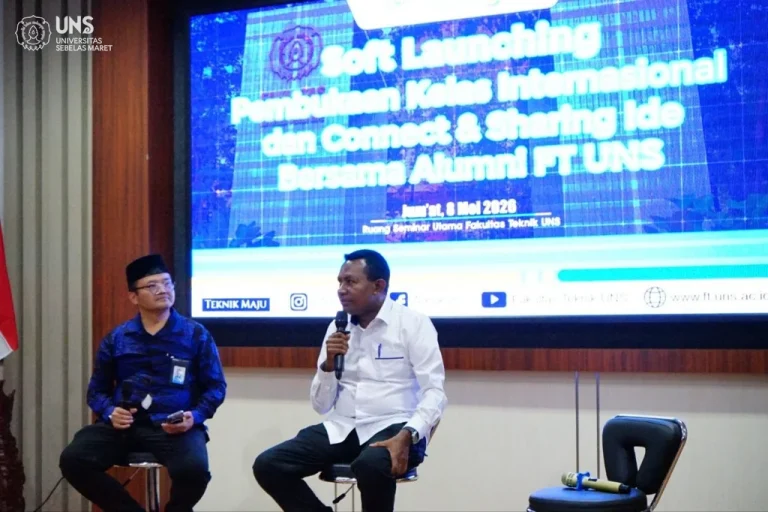
UNS — The Master Program in Architecture Faculty of Engineering (FT) Universitas Sebelas Maret (UNS) Surakarta held a general lecture on Challenges for Postgraduate Program in Architecture in the Development of Science and Technology. The general lecture was held online through Zoom Meeting application and live broadcast in Faculty of Engineering UNS YouTube channel on Tuesday (22/9/2020).
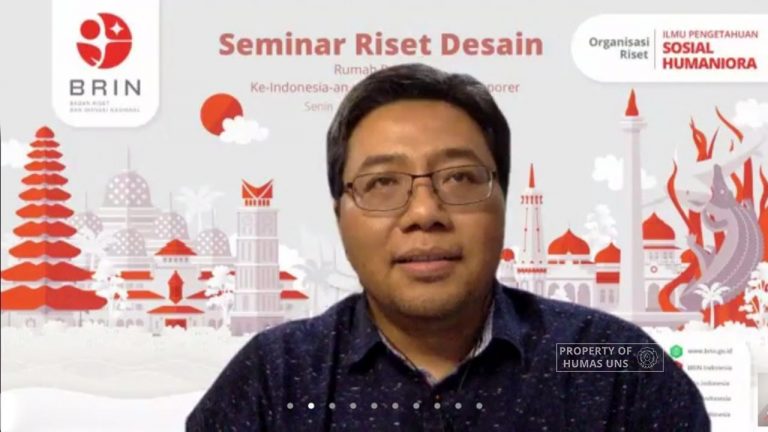
The online lecture was attended by tens of participants from 47 universities in Indonesia. Led Ofita Purwani, ST., MT., Ph.D, this event invited Prof. Ir. Achmad Djunaedi, MURP., Ph.D, Professor of Architectural and Planning Engineering (DTAP) FT Universitas Gadjah Mada (UGM), as the keynote speaker. Opening the material, Prof. Achmad mentioned that architectural planning involves science and technology, as well as innovation. He explained that the flow of architectural design can be viewed from input, process, output or IPO method. Our focus is usually on the designing process; thus, the input process is not quite significant. According to Prof. Achmad, the flow of architectural design requires the utilization of technology, innovation, and science. The process of designing will use science and technology and the result of design will be used somewhere, for someone, for a certain objective, and providing a solution for certain issues. Thus, a challenge to use science and technology and how to develop it appear in the flow.
Concerning the education of Architecture, at the undergraduate and master degree, the learning process will start with educational materials on the use of science and technology through the practice in the architectural profession. Then at master and doctoral degree, the educational materials on the production of science and technology through research and development is added. Therefore, the theme discussed is the education for architectural researcher which is focused on the topics such as substantial, methodological, and contemporary issues challenges in architectural researches.
At the substantial challenges, several factors affect the selection of research substances in the architectural field such as its inclusion in the Faculty of Engineering and separation of architecture from regional planning and urban design. Some aspects require attention such as “Process Flow” aspect and “component” aspect in architectural development. The methodological challenges include the diversity of methods in architectural research which can be divided into two general categories, general and specific. The general method can be found in interpretive historical research, qualitative research, correlation research, full and pseudo experimental research, simulation research, logical argumentation research, and case study/combination strategy research. While the specific method can be found in space syntax and environmental behavior. Specific methods for architectural research need to be developed, identified, and formulated. Lastly, concerning the contemporary issues in architectural research, Prof. Achmad stated that theory will not be established forever. Therefore, an architectural researcher has a task to update the theories and architectural knowledge or the built environment, to be always sensitive to the contemporary issues to conduct a study on the impact of contemporary issues on the existing theories. Humas UNS
Reporter: Zalfaa Azalia Pursita
Editor: Dwi Hastuti