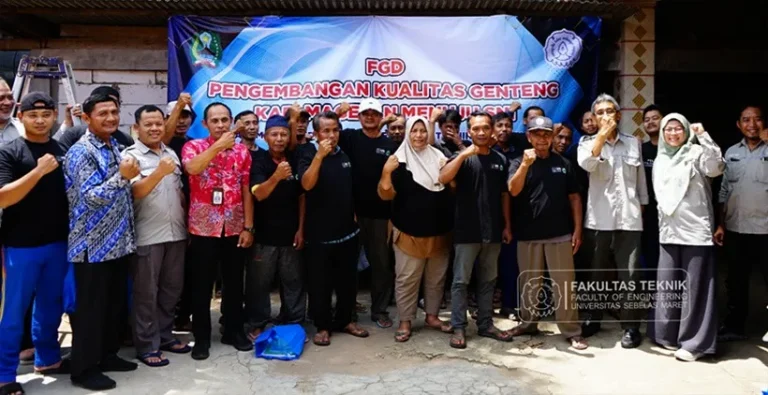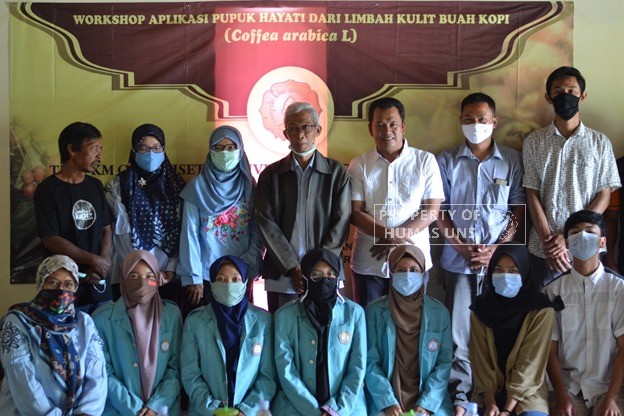
UNS — The Community Service Team (Pengabdian Kepada Masyarakat – PKM) from Biology Education Program Faculty of Teacher Training and Education (FKIP) Universitas Sebelas Maret (UNS) Surakarta held a workshop on the production of organic fertilizer. The activity was held in Kampus Kopi (Kampung Susu dan Kopi – Milk and Coffee Village) Ngemplak, Banyuanyar Village, Ampel Sub-District, Boyolali District on Tuesday (6/10/2020). This community service was led by Dr. Harlita and Dewi Puspita Sari, M.Sc, Dr. Umi Fatmawati, Prof. Dr. rer.nat. Sajidan, Dr. Slamet Santosa and Dr. Meti Indrowati as members.
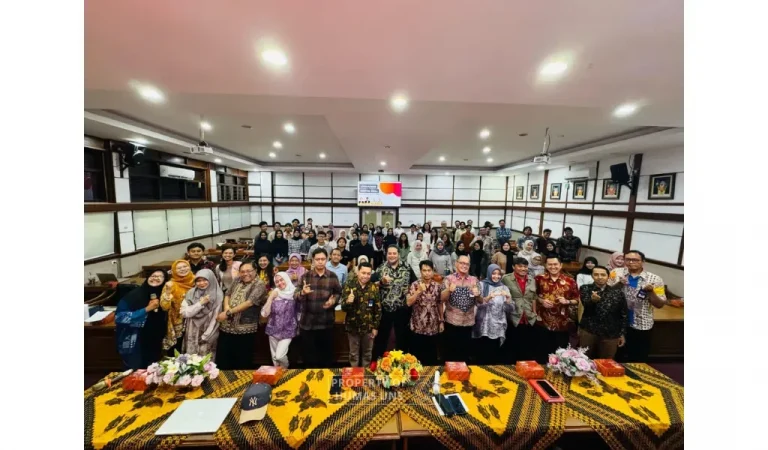
Dr. Harlita as the chief explained that this event aims to introduce the method to produce organic fertilizer from the waste of coffee fruit skin (Coffea arabica L). “UNS is a Green Campus which has the vision to preserve the environment. Organic fertilizer that we will produce and we will share the production process is the result of a research from Biodiversity and Genetic Engineering Research Group of Biology Education Program FKIP UNS,” Dr. Harlita explained in her opening remark. The workshop was attended by the research team, stakeholder from the village government and the local community. Komarudin, S.T. as the village chief of Banyuanyar village also conveying similar words to Dr. Harlita’s remark.
“Kampus Kopi Ngemplak, Banyuanyar is a pioneering Smart Green Village from 2018, therefore, it is focused on the environmental-based management. As an example, this kampung is a center for fresh milk production in Boyolali, the waste of coffee fruit skins is usually used as a mixture in fodder, then cow manure is used as compost for coffee plants. Therefore, with the innovation from PKM UNS team, it is expected that it will enrich the community’s knowledge and village empowerment in the future,” he explained.
Conducted offline, all participants were urged to apply the health protocol. The event was opened by the material delivered by Dr. Umi Fatmawati and Dewi Puspita Sari, M.Sc., which is followed by a demonstration session for organic fertilizer production. The demonstration was held with direct supervision from the PKM UNS team. Dewi Puspita Sari, M.Sc. explained that the result of this event in biological fertilizer made from the waste of coffee fruits fermented by Streptomyces spp bacteria for 14 days. The fertilizers were in the form of sown and block fertilizer. The appropriate technology applied in this process is the innovation in producing organic block fertilizer moulded with different sizes. This block was produced from a mixture of sown organic fertilizer and starch. “The mixture was moulded and dried for easier application,” Dewi Puspita Sari, M.Sc. added.
The block fertilizer has an effective period of around two years. It can be applied by the plant it together with the plant seeds. Before closing the event, Dr. Harlita hopes that through this event the community can solve the problem of critical lands and the decrease in soil nutrient due to chemical substances. “The utilization of coffee skin waste as organic fertilizer is an effort to achieve zero waste management that can support the productivity of coffee plants in particular, and cultivated plants in general,” she stated. Humas UNS
Reporter: Bayu Aji Prasetya
Editor: Dwi Hastuti