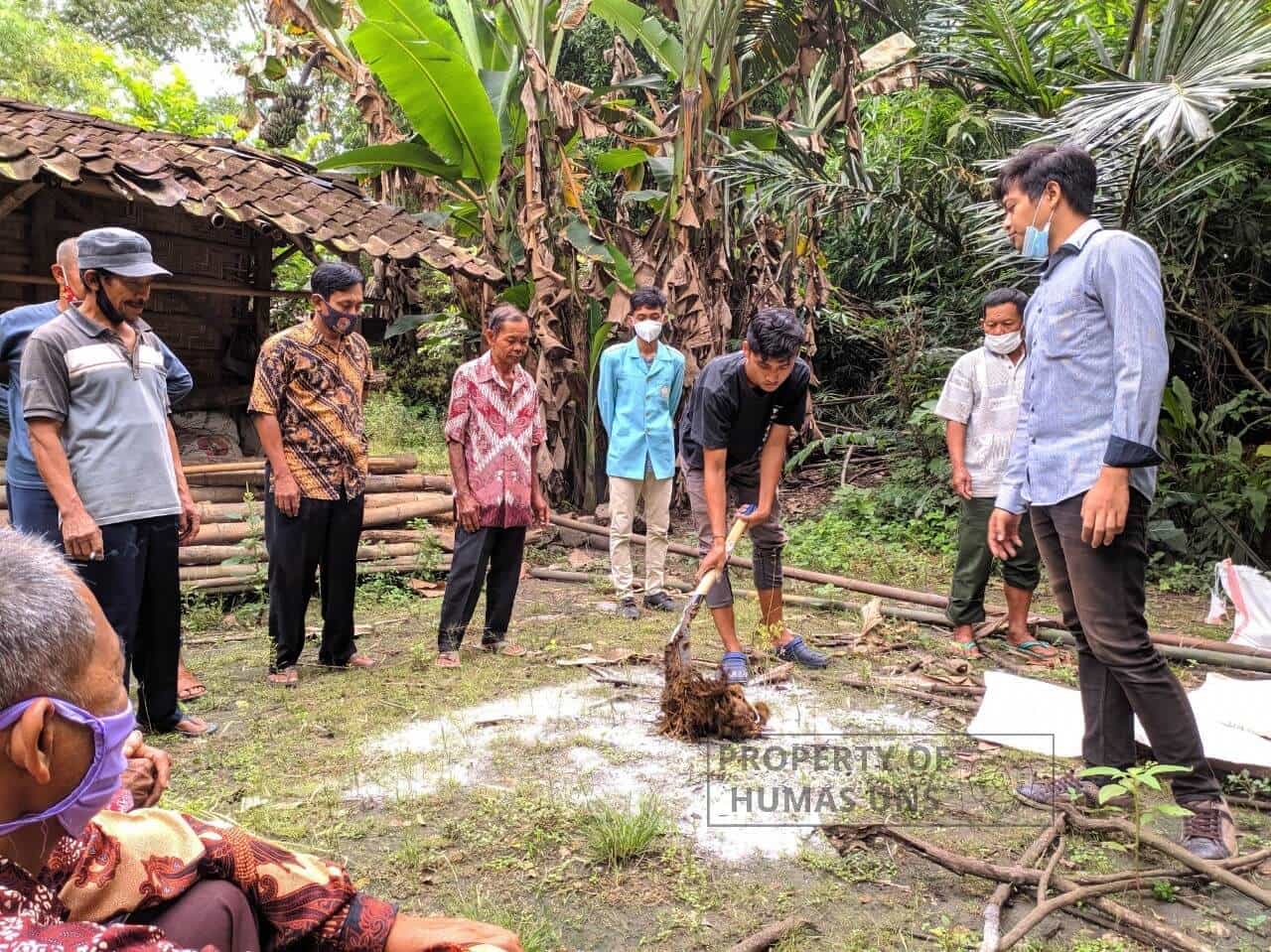
UNS — Waste is generated by household activities and livestock activities in the form of manure. The majority of people in Wonorejo Kidul hamlet, Tuban Village, Gondangrejo Subdistrict, Karanganyar District have cattle that created manure. This condition triggered Universitas Sebelas Maret (UNS) Surakarta student creativity to process the waste into solid organic fertilizer.
The community members often use the manure as fertilizer directly without processing the manure. Pre-processing fertilizer will add value to the waste. In an interview with uns.ac.id on Sunday (28/2/2021), Sonia Canda, the leader of Team 45 KKN UNS, stated that before the fertilizer production process, their team held training in manure processing as an introduction. Sonia also explained that their program aims to reduce cattle waste, increase farmer productivity, and developed into local scale Micro, Small, and Medium Enterprise (MSME) in the future.
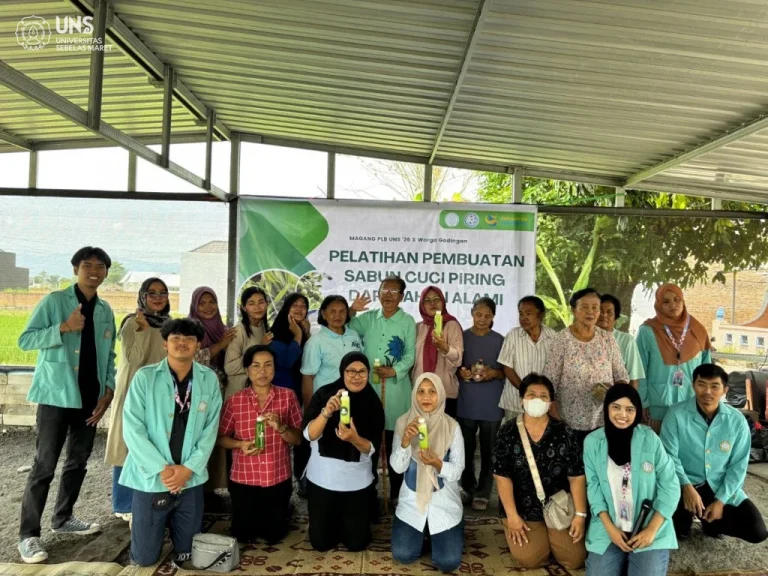
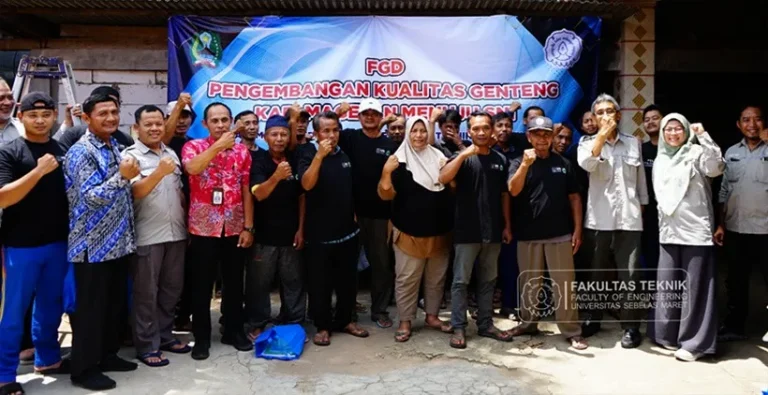
The event held at the end of February was aimed at the people of Wonorejo Kidul hamlet who have cows or goats. In the offline activities, Team 45 KKN UNS maintains the prevailing health protocols. The villagers were enthusiastic about the event because they were planning to establish a farmer group, as mentioned by the Chief of Wonorejo Kidul hamlet, Mahmudin when attending the event.
“I am extremely grateful for UNS students who have initiated this beneficial program. My people and I hope that in the future (the training) will benefit the farmers and (they) can process (the manure) well to establish local MSME,” Mahmudin stated.
Sonia Canda also explained that the solid organic fertilizer production process used Stardec and Dolomite as organic decomposers. Sonia added the explanation to the production process. “Firstly, prepare dry manure. Then, sprinkle Stardec and Dolomite on the manure with a 1:4 composition. The material is then covered with manure until 30 cm high. Then store the mixture for four weeks, but once a week, the mixture should be inversed to resupply the oxygen and speed up the composting process,” Sonia explained.
The Agricultural Extension & Communication Program Faculty of Agriculture (FP) UNS student hoped that it would benefit the local community. “Hopefully, this program will equip the farmers to be productive and creative. Hopefully, the knowledge we shared on cattle waste processing will bring business opportunity amid the pandemic and post-pandemic and can be applied in an MSME,” Sonia concluded. Humas UNS
Reporter: Bayu Aji Prasetya
Editor: Dwi Hastuti