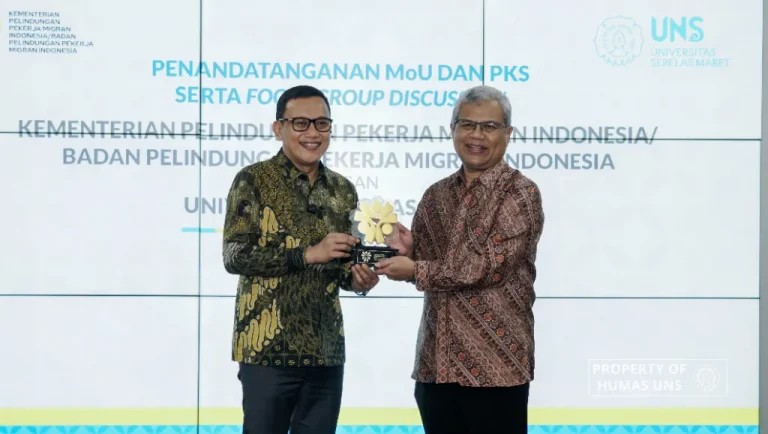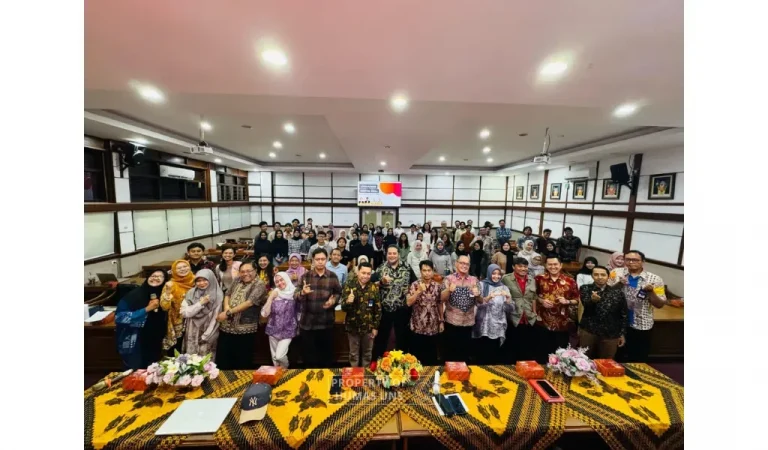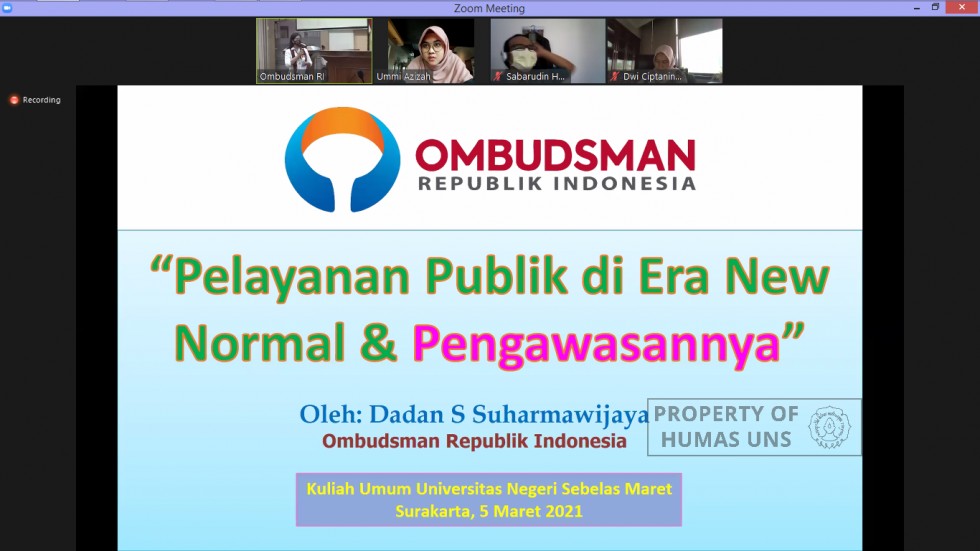
UNS –– The Ombudsman of the Republic of Indonesia (RI) held an online general lecture for Universitas Sebelas Maret (UNS) Surakarta students through Zoom Cloud Meeting, Friday morning (5/3/2021). The general lecture was held as an implementation of the Merdeka Belajar program.
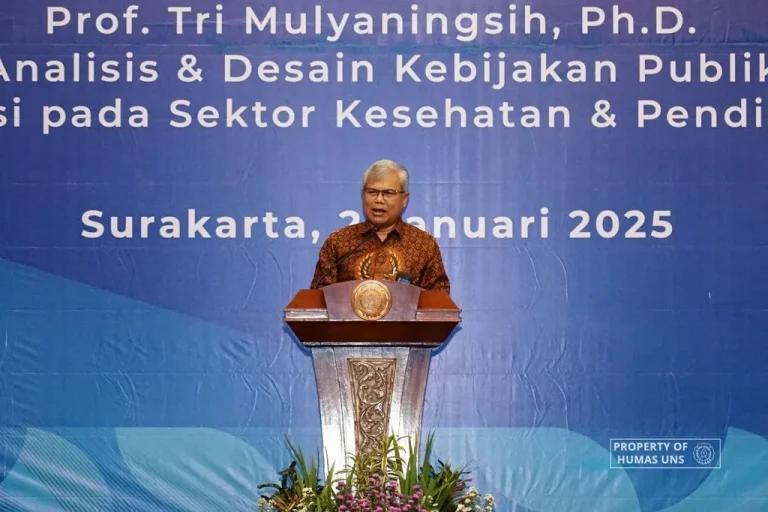
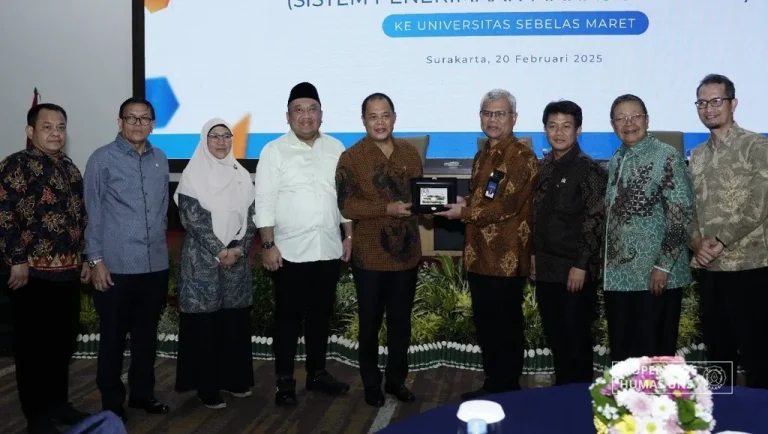
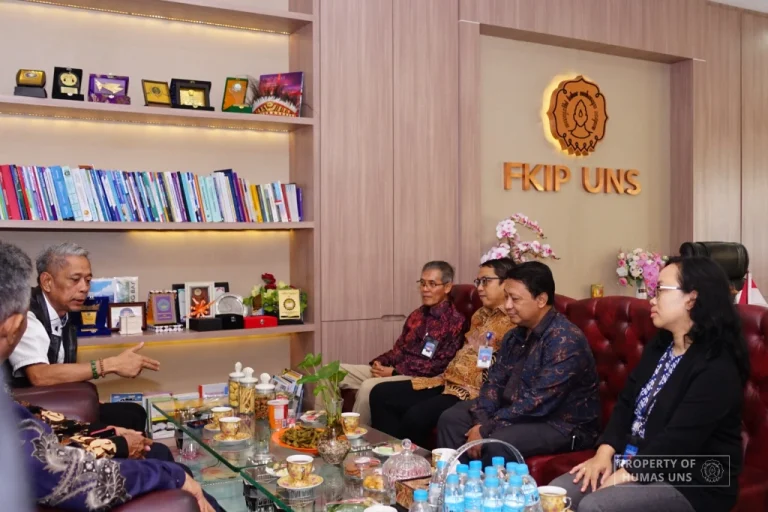
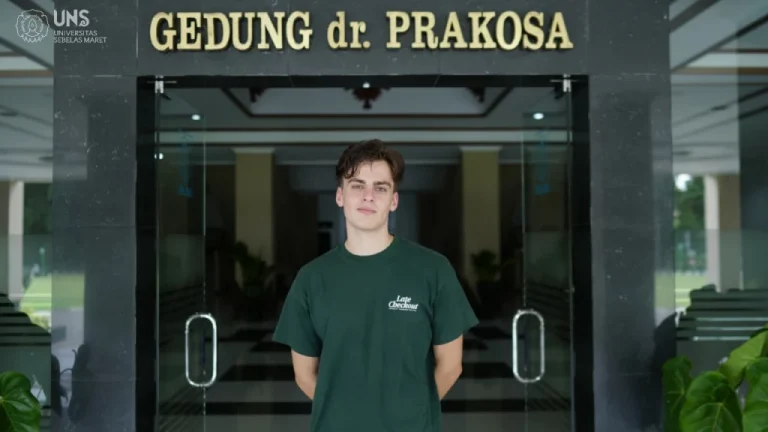
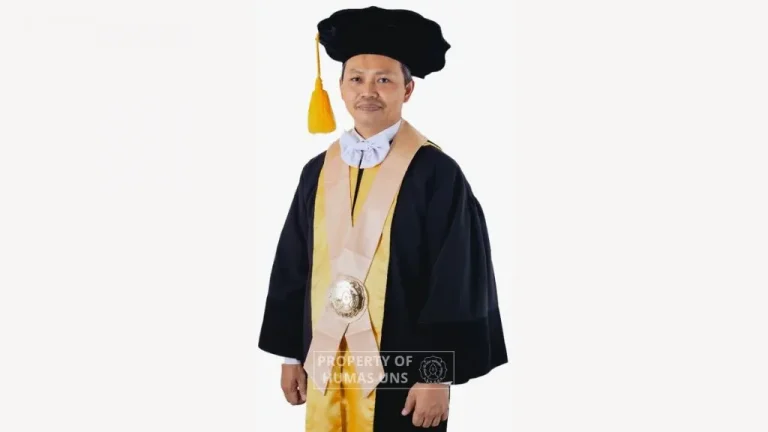
The general lecture broadcasted from Ruang Sidang (Meeting Room) II dr. Prakosa Rectorate Building UNS was attended by the Vice-Rector for Planning, Partnership, Business, and Information Affairs UNS, Prof. Sajidan, members of Ombudsman RI, Dadan Suparjo Suharmawijaya, S.IP., M.IP, and the Chief of Ombudsman Representative for Central Java, Siti Farida, S.H., M.H.
Also attending the event was the Chief of Maladministration Prevention Assistance Ombudsman Central Java, Bellinda W Dewanty, S.H., M.H, Chief of Supervising Assistance, Sabarudin Hulu, S.H., M.H, and Chief of Assistance, PVL Ellya Noor D Nazla, S.Pt, S.H, M.Si.
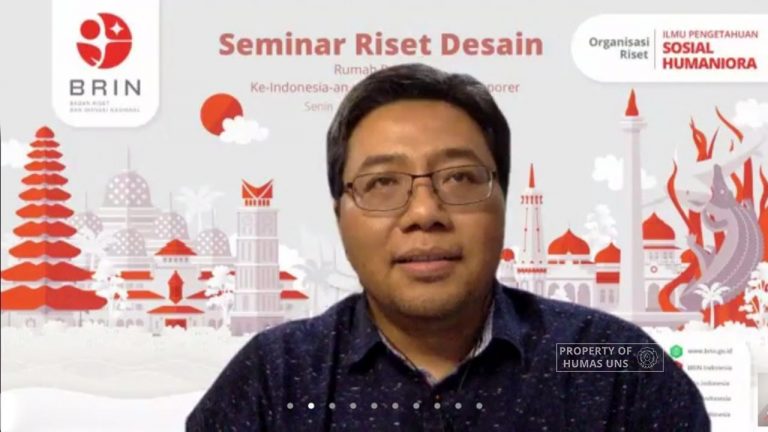
The general lecture material was delivered directly by Dadan Suparjo Suharmawijaya, S.IP., M.IP. In his presentation titled “Pelayanan Publik di Era New Normal dan Pengawasannya” (public service in the new normal era and its supervision), he mentioned the lesson from the Covid-19 pandemic for the acceleration of public service.
He stated that currently, many government institutions had moved their public service to online services by improving their Information Technology (IT), which up to the Covid-19 outbreak is merely a plan.
“Behind the disaster, we took some lessons for the bureaucracy. This condition becomes momentum for accelerated IT innovations. The long-planned e-governance was rapidly encouraged,” he stated.
To 110 students from the Faculty of Law (FH) and the Faculty of Economics and Business (FEB) UNS who attended the general lecture, Dadan Suparjo Suharmawijaya, S.IP., M.IP conveyed that Ombudsman encouraged the supervision of public services based on complaint management. Public service supervision needs to pay attention to people’s aspirations and expectations and fix deficiencies and comparability, which means combining competition, participation, and appreciation aspects.
Dadan Suparjo Suharmawijaya, S.IP., M.IP explained that the legal basis for complaint management is regulated in Law 25/ 2009 article 8, 21, 36, and 37 as an inseparable part and the ‘soul’ of public services. Thus, complaint management should not be treated as an attribute of services or additional duty because there will be no quality public services without complaint service. Governmental institutions often focused only on their public services, which has a limitation and should be solved by the public’s suggestions.
“The input from the public should be used as acceleration input and improvement input,” he added.
Regarding the importance of complaint services, the Ombudsman member shared a comparison between public services in Indonesia, Sweden, and Australia. In 2018, Sweden’s total population was 10.05 million people, and it had over 8,826 public service complaints, while Australia, with its 25.08 million people, received 46,494 public service complaints. On the other hand, Indonesia, with its 270 million population, only received 9,376 complaints on its public services. Dadan Suparjo Suharmawijaya, S.IP., M.IP conveyed that this number affects the Indonesian Corruption Perceptions Index.
In his presentation, Dadan Suparjo Suharmawijaya, S.IP., M.IP also discussed the relevance of good government with public services. He said that there are supply and demand mechanisms in public service quality improvement. This improvement needs an increase in human resource capacity, a public service system based on public service orientation and innovation needs, strengthening participation, the rule of law, transparency, responsiveness, service justice, effectiveness-efficiency, and strategic vision.
“Public services should be citizen-oriented and market-oriented, supported by professional human resources, facilities and infrastructure, SOP and service mechanism, accessibility, IT support, and innovativeness,” he concluded. Humas UNS
Reporter: Yefta Christopherus AS
Editor: Dwi Hastuti