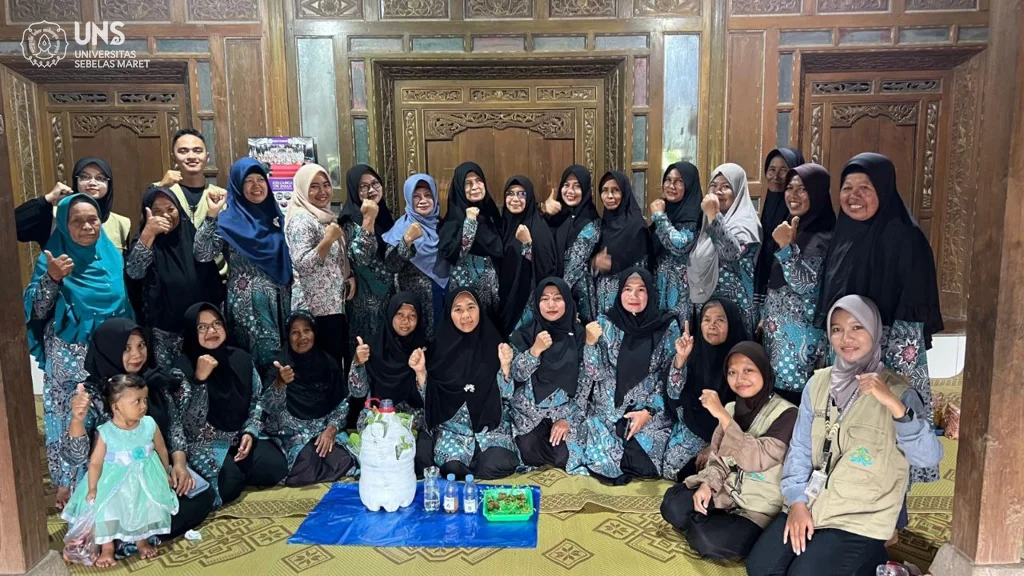
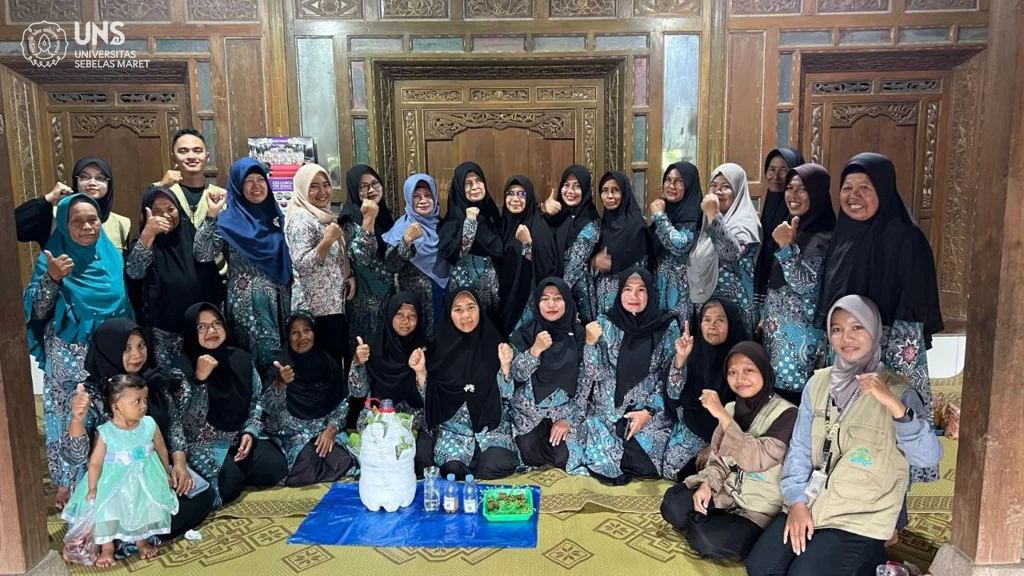
UNS — Students of Universitas Sebelas Maret (UNS) Surakarta who are part of the 2026 Thematic Community Service Program (KKN-T) Group 121 initiated a program utilizing used water gallons as hydroponic planting media for the Family Welfare Movement (PKK) group in Papringan Village, Kaliwungu District, Semarang Regency. This innovation offers an environmentally friendly and economical solution for healthy food production.
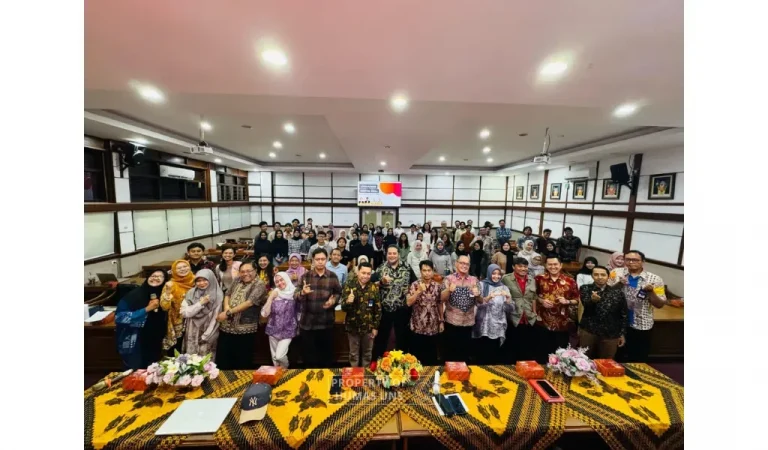
The socialization program, conducted in February 2026, was attended by local PKK members. The activity was presented by Faiza, a representative of UNS students, under the supervision of the Field Supervising Lecturer (DPL), Prof. Dr. Ir. Samanhudi, S.P., M.Si., IPU, ASEAN Eng., APEC Eng. The session was carried out interactively through material presentations, hands-on practice, and discussion sessions.
Hydroponics is a method of cultivating plants without using soil as a growing medium, instead relying on water to provide nutrients. The planting media can include rockwool, cocopeat, gravel, stones, and rice husk charcoal. Leafy vegetables grown hydroponically can be harvested in a relatively short time, producing fresher and crispier leaves. This technique is particularly suitable for areas with limited land space or restricted water supply.
One of the simplest hydroponic techniques is the wick system. The main principle of this system is the flow of nutrients from the nutrient reservoir to the plant roots through capillary action, allowing the roots to absorb nutrients efficiently. The wick system can utilize recycled materials such as perforated water gallons, used plastic cups cut into halves, or rectangular plastic containers.
In this program, the students used discarded mineral water gallons as hydroponic cultivation media. This method was considered practical, cost-effective, and easy to apply in limited spaces, including home yards.
“The use of used water gallons not only supports cultivation efficiency but is also aligned with efforts to reduce household plastic waste,” Faiza explained to uns.ac.id on Tuesday (17/3/2026).
The cultivation process began by preparing the media using used gallons that had been perforated, painted, and filled with nutrient solutions using AB Mix fertilizer, with a composition of 8 liters of water mixed with 56 ml of concentrate A and 56 ml of concentrate B. Each gallon contained six holes, with one plant placed in each hole. Leafy vegetables can grow optimally at a pH level of 6–7, nutrient concentration of 1200–1400 ppm, and direct sunlight exposure.
One of the participants, Sri Widarti, expressed that the activity provided new insights for PKK members.
“This activity gave me new knowledge, and it is truly worth implementing. Besides providing healthy food, it also helps reduce plastic waste,” she said.
Through this program, the community is expected to adopt more environmentally friendly and sustainable agricultural practices. The application of hydroponic cultivation has the potential to minimize the use of synthetic pesticides and reduce household expenses through independent food production.
It is hoped that this innovation will become an initial step toward a sustainable agricultural system that increases productivity while preserving the environment. The use of discarded gallons as hydroponic planting media proves that simple innovations can create meaningful impacts on the welfare of rural communities.
This program also contributes to the achievement of the Sustainable Development Goals (SDGs), particularly SDG 3: Good Health and Well-being, by providing access to healthy food sources in the form of fresh vegetables for daily consumption.
HUMAS UNS