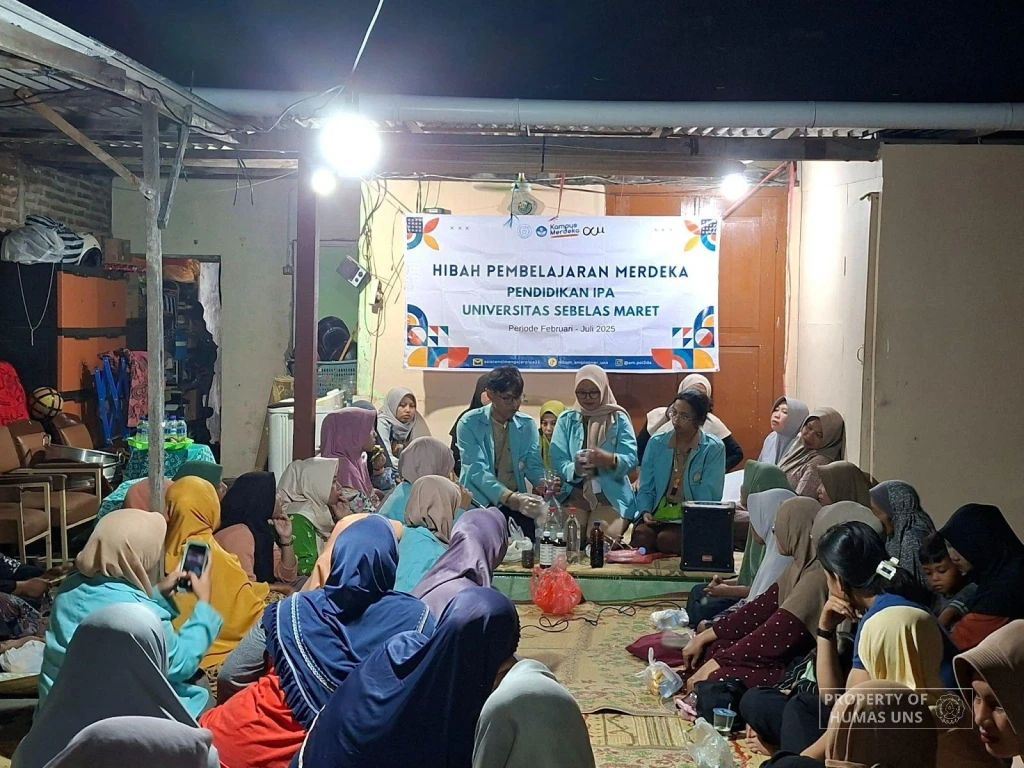
UNS – Students from Universitas Sebelas Maret (UNS) Surakarta held an eco-enzyme workshop in Jatisobo Village. The event took place in Polokarto District, Sukoharjo Regency. It was part of their commitment to Sustainable Development Goal (SDG) 12 on Responsible Consumption and Production. The initiative was also part of the Community Service Program (KKN), funded by the Independent Learning Grant (Hibah Pembelajaran Merdeka).
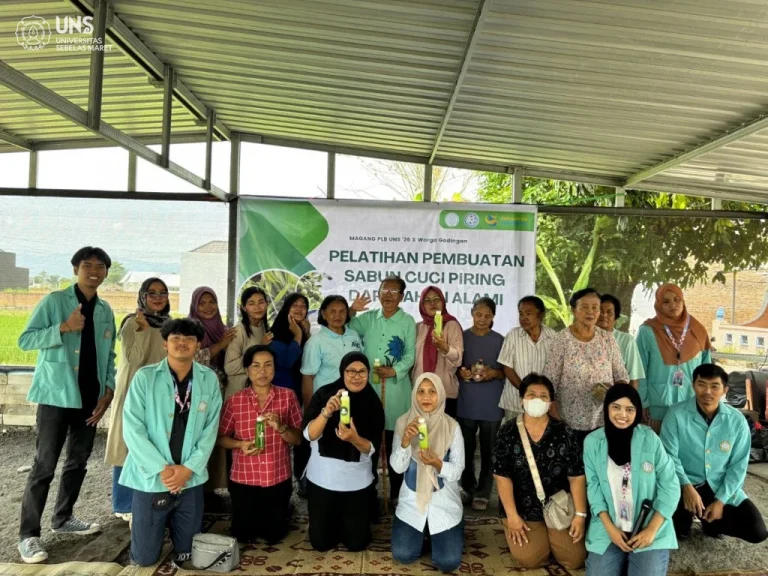
The event occurred on Sunday (4/5/2025). It involved 72 members of the Family Welfare Empowerment (PKK) group from RT 2 RW 4 of Jatisobo Village. The UNS student team included ten members. They were Arief Kurnia Pambudi, Arilistya Kurniawan, Alifia Nadiatun Najiiha, Debby Asti Septina, and Eka Tias Ambarwani. Other members were Endyas Miftakhuljannah, Mohammad Nauffal Dzhiyaul Haq, Nurista Ayu Soutul Haqiqi, Yumna Alhay Munajaeti, and Zefanya Widyasari.
The workshop opened with a presentation highlighting the importance of managing organic waste through sustainable and eco-friendly practices. One effective method introduced was eco-enzyme production. This fermented liquid, from fruit and vegetable scraps mixed with brown sugar and water, offers multiple benefits. People can use the resulting liquid as a natural cleaner, organic fertilizer, and a plant pest repellent.
Promoting Household Waste Management
A live demonstration followed, where students guided the participants through each step of the eco-enzyme production process. They explained how to select ingredients, measure the correct ratios, and store the mixture in fermentation containers. The participants responded enthusiastically. They asked questions and actively joined the discussion.
In the next session, the team explained how to apply eco-enzymes in daily life, particularly for home gardening. For example, 30 ml of eco-enzyme diluted in 2 liters of water can serve as a natural fertilizer. This practical knowledge aims to reduce reliance on industrial chemical products and promote the reuse of household waste.
To mark the event’s success, the student team presented a bottle of fully fermented eco-enzyme to Ms. Ika, head of RT 2 RW 4. This symbolic handover served as an example for the community and encouraged them to begin eco-enzyme production at home.
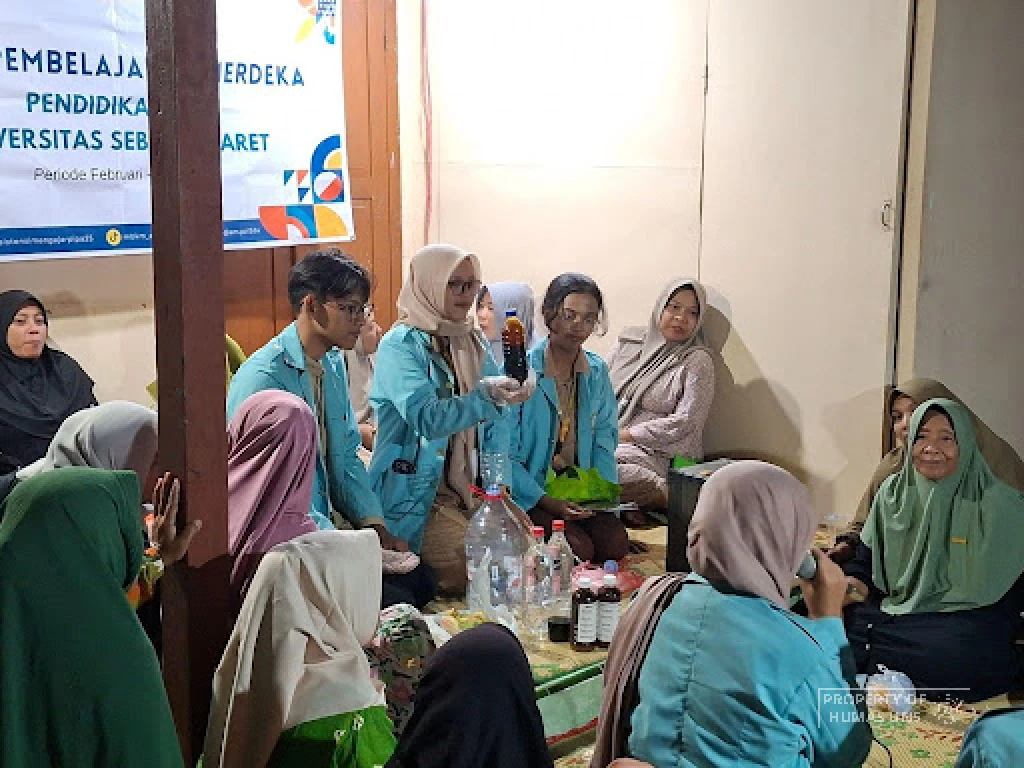
“Thank you for the knowledge you’ve shared. We used to throw away kitchen waste like vegetable scraps and fruit peels. However, the eco-enzyme process gives them new value. I hope the women in our neighborhood can try this at home and benefit from it,” Ms. Ika said.
Community Enthusiasm and Long-Term Impact
This activity is part of the broader UNS KKN Hibah Pembelajaran Merdeka program. It aims to bridge academic knowledge with real community needs. The program uses a scientific and participatory approach. It promotes university research and strengthens local capacities to address environmental challenges.
Furthermore, the initiative supports SDG 12 by promoting sustainable behavior at the grassroots level. The students introduced simple technologies like eco-enzyme production. This has laid the foundation for a long-term shift toward environmentally friendly and sustainable lifestyles. HUMAS UNS