UNS – Universitas Sebelas Maret (UNS) Surakarta continues to promote STEM (Science, Technology, Engineering, and Mathematics)-based education. It implements a range of innovative programs in schools. One initiative comes from students in the UNS Science Education Program. They joined the Merdeka Learning Grant Program. They are currently providing teaching assistance at SMP Negeri 2 Polokarto, Sukoharjo.
This activity runs from February to June 2025. It is part of the Science for Life (SFL) Class program. The program develops 21st-century skills and emphasizes contextual and project-based learning. Students introduced various educational media and methods through this program. These included science pop-up books, infographics, and digital tools using IoT and Artificial Intelligence (AI).
Empowering Junior High School Students Through STEM
A total of 10 UNS students actively participate in the program. The participants are Arief Kurnia Pambudi, Arilistya Kurniawan, and Alifia Nadiatun Najiiha. Other members include Debby Asti Septina, Eka Tias Ambarwani, and Endyas Miftakhuljannah. The group also features Mohammad Nauffal Dzhiyaul Haq, Nurista Ayu Soutul Haqiqi, and Yumna Alhay Munajaeti. Zefanya Widyasari completes the team. All students come from the Faculty of Teacher Training and Education (FKIP) at UNS. They actively participate in the teaching assistant initiative.
In seventh-grade classes, the UNS students introduced temperature and humidity sensors to demonstrate the application of IoT in science learning. Students conducted simple experiments by recording the school’s environmental temperature data. They then analyzed the data to understand how human activities contribute to climate change and its impact on biodiversity.
Fostering Curiosity and Environmental Awareness
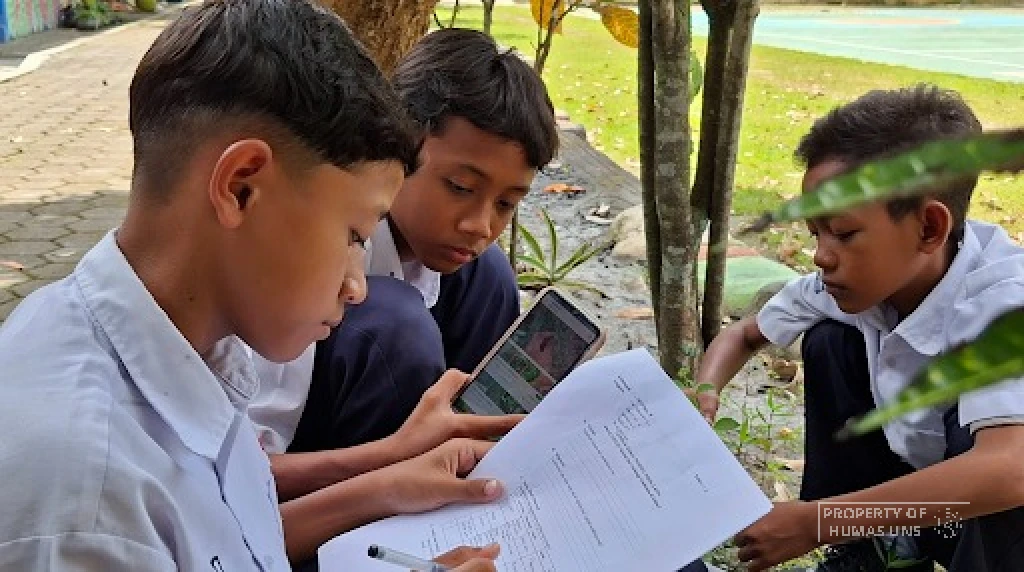
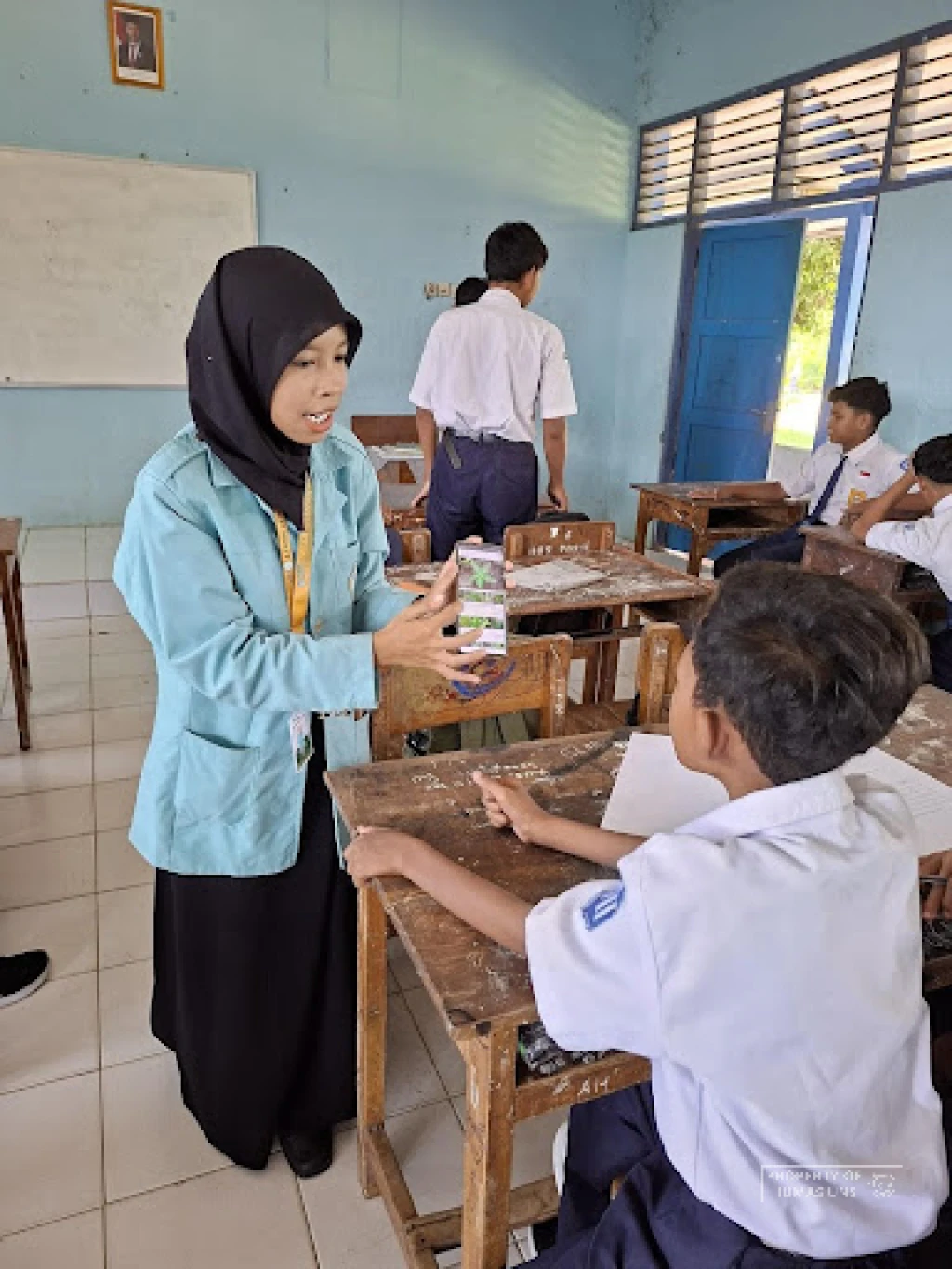
Additionally, students explored the PlantNet app, an AI-powered plant identification tool. By taking photos of leaves and flowers around the school, they could identify plant species scientifically. This hands-on experience not only improved scientific literacy but also increased awareness of local plant conservation.
The use of these digital tools sparked significant enthusiasm among the junior high students. Denisa, a seventh-grade student, shared that she could now understand her surroundings better using simple tools like temperature sensors. Similarly, Qisel, another seventh-grade student from class B, expressed excitement about identifying various plant species using the PlantNet app. “I can now easily identify the diversity around me, from families to species, more quickly. I discovered there are so many types of plants around,” Qisel said.
Tiara Eka Mawarni, S.Pd., the science teacher at SMPN 2 Polokarto, welcomed the collaboration. She noted that IoT and AI-based learning stimulated students’ curiosity and offered meaningful, new experiences. “Science learning using IoT and AI technologies has received positive responses from students. It triggers their curiosity and provides an experience that they have never encountered before,” she explained.
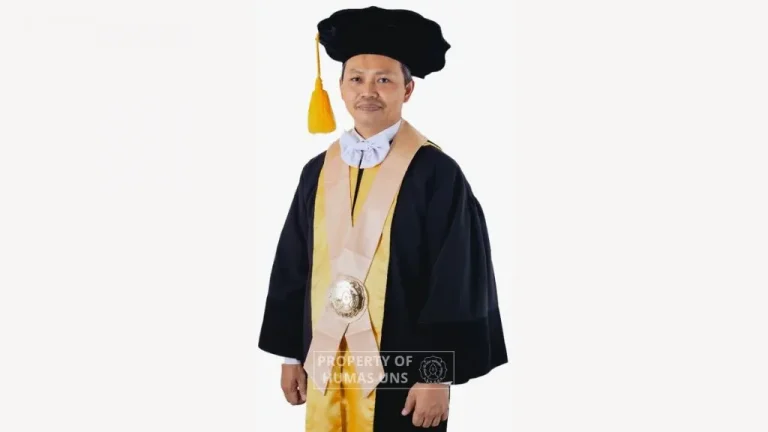
Dr. Riezky Maya Probosari, S.Si., M.Si., and Dr. Muhammad Nur Hudha, M.Pd., supervise the UNS students. They emphasized that this program exemplifies the implementation of the tridharma of higher education. Those are education, research, and community service. It also creates synergy between education and technology.
This initiative expects students to develop ecological awareness and essential 21st-century skills. This activity also contributes to achieving the fourth Sustainable Development Goal (SDG) on Quality Education. The goal aims to equip learners with knowledge and skills aligned with today’s global challenges. Humas UNS