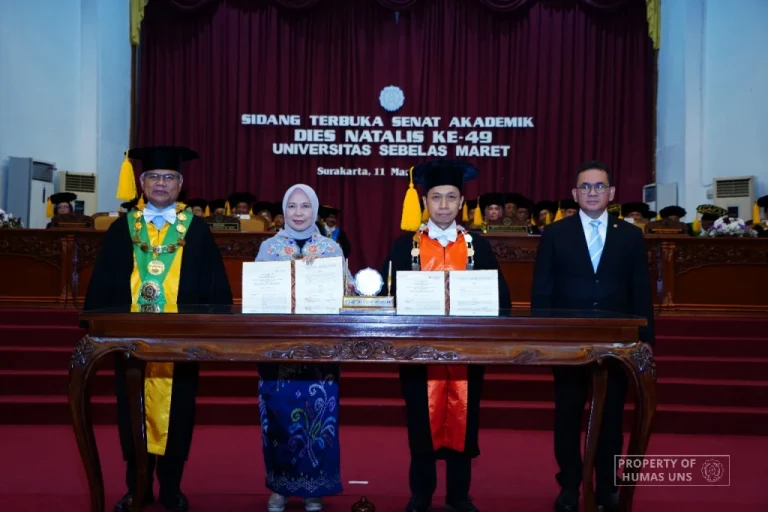
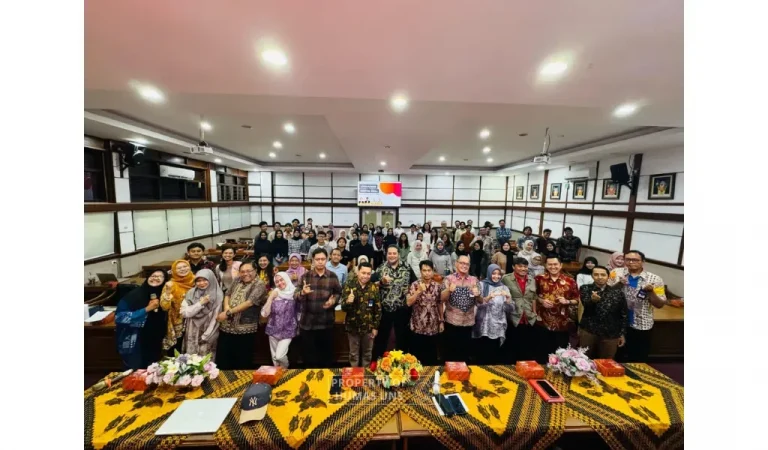
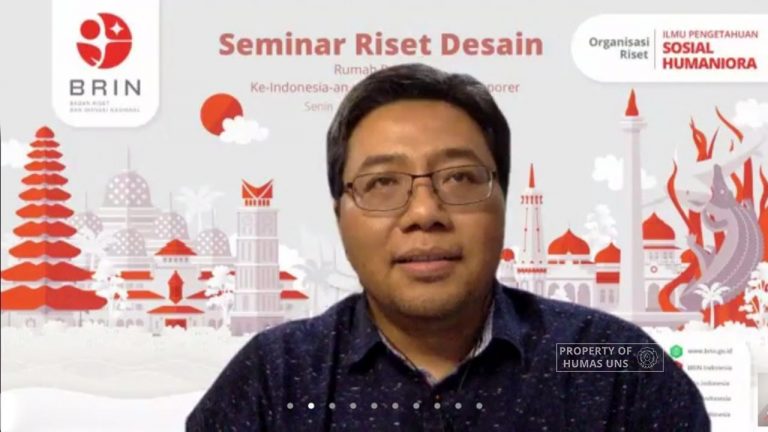
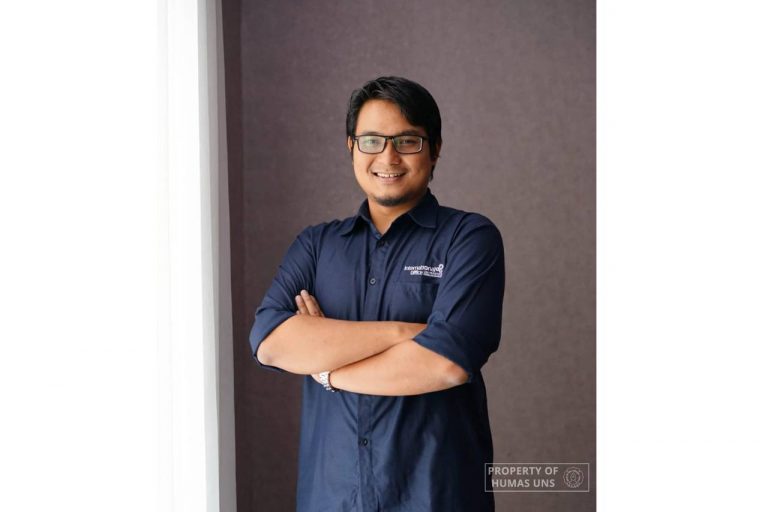
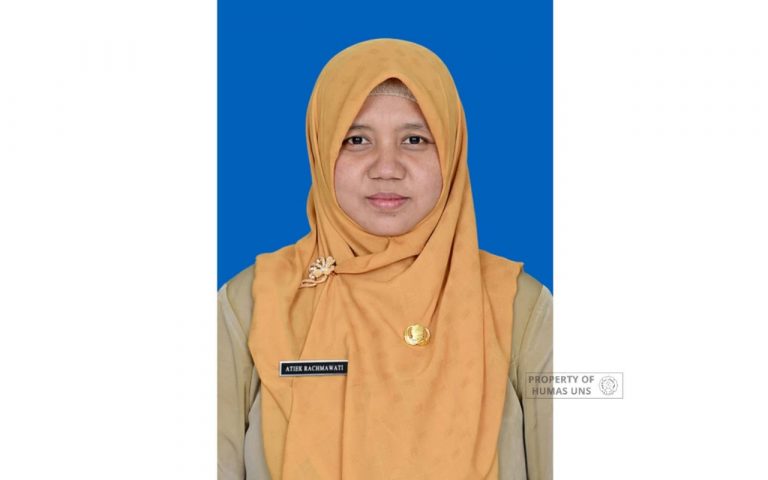
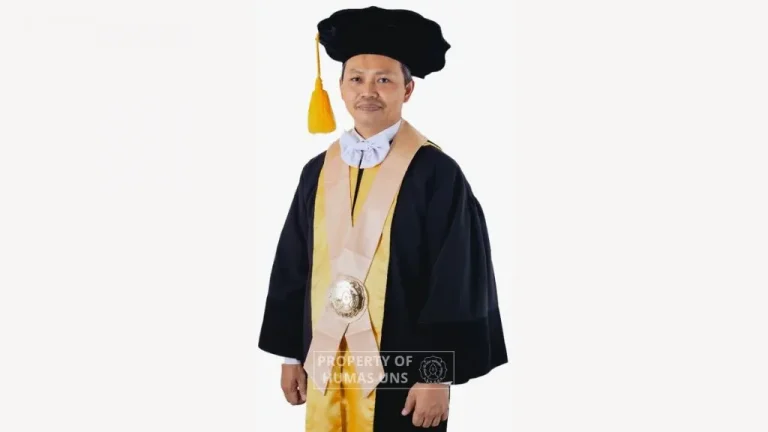
UNS — Universitas Sebelas Maret (UNS) Surakarta inaugurated three new professors through the offline and online ceremony on Tuesday (3/11/2020). The three professors are Prof. Dr. Budhi Haryanto, MM. who is a Professor in Management in the Faculty of Economics and Business (FEB), Prof. Dr. Ir. Bambang Suhardi, ST, MT, IPM, ASEAN.Eng a Professor in Industrial Engineering, and Prof. Dr. Ir. Margaretha Maria Alacoque (MMA) Retno Rosariastuti, M.Si. a Professor in Soil Bioremediation Science Faculty of Agriculture (FP) UNS.
Prof. Dr. Budhi Haryanto, MM. is the 16th professor in FEB and 225th professor in UNS will deliver an inauguration speech with a title ‘Consumer Behavioral Model with Product Types as A Moderating Variable (Study on Traditional Foods)’. Consumer behavior in traditional foods consumption is an interesting issue to be theorized because there are two underlying reasons practical reasons which are concerned with the real phenomenon in Indonesia, the negative symptoms surrounding traditional foods. The negative effect is the 8.1% decrease of traditional market share and the 31.4% growth of the modern market. This means that there is around 17.5 – 30.0% of the decrease in sales caused by around 29.0 – 32.0% decrease in traditional market consumers per year. This decrease including the decrease of traditional food sales.
The next negative phenomenon is the entry of imported foods that compete with traditional foods. The imported foods have diverse and interesting marketing strategies, for example, KFC, CFF, Burger King that compete with local fried chicken and Thai Tea, Star Buck, bubble tea, and other imported beverages which compete with traditional beverages like Kopi Klotok, Dawet, Bajigur, and other traditional beverages. Likewise, with the growth of restaurants, such as Chinese restaurants, Thailand restaurants, Korean restaurants, and Steak restaurants which all offer foreign foods. The imported snacks also started to replace traditional snacks or jajanan pasar. This condition was worsened by a parenting style which direct children to like imported foods.
“We now contemplate on how long the traditional foods will be able to compete with the imported foods?,” Prof. Budhi stated. Prof. Budhi added that various scientific studies and various approaches have been taken such as from cultural approach, religious approach, tourism approach, and many other approaches which are basically to maintain the existence of traditional foods. These means are effective, but it is only an appeal, invitation, or other matter concerning decency, ethics, and nationality.
While Prof. Dr. Ir. Bambang Suhardi, ST, MT, IPM, ASEAN.Eng as the 15th professor in FT and 226th professor in UNS will deliver an inauguration speech on ‘The Implementation of Ergonomics to Improve Small Furniture Industry Competitiveness’. Since 2013, Prof. Bambang has been involved in research and community services, especially to improve MSME’s competitiveness. He conducted a study on the limitedness of technology used in the production process at MSMEs. The limitation of production process technology caused the limit in quantity, types, and variation of products as well as the low quality of products. Therefore, MSMEs have a static product that cannot compete in the market. This problem should be solved by implementing appropriate technology. The implementation of appropriate technology in MSME will improve production capacity and product quality.
Appropriate technology is a technology designed for a certain community that can be adjusted to the environmental, ethical, cultural, socio-political, and economic aspects in the community. Appropriate technology requires the efficient use of resources, easy to maintain, and have minimum environmental impact compared to the existing technologies. The implementation of appropriate technology can be done through ergonomics intervention. Prof. Bambang provided his energy and thoughts to develop various designs of tools and methods for improving work systems as an intervention option to increase the competitiveness of MSMEs.
Prof. Dr. Ir. Margaretha Maria Alacoque (MMA) Retno Rosariastuti, M.Si., the 30th professor in FP and 227th professor in UNS will deliver an inauguration speech on ‘The Development of Bioremediation Technology for Remediation of Polluted Soil to Support Sustainable Farming’. Bioremediation is a technology to restore the environment contaminated with hazardous materials using microorganism or higher plants that live in nature. Bioremediation has the definition of bio (a living organism) and remediation (recovery). The main principle is to transform and degrade pollutants such as hydrocarbon, oil, heavy metal, pesticides, artificial dyes and others. Bioremediation technology is used because there are degradations that occur in farming lands in Indonesia which is caused by heavy metal pollution from industrial and household wastes. The conversion of agricultural lands into other functions also caused the increase in land degradation which leads to an increase in the number of marginal soils.
With the narrowing agricultural lands and the increase in degraded soils, remediation is needed to recover the quality of soils so that it can be used in agricultural activities, increase the productivity of the soil, and produce safe agricultural products. A cheap, easy to apply, safe, environmentally friendly, and sustainable remediation method for polluted soils, especially those contaminated with heavy metal are highly needed in Indonesia. “This is a challenge for us to create such technology. The method that can meet all of these criteria are Bioremediation,” Prof. Retno explained.
To this day, the handling of soils contaminated with metal focuses on the physical and chemical method by removing soils, reclamation, stabilizing or compression, extraction using physio-chemical methods, washing, and soil flushing. These methods are usually adopted for a temporary solution which requires high energy and cost. Ecologically, these methods are less favorable because it damages soil structure and ecosystem. “The application of Bioremediation technology is expected to solve all of these problems. Soil bioremediation technology which has been adopted currently is bioremediation technology using microorganism (bioremediation) or plants only (phytoremediation). Microorganism has a tole in immobilization, detoxification or degradation of various chemical pollutants and dangerous materials from the environment so that it can decompose or transform dangerous pollutants,” she concluded. Humas UNS
Reporter: Dwi Hastuti