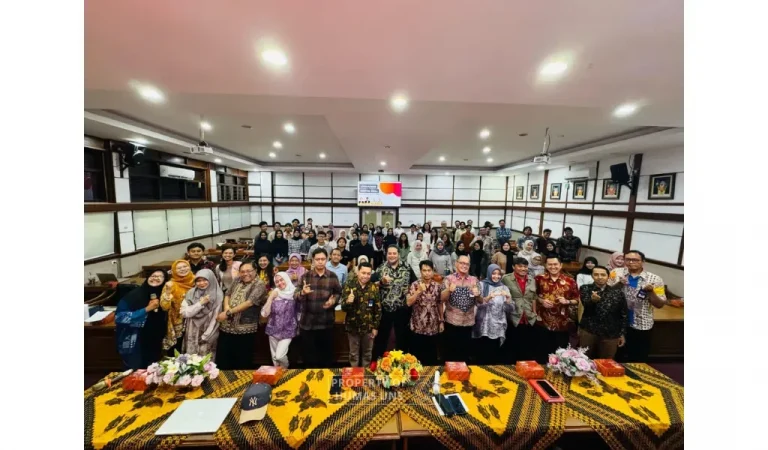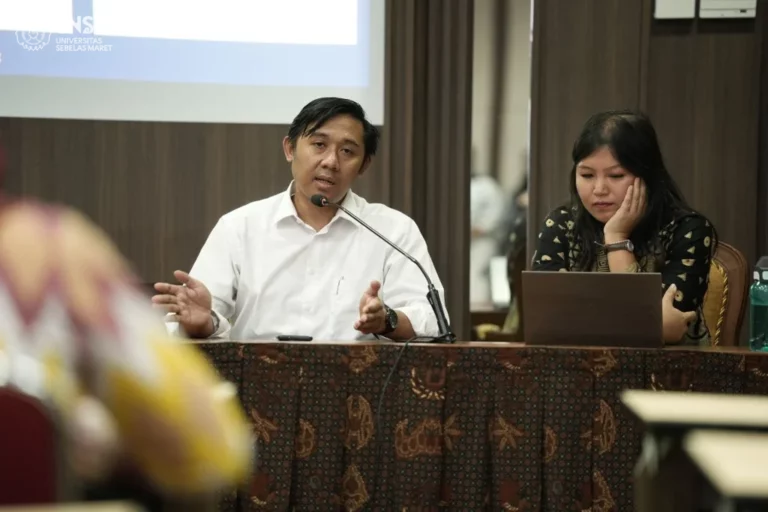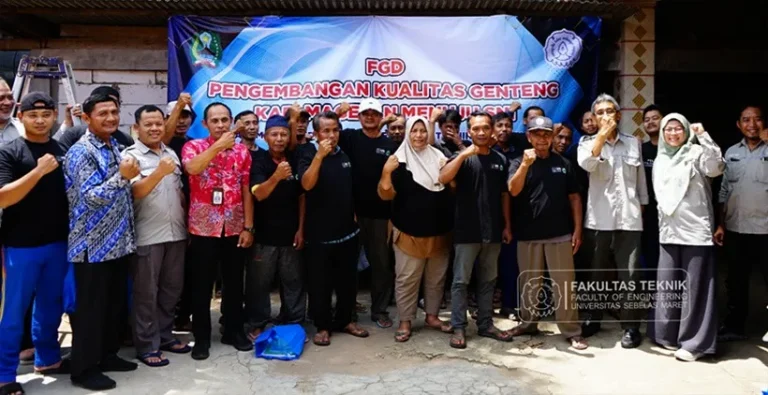
UNS — Research Group Ergonomic Engineering, Work Systems and Environmental Management (RG. RESKML) of Industrial Engineering Program Faculty of Engineering (FT) Universitas Sebelas Maret (UNS) Surakarta conducted socialization on the importance of Occupational Health and Safety (Keselamatan dan Kesehatan Kerja – K3) to the workers of gamelan industry in Wirun Palu Gongso, Sukoharjo, Monday (30/11/2020).
The Team of Research and Community Services (P2M) led by Prof. Bambang Suhardi, is aware of the particular dangerous conditions workers face in the gamelan industry. These dangerous conditions are the exposure to noise during the forging, mapping the musical scale, and finishing through grinding processes. The Research Group also found unsafety behavior that might lead to work accidents, such as not wearing welding glasses during welding and not using gloves or safety glasses when grinding.
“Based on this observation, there is a possibility that other aspects also pose K3 dangers to workers so that research to identify the risks in Gamelan Wirun Palu Gongso industry is needed,” Prof. Bambang Suhardi explained.
During the observation in the production site, RG. RESKML also interviewed the workers concerning health complaints, work accidents, and near-miss that have been experienced. The workers stated that they felt back and shoulder pain due to strenuous physical activity, eye irritation from exposure to dust or burning smoke, ringing in the ears, decreased hearing ability, skin blisters from sparks, and almost fell due to tripping over work tools.
“From the observation and interview results, we found that the preventive measures taken by the owner of Gamelan Wirun Palu Gongso industry are not quite appropriate. For example, providing cotton as PPE to protect worker’s ears from noises,” Prof. Bambang Suhardi added.
In the official statement, he stated that inappropriate PPE is not enough to protect the workers from noise. Workers also said that they never use the tool because it is uncomfortable. RG. RESKML concluded that the noise level in the forging process is 96 dB and is included as continuous noise. This means that the workers were exposed to 96 dB noise for 240 minutes. The duration of exposure to 96 dB noise, according to the Minister of Manpower (Menaker) RI Decree Number 51 of 1999, is for 40 minutes. RG. RESKML also found that the level of noise during the mapping of the musical scale is 93 dB. This type of noise is impulsive and repetitive. During the mapping process, the workers were exposed to the noise for 60 minutes. The duration of exposure to this intensity is only permitted for 70 minutes.
“The duration of exposure received by workers is still below the threshold. If this condition is not treated immediately, it can cause health problems for workers, especially hearing loss,” Prof. Bambang Suhardi stated.
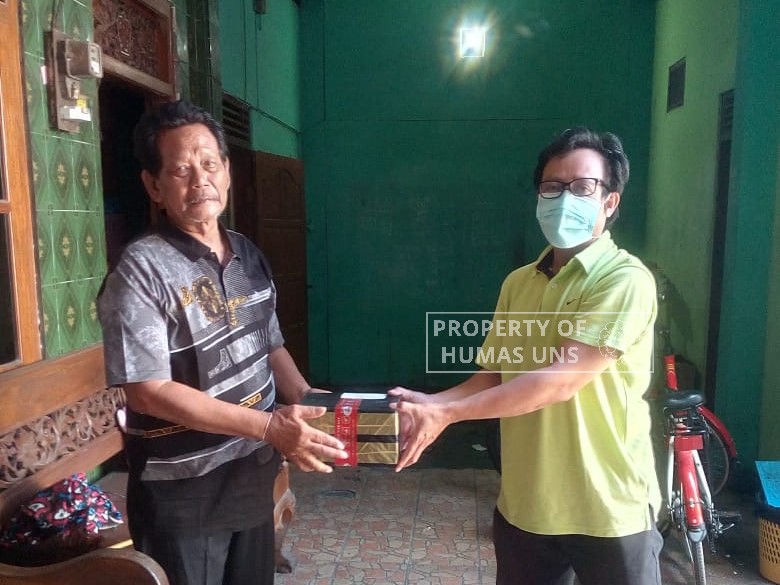
The workers are also exposed to 96.2 dB noise for 240 minutes during the finishing process. The exposure to the 96.2 dB noise is only allowed for 38 minutes. According to Prof. Bambang Suhardi, the duration of exposure received by the workers is above the permitted threshold. With this finding, RG. RESKML held socialization on K3 to control noise. The socialization includes the danger of noise and how to control noise. The RG. RESKML also handed PPEs that consist of the earmuff, mask, gloves, boots, safety glasses, and SOP for the finishing process. Humas UNS
Reporter: Yefta Christopherus AS
Editor: Dwi Hastuti